Gherardo del Fora: Florentine Master of Subtle Majesty
Gherardo di Giovanni di Miniato del Fora, born in Florence around 1445 and tragically passing away in 1497, remains a captivating figure within the vibrant tapestry of Renaissance art. Often referred to as “Master of the Triumph of Chastity,” his legacy extends beyond a single celebrated work; it’s one of quiet brilliance, meticulous detail, and an understated yet profound engagement with both Italian humanist ideals and the burgeoning influence of Early Netherlandish painting. His life was inextricably linked to Florence's artistic powerhouse, a city that nurtured innovation and demanded exceptional skill from its artists. As the son of the renowned sculptor Giovanni di Miniato del Fora – inheriting his father’s distinctive “del Fora” moniker – Gherardo entered an environment steeped in artistic tradition, yet he quickly forged his own unique path.
Early Life and Artistic Training
Gherardo's formative years were spent absorbing the techniques of his family and, crucially, under the tutelage of Domenico Ghirlandaio, a master painter whose workshop served as a crucible for many young Florentine artists. This exposure to Ghirlandaio’s style – characterized by its naturalism, rich colors, and masterful use of perspective – undoubtedly shaped Gherardo's approach. However, unlike his contemporaries who often specialized in a single medium, Gherardo demonstrated remarkable versatility, excelling not only in painting but also venturing into the realms of miniature illumination, intricate mosaics, and even jewelry design. This broad range suggests a deeply inquisitive mind and an eagerness to explore the possibilities of visual expression.
A Patronage Network and Expanding Horizons
Gherardo’s career flourished within the orbit of Florence's powerful Medici family. He received numerous commissions from these influential patrons, creating stunning illuminated manuscripts and decorative panels that adorned their palaces and chapels. His work for the Medici reflects a sophisticated understanding of humanist values and a desire to elevate religious narratives through exquisite detail and elegant composition. Beyond Florence, Gherardo’s talents reached as far as Hungary, where he served King Matthias Corvinus, producing lavish artwork intended to showcase the king's wealth and power. This international exposure broadened his artistic horizons, introducing him to new stylistic influences – particularly those emanating from the Early Netherlandish painters who were gaining increasing prominence across Europe. The subtle use of atmospheric perspective, delicate modeling, and a focus on individual emotion, hallmarks of this style, can be discerned in many of Gherardo’s landscapes.
Distinctive Style and Notable Works
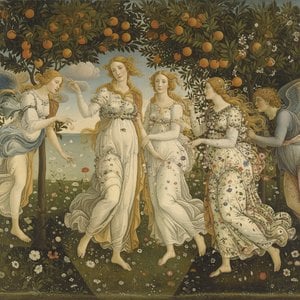
Gherardo del Fora's artistic signature is defined by his meticulous attention to detail, refined draftsmanship, and a restrained palette. Unlike the bolder, more flamboyant styles prevalent at the time, his works possess an understated elegance and a remarkable sense of serenity. His landscapes are particularly noteworthy, demonstrating a keen observation of nature combined with a subtle understanding of atmospheric perspective – a technique borrowed from the Netherlandish masters. The “Triumph of Chastity,” for which he is most famously known, exemplifies this style perfectly: a complex allegorical scene rendered with exquisite precision and imbued with a quiet dignity. Furthermore, his miniature paintings are celebrated for their delicate rendering of figures and intricate details, showcasing a mastery of technique rarely matched by his peers.
Legacy and Historical Significance
Gherardo del Fora’s contribution to the artistic landscape of Renaissance Florence is significant, though often overshadowed by more prominent contemporaries. His versatility – encompassing painting, miniature, mosaic, and jewelry – reflects a rare breadth of talent within a period increasingly defined by specialization. His work for the Medici family provides invaluable insights into the tastes and aspirations of one of Europe’s most influential dynasties. Moreover, his engagement with Early Netherlandish techniques demonstrates a willingness to embrace new influences and adapt them to his own unique style. While few of his works survive today, they represent a testament to the quiet brilliance of a Florentine master who deserves greater recognition for his significant contribution to the art of the Renaissance. His legacy continues to be studied by scholars and appreciated by art lovers alike, reminding us that true artistry often resides in subtlety and refinement.