A Life Etched in Detail: The World of George Ogilvy Reid
George Ogilvy Reid, a name synonymous with meticulous detail and a deep reverence for Scottish history, was born in Leith, Edinburgh, in 1851. His life unfolded entirely within the bustling port area of his native city, a setting that would subtly yet profoundly influence his artistic vision. Initially embarking on a career as an engraver, Reid honed skills in precision and line work—a foundation that would later become a hallmark of his paintings. However, it wasn’t long before painting beckoned, drawing him towards the expressive possibilities of watercolour and oil. He studied at the Trustee's Academy, the precursor to the Edinburgh College of Art, laying the groundwork for a career steeped in both technical mastery and artistic ambition.From Engraving to Historical Narrative
Reid’s early work demonstrated an inclination toward genre scenes and landscapes, but it was his fascination with Scottish history that truly ignited his creative spark. He absorbed influences from earlier masters like David Wilkie, whose narrative precision resonated deeply, as well as contemporaries such as William Quiller Orchardson and John Pettie. This blend of tradition and emerging artistic sensibilities shaped Reid’s unique style—a commitment to detailed realism infused with a growing sense of dramatic storytelling. His paintings weren't merely depictions of the past; they were carefully constructed narratives designed to evoke emotion and convey historical significance. He exhibited regularly at both the Royal Scottish Academy and the Royal Academy in London, quickly gaining recognition for his ability to breathe life into bygone eras.Royal Commissions and National Recognition
The year 1891 marked a pivotal moment in Reid’s career with a prestigious commission from Queen Victoria herself. Tasked with painting the baptism of Prince Maurice of Battenburg at Balmoral Castle, Reid seized the opportunity to showcase his talent on a grand scale. The preparatory studies for this work, later bequeathed to the Royal Scottish Academy, stand as testament to his dedication and meticulous approach. This royal endorsement solidified his position within the art world and opened doors to further opportunities. In 1888 he was elected an Associate of the Royal Scottish Academy (ARSA), a distinction that acknowledged his growing reputation. A decade later, in 1898, he achieved full membership as a Royal Scottish Academician (RSA), with his diploma work being the powerful historical painting *After Killiecrankie – The Death of Claverhouse*.Themes and Techniques: A Legacy of Scottish Identity
Reid’s artistic output was remarkably diverse. He painted portraits that captured the character and dignity of his subjects, contemporary scenes reflecting the social landscape of his time, and genre paintings imbued with a sense of everyday life. However, it was his historical works—particularly those centered around Jacobite themes—that truly defined his legacy. Paintings like *After Killiecrankie* weren’t simply recreations of past events; they were carefully constructed dramas filled with symbolism and emotional resonance. He wasn't always concerned with strict historical accuracy, instead prioritizing the conveyance of atmosphere and the weight of significant moments. His technique was characterized by a painstaking attention to detail, a masterful use of light and shadow, and an ability to imbue his figures with a sense of life and movement.A Pillar of Tradition: Reid’s Enduring Influence
George Ogilvy Reid passed away in Edinburgh on April 11th, 1928, leaving behind a rich artistic legacy. He was remembered as a loyal and devoted member of the Royal Scottish Academy, fiercely protective of its traditions and committed to upholding the highest standards of artistic excellence. While his unwavering adherence to established techniques sometimes drew criticism from younger artists embracing more modern styles, his integrity and dedication were never questioned. His works continue to captivate audiences today, offering a glimpse into a bygone era and a testament to the power of meticulous detail and evocative storytelling. He remains a significant figure in Scottish art history, celebrated for his ability to capture the spirit of his nation and translate it onto canvas with unparalleled skill and passion.Otázky a odpovědi
Jak najdu všechna díla umělce George Ogilvy Reid v určitém médiu?
Stránka Podle techniky seskupuje díla umělce George Ogilvy Reid podle použité techniky.
Kde si mohu prohlédnout díla umělce George Ogilvy Reid uspořádaná podle atmosféry?
Stránka umělce Galerie nálad nabízí díla George Ogilvy Reid uspořádaná podle jejich atmosféry.
Kolik děl umělce George Ogilvy Reid je možné si prohlédnout?
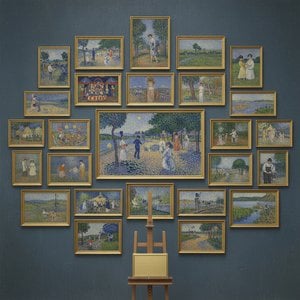
Na stránce Všechná umělecká díla si můžete prohlédnout 27 uměleckých děl děl autora George Ogilvy Reid.