George Koberwein: A Viennese Master of Portraiture
George Koberwein (1820–1876) stands as a prominent figure in 19th-century Austrian art, celebrated primarily for his meticulously crafted portraits of European royalty and nobility. Born in Vienna, Austria, Koberwein’s artistic journey began amidst the burgeoning Romantic movement, though he swiftly embraced Neoclassical principles, establishing himself as a steadfast champion of classical ideals within his era. His dedication to realism combined with an exceptional understanding of anatomy and drapery resulted in paintings that are not merely representations but immersive experiences of their subjects—capturing their character and conveying a profound sense of dignity.- Early Life & Training: Koberwein’s formative years were spent honing his skills under the tutelage of Johann Baptist Anton Hochberger, a respected Viennese painter who instilled in him a foundational appreciation for classical composition and technique.
- Vienna Academy Influence: He subsequently enrolled at the Vienna Academy of Fine Arts, where he studied alongside luminaries like Wilhelm Leibl and Josef Kruger, absorbing influences that would shape his artistic vision. Leibl’s emphasis on capturing psychological nuance undoubtedly impacted Koberwein's approach to portraiture.
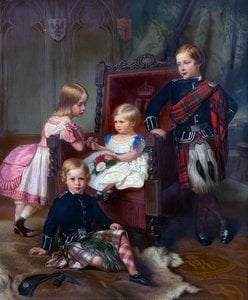
- Notable Commissions: Among his most celebrated works are portraits of Queen Victoria, Prince Leopold, Duke of Albany, and Victoria, Duchess of Kent—each rendered in exquisite Neoclassical style and imbued with an undeniable aura of regal composure.
- Technique & Style: Koberwein’s technique involved painstaking layering of glazes to achieve luminous surfaces and subtle tonal variations. He meticulously studied cadavers to accurately depict musculature, demonstrating a profound understanding of human anatomy—a skill that elevated his portraits beyond mere likenesses into embodiments of character.
Major Achievements & Recognition
Koberwein’s artistic reputation grew steadily throughout his career, earning him recognition from Viennese society and securing prestigious commissions. His meticulous attention to detail and profound understanding of human anatomy solidified his position as one of Austria's foremost portrait artists. Although he died prematurely at the age of 56, Koberwein left behind a substantial body of work that exemplifies the best traditions of Neoclassical painting—a testament to his enduring artistic vision.Otázky a odpovědi
Jak mohu sledovat tvorbu umělce George Koberwein rok po roce?
Díla umělce George Koberwein můžete prohlédnout v chronologickém pořadí na stránce Časová osa děl.
Mohu si díla umělce George Koberwein seřadit podle barvy?
Díla umělce George Koberwein si můžete prohlédnout podle barev na stránce Spektrální index tohoto umělce.
Jaké barvy používal/a George Koberwein nejčastěji?
Genom palety umělce George Koberwein je stránka, která představuje barevný profil celkového díla tohoto umělce.