BEZPLATNÉ UMĚLECKÉ PORADENSTVÍ

x

1604 - 1668

Stručné informace

  • Nationality: Belgium
  • Copyright status: Public domain
  • Died: 1668
  • Topics explored: portraits
  • Top 3 works:
    • Annunciation
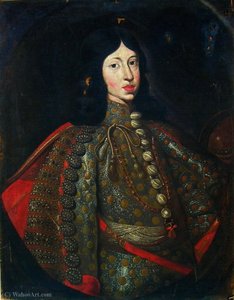
    • John george i
    • Ferdinand III
  • Lifespan: 64 years
  • Více…
  • Top-ranked work: Annunciation
  • Also known as:
    • Luuk
    • Luc
    • François Luys
    • Frans Luc
    • Frans Luijk
  • Born: 1604, Antwerp, Belgium
  • Works on APS: 11
  • Museums on APS:
    • Národní galerie Praha
    • Národní galerie Praha
    • Národní galerie Praha
    • Národní galerie Praha
    • Národní galerie Praha
  • Art period: Early Modern

Kvíz o umění

U každé otázky je pouze jedna správná odpověď.

Otázka 1:
Frans Luyckx was primarily known for his work during which artistic period?
Otázka 2:
Frans Luyckx's portrait commissions were largely associated with which European royal family?
Otázka 3:
What type of still life paintings were Frans Luyckx particularly celebrated for?
Otázka 4:
In which city did Frans Luyckx spend the majority of his career as a court painter?
Otázka 5:
Frans Luyckx's artistic style was heavily influenced by which prominent artist?

A Courtly Brush: The Life and Art of Frans Luyckx

Frans Luyckx, a name perhaps less immediately recognizable than his celebrated contemporary Peter Paul Rubens, nevertheless occupies a significant position within the tapestry of 17th-century Flemish painting. Born in Antwerp around 1604, into a family of merchants, Luyckx’s trajectory led him not to the bustling art market of his native city, but to the rarefied atmosphere of the Habsburg Imperial Court in Vienna. His story is one of ambition, skillful adaptation, and a mastery of portraiture that captured the power and prestige of an empire. Initially apprenticed to Remakel Sina and later joining Rubens’ workshop—a crucible for artistic talent—Luyckx absorbed the technical brilliance and dynamic compositions characteristic of the Baroque style. However, it was his journey beyond Flanders, specifically to Rome in 1635 and subsequently Vienna around 1638, that truly defined his career. These travels were instrumental in establishing crucial connections with influential figures within the Habsburg circles, paving the way for his appointment as court painter to Emperor Ferdinand III.

The Imperial Portraitist

Luyckx’s ascent to prominence at the Viennese court was swift and assured. He became a favored artist, entrusted with immortalizing the imperial family—Ferdinand III himself, his wife Maria Anna of Bavaria, their children, and various members of the extended Habsburg dynasty across Austria and Spain. His portraits weren't merely likenesses; they were carefully constructed statements of authority, lineage, and dynastic continuity. Luyckx possessed a remarkable ability to convey not just physical resemblance but also the character and status of his sitters. He skillfully employed rich fabrics, opulent settings, and refined poses to project an image of regal splendor. The portraits are characterized by a meticulous attention to detail—the gleam of jewels, the texture of velvet, the intricate lace collars—all contributing to a sense of tangible luxury and power. Beyond the Emperor’s immediate family, Luyckx's commissions extended to other prominent nobles and dignitaries, solidifying his reputation as the leading portraitist in Vienna. His work became synonymous with Habsburg courtly life, documenting its rituals, ambitions, and enduring legacy.

Influences and Artistic Development

While deeply indebted to Rubens’ influence—evident in his early works and dynamic compositions—Luyckx developed a distinctive style that moved beyond mere imitation. The Italian sojourn of 1635 likely exposed him to the portraiture traditions of Rome, influencing his approach to capturing psychological depth and refined elegance. However, it was the specific demands of the Habsburg court that shaped his artistic evolution. Unlike the more emotionally charged portraits favored in other centers, Luyckx’s work often prioritized a sense of dignified restraint and formal composure. He excelled at group portraiture, skillfully arranging figures within complex compositions while maintaining individual clarity and prominence. His palette, though rich, tended towards a cooler tonality compared to Rubens' vibrant hues, reflecting the more reserved aesthetic preferences of his imperial patrons. Interestingly, Luyckx’s connections extended beyond the Habsburgs; documented accounts reveal commissions from Polish royalty like Władysław IV Vasa, demonstrating a wider network and influence across European courts.

Beyond Portraits: A Broader Oeuvre

Although celebrated primarily as a portraitist, Frans Luyckx's artistic range wasn’t limited to capturing likenesses. He also ventured into other genres, including historical scenes and allegorical compositions, though these works are less frequently encountered today. His brother, Carstian Luyckx, was himself a notable painter specializing in still lifes—a testament to the artistic environment within the family. The influence of Frans Francken III is also apparent, as he served as a teacher for Carstian. While his historical paintings often echo the style of Rubens and other Flemish masters, they lack the same level of dynamism and emotional intensity found in his portraits. It’s in the realm of portraiture that Luyckx truly distinguished himself, honing a unique skill set tailored to the specific needs and expectations of his imperial clientele.

Historical Significance and Legacy

Frans Luyckx's historical significance lies not only in the artistic quality of his work but also in its role as a visual record of Habsburg courtly life during a pivotal period. His portraits offer invaluable insights into the fashion, customs, and political ambitions of the era. He wasn’t simply painting individuals; he was constructing an image of imperial power and dynastic legitimacy. While perhaps overshadowed by more flamboyant contemporaries like Rubens, Luyckx's meticulous technique, refined elegance, and unwavering commitment to capturing the dignity of his sitters secured his place as a leading portraitist of the Dutch Golden Age. His legacy endures through the numerous portraits that grace museum collections across Europe, offering a captivating glimpse into the world of Habsburg royalty and the artistry that immortalized it.