Biography
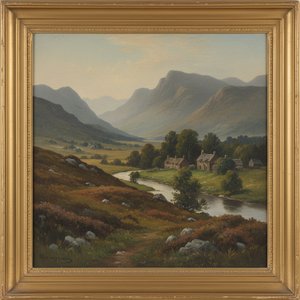
Fionna Carlisle was born in Wick, in the far North of Scotland and studied at Edinburgh College of Art from 1972 to 76. She has worked and exhibited in the UK, Europe and the USA. Her artistic journey began with a fascination for landscape painting, particularly inspired by the rugged beauty of Skye and Orkney—regions that would become recurring motifs in her oeuvre. Early influences included Turner’s atmospheric landscapes and Cézanne’s exploration of form and colour, shaping her distinctive approach to capturing light and texture. Carlisle's artistic vision developed further during her time in Greece, where she immersed herself in the vibrant hues of the Aegean Sea and cultivated a deep appreciation for Cretan culture. This experience profoundly impacted her style, resulting in paintings characterized by bold brushstrokes and luminous palettes—a stylistic hallmark that distinguishes her work from many contemporaries.- Early Training: Edinburgh College of Art (1972-76)
- Influences: Turner’s Landscape Painting; Cézanne’s Exploration of Form & Colour
- Significant Locations: Skye, Orkney, Crete
Style and Technique
Carlisle's artistic technique is marked by a meticulous attention to detail and an unwavering commitment to capturing the essence of her subjects. She employs a layering process—often applying thin glazes over thicker underpaintings—to build up depth and luminosity, achieving remarkable tonal variations that convey subtle nuances of mood and atmosphere. Her brushstrokes are deliberate and expressive, conveying movement and energy while simultaneously maintaining a sense of control and precision. Carlisle’s distinctive style is characterized by its bold exuberance and rhythmic intensity, reflecting her profound connection to the natural world—a connection that informs every aspect of her artistic practice. She favors acrylic paints for their versatility and ability to produce vibrant colors, blending them seamlessly with mediums like linseed oil to achieve a velvety surface finish.- Painting Medium: Acrylic Paint
- Technique: Layering Process; Glazing
- Brushstroke Style: Deliberate & Expressive
Notable Achievements
Fionna Carlisle’s artistic reputation grew steadily throughout the 1980s and 1990s, culminating in international recognition for her captivating portraits and landscapes. Her work has been featured prominently in solo exhibitions across Europe and North America, garnering critical acclaim for its emotional resonance and technical mastery. Carlisle's paintings have been showcased at prestigious galleries such as the Scottish National Gallery and Kilmorack Gallery, cementing her place among Scotland’s leading artists. Furthermore, she was awarded a fellowship by the Royal Society of Edinburgh in 1998—a testament to her scholarly pursuits and artistic excellence. Her dedication to capturing the human condition through art continues to inspire audiences worldwide.- Exhibitions: Scottish National Gallery; Kilmorack Gallery
- Fellowship: Royal Society of Edinburgh (1998)
Historical Significance
Carlisle’s artistic legacy extends beyond her individual achievements, influencing subsequent generations of painters and fostering a dialogue about the role of art in reflecting cultural values. Her work embodies the spirit of Colourism—a movement that championed expressive colour as a primary means of conveying emotion and capturing visual experience—challenging conventional notions of representation and advocating for a more subjective approach to artistic creation. Carlisle’s paintings stand as enduring symbols of Scottish landscape and portraiture, embodying both tradition and innovation—a testament to her unwavering commitment to artistic excellence and her profound engagement with the complexities of human existence. Her contribution to contemporary art is undeniable, securing her place in the annals of Scottish art history.- Movement: Colourism
- Legacy: Enduring Symbols of Scottish Landscape & Portraiture
Otázky a odpovědi
Kde najdu díla umělce Fionna Carlisle seskupená podle uměleckých směrů?
Stránka Všechna umělecká hnutí seskupuje díla umělce Fionna Carlisle podle jednotlivých uměleckých směrů.
Mohu navštívit virtuální muzeum děl umělce Fionna Carlisle?
Možná je i virtuální prohlídka: na stránce 3D galerie umělce Fionna Carlisle můžete obdivovat jeho díla v trojrozměrné galerii.
Kde si mohu prohlédnout díla umělce Fionna Carlisle uspořádaná podle atmosféry?
Stránka umělce Galerie nálad nabízí díla Fionna Carlisle uspořádaná podle jejich atmosféry.