the Robert and Penny Fox Historic Costume Collection at Drexel University
The Tailor of the Stars: Emilio Schuberth and the Birth of Italian Fashion
Emilio Federico Schuberth, a name synonymous with postwar elegance and the burgeoning world of Italian haute couture, wasn’t merely a designer; he was an architect of style. Born in Naples in 1904, his journey from a childhood steeped in artistic curiosity to becoming “the tailor of the stars” is a compelling narrative of vision, craftsmanship, and the rise of *Made in Italy*. While myths surrounding his birth in a Saxon castle persisted, the truth – a family with roots tracing back to both Spain and Germany – hints at an early exposure to diverse cultural influences that would later inform his aesthetic. His initial studies at the Academy of Fine Arts in Naples laid the groundwork for a keen eye for form and color, but it was his apprenticeship under Montorsi in Rome that truly ignited his passion for tailoring. He married Maria Jelasi in 1929, and together they established a small millinery shop on Via Frattina, catering to the Roman aristocracy with exquisitely crafted hats. This early success paved the way for the opening of his women’s fashion atelier on Via XX Settembre in 1940, marking the official birth of “Schuberth Emilio.”
From Aristocratic Commissions to Hollywood Glamour
The war years saw Schuberth refine his signature style – a delicate balance between architectural structure and voluptuous sensuality. His designs weren’t about ostentation; they were about *la bella figura*, embodying the Italian ideal of grace, leisure, and understated glamour. This aesthetic resonated deeply with Rome's burgeoning film industry during the “Hollywood on the Tiber” era. Schuberth quickly became the couturier of choice for international stars gracing the Cinecittà studios. The names that flocked to his atelier read like a roll call of golden age icons: Rita Hayworth, Ingrid Bergman, Bette Davis, Brigitte Bardot, Sophia Loren, Gina Lollobrigida, and Anna Magnani – each seeking a Schuberth creation to capture their on-screen allure and off-screen sophistication. He didn’t simply dress these women; he crafted an image, understanding that clothing was not just about fabric and cut but about projecting confidence and embodying a star persona. His atelier itself mirrored the Parisian fashion houses, fostering an atmosphere of luxury and exclusivity.
Pioneering Italian Fashion on the Global Stage
The late 1940s proved pivotal for Schuberth and, arguably, for the entire Italian fashion industry. He participated in landmark events like the “French Fashion? Italian Fashion” show at Casino de la Vallée in Saint-Vincent in December 1948, boldly presenting his designs alongside established French houses. However, it was Giovanni Battista Giorgini’s Florence high fashion event in February 1951 that truly catapulted Italian designers onto the international stage. Schuberth's presence there, along with other emerging talents, attracted American buyers and press, opening doors to markets previously dominated by Paris. This exposure led to his designs being sold at prestigious retailers like Bergdorf Goodman in New York, solidifying Italy’s position as a new fashion powerhouse. In 1953, he co-founded the S.I.A.M. – Italian High Fashion Syndicate – alongside other prominent designers, further organizing and promoting Italian couture on a global scale.
Legacy of Craftsmanship and Mentorship
Emilio Schuberth’s influence extended beyond his own creations. He was a dedicated mentor, nurturing the talents of future fashion icons like Valentino Garavani and Roberto Capucci. His commitment to “Made in Italy” craftsmanship – prioritizing quality materials, skilled artistry, and meticulous attention to detail – became a defining characteristic of Italian fashion. He understood that true luxury wasn’t just about expensive fabrics but about the hands that shaped them and the heritage they represented. He died unexpectedly from a heart attack in Rome on January 5th, 1972, at the age of 67, leaving behind a legacy that continues to inspire designers today. His garments are now held in the permanent collections of institutions like the Metropolitan Museum of Art, serving as testaments to his enduring vision and contribution to the world of fashion. His daughter Gretel’s donation of his sketches and archive papers to the University of Parma ensures that future generations can study and appreciate the artistry of “the tailor of the stars.”
Redakce WahooArt.com
Kvíz o umění
U každé otázky je pouze jedna správná odpověď.
Otázka 1:
Emilio Schuberth was famously known as what within the fashion industry?
Otázka 2:
Which era saw Emilio Schuberth rise to prominence as a fashion designer?
Otázka 3:
What was a key characteristic of Schuberth's designs, reflecting the Italian aesthetic of his time?
Otázka 4:
Which international event significantly boosted Schuberth's exposure to buyers?
Otázka 5:
Name one famous celebrity who wore designs created by Emilio Schuberth.
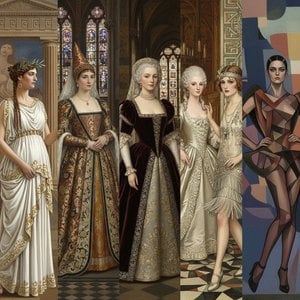
Explore the breathtaking intersection of fine art and high fashion. Discover how iconic masterpieces from Art Deco to Impressionism have shaped the world of luxury couture and timeless design in this curated visual journey.
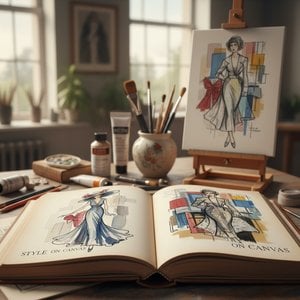
Discover the exquisite world of fashion illustration art. From Art Deco elegance to bespoke oil reproductions, explore how timeless sartorial beauty transforms luxury interiors through masterfully crafted canvas works and curated historical masterpieces.
Embark on a visual journey through the evolution of fashion photography. Discover how masters like Gianfranco Ferré blended geometry, surrealism, and texture to redefine high-fashion art for collectors and connoisseurs of luxury imagery.