Elmer Wachtel: A California Impressionist
Early Life and Education
- Born: January 21, 1864, in Baltimore, Maryland.
- In 1882, Wachtel moved to California with his brother, settling in San Gabriel.
- He initially worked as a ranch hand and furniture store clerk while saving funds for art education.
- Self-taught beginnings: While largely self-taught, he briefly studied at the Art Students' League in New York and later at the Lambeth School of Art in London.
- Wachtel also pursued a musical career, playing violin for the Philharmonic Orchestra of Los Angeles.
Artistic Development and Style
- California Landscapes: Wachtel dedicated his artistic focus to capturing the beauty of California’s landscapes, diverging from the European scenes favored by many contemporaries.
- Impressionist Influences: His style is characterized by Impressionistic techniques – vibrant colors, textured brushstrokes, and a focus on light and atmosphere.
- He frequently worked en plein air, painting outdoors directly from nature to capture the immediacy of his surroundings.
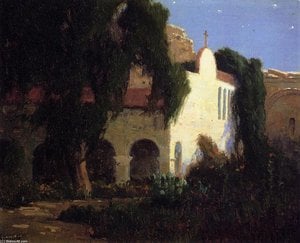
- Common subjects included missions, valleys, coastal scenes, and depictions of rural life in Southern California.
Marriage and Life in Arroyo Seco
- In 1904, Wachtel married sculptor Marion Kavanagh.
- The couple resided in the Arroyo Seco region of Los Angeles, a thriving artistic community at the time.
- Their home became a gathering place for artists and intellectuals.
Major Works and Achievements
- Notable Paintings: Some of his most recognized works include “Convict Lake,” “Capistrano Mission,” “Valley Afternoon,” and numerous depictions of the San Juan Capistrano mission.
- His paintings are celebrated for their ability to evoke a sense of place and capture the unique character of California’s natural beauty.
- Wachtel's work contributed significantly to establishing a distinct California Impressionist style.
Historical Significance and Controversies
- World War I Informant: During World War I, Wachtel served as an informant for the U.S. Department of Justice.
- He reported alleged pro-German sentiments and antiwar statements made by fellow artists and militant socialists – a controversial role that reveals a complex aspect of his life.
- Legacy: Elmer Wachtel’s paintings provide valuable insights into the early 20th-century California landscape and artistic community.
- He died suddenly on August 31, 1929, while on a painting trip in Guadalajara, Mexico.
Otázky a odpovědi
Kolik děl umělce Elmer Wachtel je možné si prohlédnout?
Na stránce Všechná umělecká díla si můžete prohlédnout 18 uměleckých děl děl autora Elmer Wachtel.
Odkud pochází Elmer Wachtel?
Elmer Wachtel se narodil(a) v United States of America.
Je k dispozici 3D virtuální prohlídka děl umělce Elmer Wachtel?
3D galerie umělce Elmer Wachtel je stránka, která v rámci virtuální trojrozměrné galerie prezentuje umělecká díla tohoto tvůrce.