A Voice Silenced by Darkness: The Tragic Brilliance of Elfriede Lohse-Wächtler
The history of German Modernism is often told through the triumphs of its giants, yet some of its most profound and hauntingly beautiful voices were those systematically silenced. Elfriede Lohse-Wächtler stands as a poignant figure in this narrative—a testament to artistic brilliance tragically extinguished by the horrors of Nazi persecution. Her work, which emerged from the vibrant, chaotic energy of the Weimar Republic, embodies both the psychological complexities of her era and the profound personal struggles that would eventually lead to her untimely demise. To look upon her portraits is to witness a soul grappling with the anxieties of a world on the brink of collapse, rendered with an unflinching honesty that was later deemed degenerate by the Third Reich.
Born in Dresden in 1899, Lohse-Wächtler’s early life was marked by an innate inclination toward the creative. Rejecting the restrictive societal expectations placed upon women of her generation, she pursued a rigorous formal education at the Royal Arts School Dresden between 1915 and 1918. Initially focused on fashion design, she soon transitioned to applied graphics, finding her true calling in the expressive potential of drawing and painting. Her formative years coincided with the rise of the Expressionist movement, and through courses at the Dresden Art Academy, she immersed herself in a burgeoning avant-garde scene. This period was crucial, as it brought her into the orbit of influential figures such as Otto Dix and Otto Griebel, fostering connections within the Dresden Secession group—a collective dedicated to challenging conventional norms and exploring the deeper, often darker, recesses of the human psyche.
The Underbelly of the Golden Twenties
Joining the Dresden Secession in 1919 marked a pivotal moment in Lohse-Wächtler’s artistic trajectory. Surrounded by fellow innovators like Conrad Felixmüller, she cultivated a collaborative spirit and experimented with diverse mediums, including lithography, woodcuts, and pastels. As she established herself as an independent artist, her subject matter began to reflect the gritty reality of urban life. While many artists of the era focused on the glamour of the Golden Twenties, Lohse-Wächtler’s gaze drifted toward the fringes of society. Her wanderings through pubs, tenement yards, and brothels provided the raw material for a body of work that acted as a devastating chronicle of social descent.
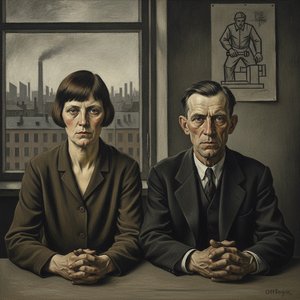
Her style evolved into a masterful blend of Expressionism and New Objectivity. She possessed a unique ability to imbue her portraits with an empathetic yet brutally honest quality, capturing the weariness and resilience of those living on the margins. Whether depicting harbor scenes or the faces of the impoverished, her technique utilized sharp lines and emotive color palettes to convey a sense of profound psychological depth. In 1929, when she exhibited her work in Hamburg, critics met her portraits with euphoric praise, positioning her as a peer to legends like Oskar Kokoschka and Egon Schiele. Yet, beneath the critical acclaim, the shadows of her own life were lengthening.
A Legacy Forged in Adversity
The trajectory of Lohse-Wächtler’s life was tragically shaped by financial hardship and mental health struggles. The very themes she explored in her art—poverty, isolation, and social instability—became the lived reality of her later years. As she faced increasing personal crisis, her work became even more introspective, featuring powerful self-portraits that served as a harrowing record of her emotional decline. This period of suffering eventually led to her admission to psychiatric institutions, where, despite her deteriorating condition, she continued to find strength in her art, creating poignant works inspired by her fellow patients.
The ultimate tragedy arrived with the rise of National Socialism. Because her work was deemed entartete Kunst (degenerate art), Lohse-Wächtler was stripped of her rights and faced systemic persecution. Her life ended in 1940, a victim of the Aktion T4 program—the horrific Nazi euthanasia campaign—at the Sonnenstein castle in Pirna. Though her name was nearly lost to history, the modern era has seen a vital movement toward her rehabilitation. Today, her legacy persists through:
- Historical Commemoration: Ongoing efforts at the Sonnenstein Memorial Center to honor those lost to the T4 program.
- Artistic Rediscovery: The inclusion of her works in major collections like LACMA and the recognition of her role in the New Objectivity movement.
- Cultural Impact: A renewed appreciation for her ability to give a voice to the marginalized, ensuring that her "silenced" art continues to speak to the complexities of the human condition.