Eelke Jelles Eelkema: Life and Art
Early Life and Education
Eelke Jelles Eelkema was born on July 8, 1788, in Leeuwarden, Netherlands, the son of a merchant. A pivotal moment in his young life occurred at age seven when he contracted an illness that resulted in profound deafness. This disability significantly shaped his educational path, leading him to the first Dutch institution for the deaf and dumb in Groningen (1799). There, he received specialized instruction alongside traditional education. He demonstrated early artistic talent, receiving guidance from Gerardus de San, the academy’s first director, who recognized and nurtured Eelkema's potential in drawing. In 1804, his dedication earned him the academy’s first prize.
Artistic Development and Influences
Eelkema’s artistic journey was marked by a commitment to observation and detail. Gerardus de San's influence provided a foundational understanding of drawing techniques, but Eelkema also developed his style through independent study and travel. After returning briefly to Leeuwarden in 1808, he received a stipend in 1814 that allowed him to spend two years in Paris – a crucial period for exposure to contemporary artistic trends. Following Paris, he embarked on extensive travels throughout France, Switzerland, and Italy, meticulously sketching landscapes and studying the natural world. These experiences profoundly influenced his later work, fostering a keen eye for color, light, and composition.
Themes and Style
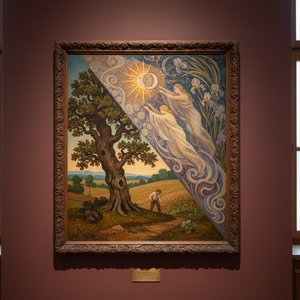
Eelkema primarily focused on three main subjects: landscapes, flowers, and fruit still lifes. His paintings are characterized by their meticulous detail, realistic depiction of textures, and subtle use of light and shadow. While his landscapes demonstrate a Romantic sensibility, his still lifes showcase a Dutch mastery of rendering natural forms with remarkable precision. He wasn’t known for grand historical narratives or dramatic compositions; instead, he found beauty in the everyday, elevating humble subjects to artistic significance.
Major Achievements and Recognition
In 1820, Eelkema held an exhibition of his work in Amsterdam, receiving positive attention from critics and art enthusiasts. He subsequently took on a teaching position at the Atheneum in Franeker, communicating with students through written notes on a slate due to his deafness. Later, he briefly worked in a flower shop in Haarlem, further honing his understanding of botanical forms. In 1830, he translated a theoretical work on miniature painting by André Léon Larue Mansion from French, demonstrating his intellectual curiosity and engagement with artistic theory.
Later Life and Legacy
Tragically, Eelkema’s career was cut short as he gradually lost his sight. He continued to paint for as long as possible, but ultimately succumbed to illness and died in Leeuwarden on November 27, 1839. While not a widely celebrated artist during his lifetime, Eelke Jelles Eelkema’s work represents a significant contribution to 19th-century Dutch painting. His detailed still lifes and landscapes offer a glimpse into the artistic sensibilities of the period and demonstrate the resilience and talent of an artist who overcame considerable personal challenges to pursue his passion. He remains a notable figure for art historians interested in the intersection of disability, artistry, and cultural context.
Historical Significance
Eelkema’s story is particularly compelling as he navigated the art world with a significant disability. His success demonstrates that artistic talent can flourish despite adversity. His work provides valuable insight into 19th-century Dutch life and aesthetics, offering a nuanced perspective on the beauty found in nature and everyday objects. He stands as an example of dedication and perseverance within the arts.