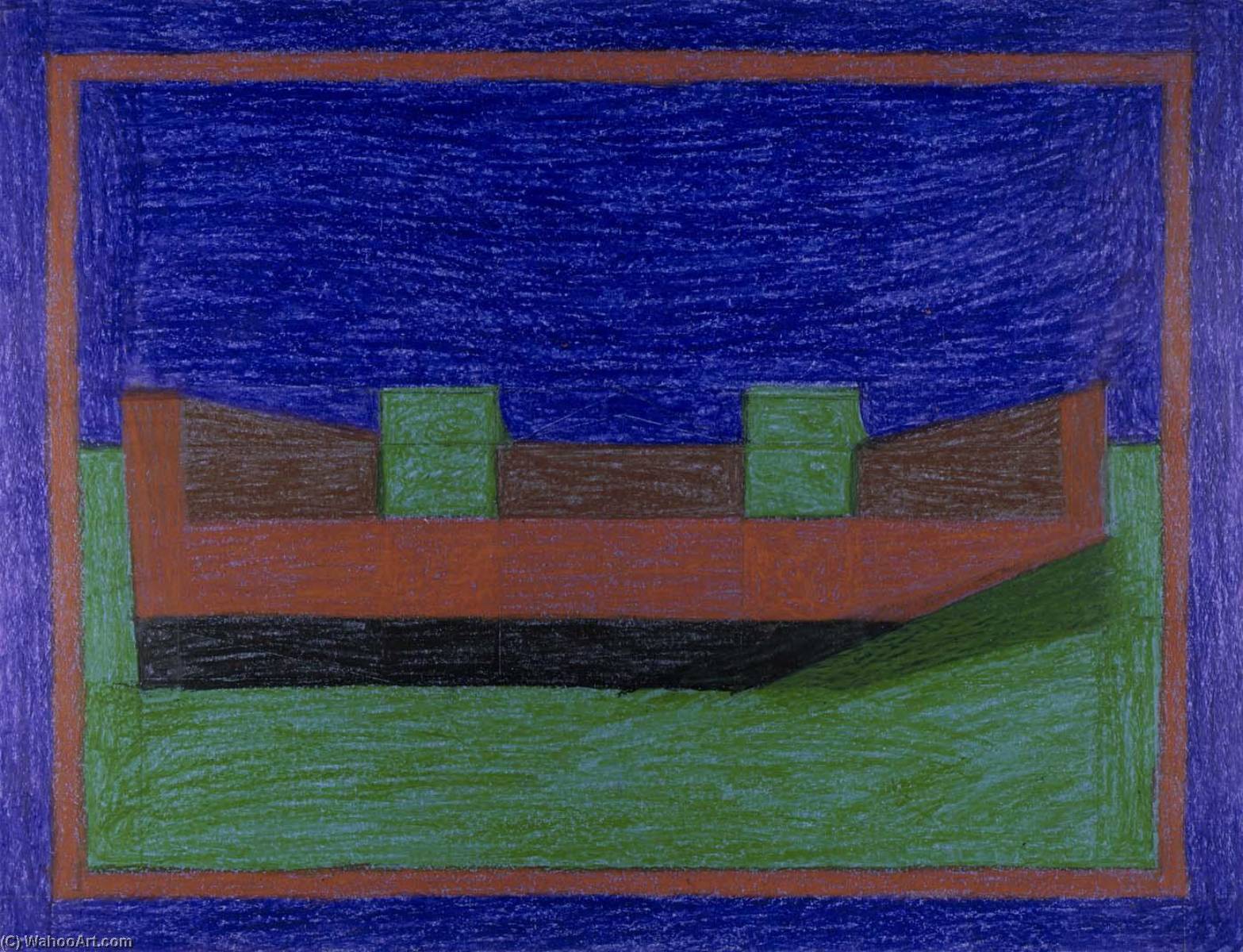
Eddie Arning, 1898 – 1993

Eddie Arning: 21 nejznámějších obrazů

Six Figures with Pigeons and Buildings (1970) je nejslavnější obrazem autora Eddie Arning. Two Soldiers (1968) a Blue Churn on Yellow (1964) jsou dalšími dvěma díly, která svět zná nejlépe. Z 21 děl umělce Eddie Arning v našem katalogu uvádíme 21 těch, na které se kolektéři a návštěvníci muzeí nejčastěji dívají, včetně roku vzniku, názvu muzea a příběhu každého díla.

Seřazeno podle našeho skóre popularity, které kombinuje počet vyhledávání, návštěv a objednávek u každého díla. Aktualizováno listopad 2026.

Portrét Eddie Arning
Eddie Arning · 1898 – 1993
Narození · úmrtí
1898 – 1993
Díla v našem katalogu
21
Nejslavnější
Six Figures with Pigeons and Buildings (1970)

Top 10: nejznámější obrazy autora Eddie Arning

Two Soldiers (1968) od Eddie Arning
2

Two Soldiers

1968

The painting "Two Soldiers" is a remarkable work of art created by Eddie Arning in 1968. This crayon on paper piece measures 48 x 64 cm and is currently housed at the Smithsonian American Art Museum in the United States. As a professional expert in Art and salesman for https://AllPaintingsStore.com, I can appreciate the unique style and technique employed by Eddie Arning in this piece. Artist Background Eddie Arning was…

Zbytek žebříčku Eddie Arning, od 11 do 21

Jesus Craze (1972) od Eddie Arning
#21

Jesus Craze

1972

The painting "Jesus Craze" by Eddie Arning is a thought-provoking artwork that showcases the artist's unique style and technique. Created in 1972, this oil on paper piece measures…

Témata, která Eddie Arning maloval nejčastěji

Čtyři témata, která se v těchto dílech objevují nejčastěji, spolu s nejlepším příkladem každého z nich.

Eddie Arning v průběhu let: díla roku

Pět desetiletí, od 1964 do 1973, zahrnuje všechny datované díla umělce Eddie Arning: zde jsou, rok po roce.

  1. 1964
  2. 1964
  3. 1964
  4. 1966
  5. 1967
  6. 1968
    Two Soldiers (1968) od Eddie Arning
    2 z 21

    Two Soldiers

    Věk 70 let

    The painting "Two Soldiers" is a remarkable work of art created by Eddie Arning in 1968. This crayon on paper piece measures 48 x 64 cm and is…

  7. 1968
  8. 1969
  9. 1969
  10. 1969
    Birds (1969) od Eddie Arning
    Pořadí 11 / 21

    Birds

    Věk 71 let
  11. 1969
  12. 1970
  13. 1970
  14. 1970
  15. 1970
  16. 1970
  17. 1971
  18. 1972
  19. 1972
  20. 1972
    Jesus Craze (1972) od Eddie Arning
    21 z 21

    Jesus Craze

    Věk 74 let

    The painting "Jesus Craze" by Eddie Arning is a thought-provoking artwork that showcases the artist's unique style and technique. Created in 1972, this oil on paper piece measures…

  21. 1973

Obrazy umělce Eddie Arning: nejčastější dotazy

Který obraz má nejznámější Eddie Arning?Zobrazit odpověď

Six Figures with Pigeons and Buildings (1970). Následují Two Soldiers (1968) a Blue Churn on Yellow (1964).

V jakém věku namaloval(a) Eddie Arning dílo Six Figures with Pigeons and Buildings?Zobrazit odpověď

72 let: dílo Six Figures with Pigeons and Buildings pochází z roku 1970 a Eddie Arning se narodil/a v roce 1898.

Kterých 10 nejslavnějších obrazů má Eddie Arning?Zobrazit odpověď

Six Figures with Pigeons and Buildings, Two Soldiers, Blue Churn on Yellow, The Forest, Windmill, Red Boat on Blue, Colonel Sanders, Three Men in a Circle, Two Houses a Airplane. Výše uvedené pořadí uvádí rok a muzeum každého díla.

Kolik obrazů má Eddie Arning?Zobrazit odpověď

Náš katalog obsahuje 21 děl autora Eddie Arning z let 1964 až 1973.

V jakém období vytvořil/a Eddie Arning svá nejznámější díla?Zobrazit odpověď

V období 1970: 5 z 21 děl na této stránce pochází z tohoto období, z nich Six Figures with Pigeons and Buildings.

Který je nejstarší a který nejnovější slavný obraz autora Eddie Arning?Zobrazit odpověď

Nejstarší dílo na této stránce pochází z Blue Churn on Yellow (1964), nejnovější z Mother Feeding Children (1973).

Eddie Arning: biografie

A Vision in Crayon: The Singular World of Eddie Arning

Eddie Arning (1898-1993) was an American outsider artist whose work, largely created during the latter half of his life, offers a profoundly unique and compelling vision of faith, Americana, and everyday existence. Born in Texas, Arning lived a relatively quiet life as a farmer and handyman before embarking on a prolific artistic journey that would only gain recognition after his death. He wasn’t formally trained; his medium was almost exclusively crayon, and his subjects sprang from the depths of his personal beliefs and observations. To call him “self-taught” feels inadequate – Arning didn't seek instruction, he simply *needed* to create, driven by an inner compulsion that manifested in a vibrant, often startlingly direct style. His art isn’t about technical mastery; it’s about raw expression, unwavering conviction, and the unfiltered translation of his internal world onto paper.

From Farm Life to Artistic Revelation

Arning's early life provided little indication of the artistic fervor that would later consume him. He worked the land, a practical existence far removed from galleries or art schools. The turning point appears to have come in his 60s, when he began producing an astonishing number of crayon drawings and paintings. These weren’t sketches or preliminary studies; they were fully realized works, often large in scale, depicting scenes ranging from biblical narratives – particularly those surrounding Jesus Christ – to depictions of contemporary American life, rural landscapes, and even abstract patterns. The sheer volume of his output is remarkable, suggesting a relentless creative energy that demanded release. He wasn’t creating for an audience; he was creating because he *had* to. This inherent need is crucial to understanding the power and authenticity of his work. His home became filled with these images, transforming his living space into a personal chapel and gallery simultaneously.

Themes and Symbolism: A Personal Mythology

The core of Arning’s artistic vision revolves around religious themes, specifically his interpretation of Christianity. However, his depictions of Jesus are far from conventional. They are often intensely emotional, sometimes unsettling, and imbued with a distinctly personal symbolism. Figures radiate light, appear in multiple forms within the same composition, or are surrounded by swirling patterns that suggest divine energy. Beyond religious iconography, Arning’s work is populated with scenes of everyday life – families, farm animals, cars, houses – rendered with a naive simplicity that belies their emotional depth. He frequently incorporated text into his works, often repeating phrases or biblical verses, further emphasizing the spiritual and moral weight he attached to his subjects. Vintage Americana is also a key element; images of mid-century automobiles, clothing styles, and domestic interiors ground his visions in a specific time and place, creating a fascinating juxtaposition between the sacred and the mundane. The repetition of certain motifs – stars, crosses, swirling lines – suggests a personal mythology that unfolds across the breadth of his oeuvre.

Technique and Style: The Power of Crayon

Arning’s choice of crayon as his primary medium is perhaps one of the most striking aspects of his work. It's an unconventional material for serious art, often associated with childhood or amateur expression. Yet, Arning wielded it with remarkable skill and intensity. He layered colors to create depth and texture, used bold outlines to define forms, and exploited the inherent vibrancy of the crayon itself. His style is characterized by a naive simplicity, a lack of traditional perspective or anatomical accuracy that contributes to the raw emotional power of his images. The slightly waxy texture of the crayon adds another layer of tactility to his work, inviting viewers to engage with it on a visceral level. He often worked on large sheets of paper or cardboard, creating expansive compositions that envelop the viewer in his world. This deliberate choice of scale and medium reinforces the sense of immediacy and authenticity that defines his art.

Legacy and Historical Significance: The Outsider’s Voice

Eddie Arning remained largely unknown during his lifetime. His work was discovered after his death by a collector who recognized its extraordinary power and originality. Since then, it has gained increasing attention from the art world, earning him recognition as a significant figure in outsider art and American folk art. Arning’s work challenges conventional notions of artistic training and skill, demonstrating that profound creativity can emerge from unexpected sources. His unwavering faith, his unique vision, and his raw emotional expression resonate deeply with viewers, offering a glimpse into the inner world of an artist who remained true to himself despite – or perhaps because of – his isolation. He stands as a testament to the power of art as a means of personal revelation and spiritual exploration, a voice from the margins that continues to captivate and inspire.
  • His work is now held in numerous private collections and museums.
  • Arning’s “Jesus craze” artwork has become particularly sought after by collectors.
  • He represents a significant example of self-taught American art from the 20th century.