A Tahitian Roots: The Emergence of Dize
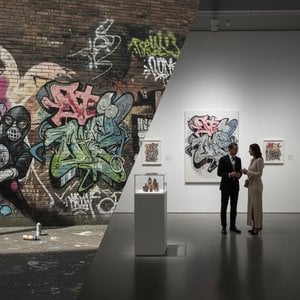
Born in the vibrant island paradise of Tahiti in 1977, Dize – also known as dizer or dize156 – embarked on a creative journey that would see him rise from the streets to international acclaim. His story isn’t simply one of artistic talent; it's a testament to dedication, a relentless pursuit of purity within an evolving art form, and a deep connection to the foundational spirit of graffiti culture. From his early explorations in 1990, Dize wasn’t merely adopting a style but actively seeking to *reclaim* the essence of graffiti, drawing inspiration from its origins in the New York City subway systems of the late 20th century.
This commitment to authenticity set him apart. While many artists experiment with diverse influences, Dize focused on honing his letterforms, pushing the boundaries of calligraphic expression within the context of urban landscapes. He wasn’t content to simply paint; he aimed to elevate graffiti beyond mere vandalism into a recognized and respected art form. This dedication led to over two decades of consistent work, refining his technique and solidifying his unique visual language.
The Pursuit of Pure Form & Collaborative Spirit
Dize's artistic philosophy centers around the idea of returning graffiti to its “purest form.” This isn’t a rejection of innovation but rather a reverence for the foundational elements – dynamic lettering, bold color palettes, and an energetic, often chaotic composition. He saw in the early New York artists a raw power and immediacy that he sought to emulate and build upon. Simultaneously, Dize understood the importance of community and collaboration.
He founded VMD, a collective dedicated to pushing creative boundaries, and became a member of the globally recognized 156 group – notably alongside the celebrated JonOne. These affiliations weren’t merely symbolic; they fostered an environment of shared knowledge, mutual inspiration, and artistic growth. Being part of 156 allowed Dize to engage with some of the most influential figures in the graffiti world, further refining his skills and expanding his network.
Recognition & The “Warm Style Dizaster” Monograph
The year 2004 marked a pivotal moment in Dize’s career with the publication of ‘Warm Style Dizaster,’ a monograph dedicated entirely to his work. This wasn't just a collection of images; it was a statement – an acknowledgement of his unique contribution to contemporary art. The title itself hints at the controlled chaos and dynamic energy that defines his style, a deliberate embrace of imperfection within a meticulously crafted framework.
The monograph served as a catalyst for international recognition. Dize’s distinctive aesthetic—characterized by complex letterforms, vibrant color combinations, and a masterful command of various techniques—began to attract attention from galleries, collectors, and prestigious brands alike. This newfound visibility allowed him to transcend the limitations of street art and engage with a wider audience.
International Exhibitions & Enduring Legacy
Today, Dize continues to create works that resonate with both seasoned art enthusiasts and newcomers to the world of graffiti. His pieces can be found in numerous exhibitions and galleries around the globe, solidifying his position as a leading figure in contemporary urban art.
His collaborations with renowned brands demonstrate not only his artistic versatility but also his ability to bridge the gap between street culture and mainstream aesthetics. Dize’s influence extends beyond his own creations; he inspires a new generation of artists to embrace the foundational principles of graffiti while simultaneously pushing its boundaries. He is a living embodiment of the art form's evolution, proving that it can be both deeply rooted in history and relentlessly forward-looking.
Dize’s story serves as a powerful reminder that true artistic innovation often lies not in abandoning tradition but in understanding it, respecting it, and building upon its legacy. His work is a testament to the enduring power of letterforms, the energy of urban landscapes, and the importance of community within the creative process.