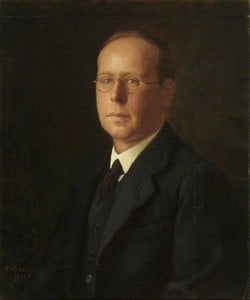
Delmar Harmood Banner: A Lake District Visionary
Delmar Harmood Banner (1896-1983) wasn’t a name widely recognized during his lifetime, yet his evocative paintings of the British Lake District and Cumbria have steadily gained appreciation for their atmospheric beauty and subtle mastery. Born in Freiburg im Breisgau, Germany, to British parents, Banner's early life was marked by a brief immersion in German culture before relocating to England at the age of seven. This dual heritage profoundly shaped his artistic sensibility – a grounding in European tradition blended with an intimate understanding of the rugged landscapes he would come to call home. His journey towards becoming a renowned artist began with formal training at Cheltenham College and later at Regent Street Polytechnic School of Art, where he honed his skills in watercolour and oil painting, ultimately finding his true voice amidst the dramatic scenery of the Lake District.Early Life and Influences
Banner’s formative years were a tapestry woven with diverse influences. His German ancestry instilled a deep appreciation for light and shadow, while his English upbringing provided a connection to British artistic traditions. Crucially, his time at Regent Street Polytechnic introduced him to Josefina de Vasconcellos, a fellow artist and sculptor who became his wife and lifelong companion. Their shared passion for art and nature fueled their creative partnership, and their home in Little Langdale, nestled within the breathtaking Cumbrian fells, served as both a sanctuary and an endless source of inspiration. The close friendship he cultivated with Beatrix Potter further enriched his artistic life; her encouragement and patronage undoubtedly contributed to his growing confidence and recognition. Potter’s appreciation for detail and connection to nature resonated deeply with Banner's own artistic sensibilities, evident in the meticulous observation and serene beauty captured in his paintings.A Landscape of Emotion: Style and Technique
Banner’s distinctive style is characterized by a remarkable ability to capture the essence of the Lake District – its dramatic light, shifting mists, and imposing mountains. He eschewed overtly romanticized depictions, instead favoring a more nuanced approach that emphasized atmosphere and mood. His brushwork is often loose and impressionistic, creating a sense of movement and depth within his landscapes. He skillfully employed color to evoke specific emotions, utilizing subtle shifts in tone to convey the changing light conditions and the ever-present drama of the weather. While rooted in realism, Banner’s paintings possess an intangible quality – a feeling of quiet contemplation and connection with the natural world. His use of oil paints allowed him to build up layers of color and texture, creating a rich and luminous surface that draws the viewer into the scene. The influence of Turner is subtly present, particularly in his masterful rendering of light and atmosphere, but Banner developed a uniquely personal vision within this established tradition.Notable Works and Recognition
Among Banner’s most celebrated works are “Dow Crag & Old Man” (1946) and numerous depictions of the surrounding fells, including Catbells and Skiddaw. These paintings exemplify his ability to capture the grandeur and serenity of the Lake District with remarkable precision and emotional depth. His portrait of Beatrix Potter, a tender and intimate depiction of the literary icon, is held in the National Portrait Gallery collection – a testament to his skill as a portrait artist. Furthermore, Banner’s participation in the 1948 London Olympics, where he represented Great Britain in the painting event, showcased his artistic talent on an international stage. His work was exhibited at numerous galleries throughout the UK, including Abbot Hall, Ferens Art Gallery, and Leicester Museum and Art Gallery, solidifying his place as a significant figure in British landscape art.Legacy and Enduring Appeal
Delmar Harmood Banner’s legacy extends beyond his individual paintings; he represents a vital link between the artistic traditions of Europe and the burgeoning landscape movement in Britain. His evocative depictions of the Lake District continue to resonate with viewers today, offering a glimpse into a timeless world of beauty and tranquility. His ability to capture not just the visual appearance of the landscape but also its emotional essence ensures that his work remains profoundly moving and relevant. He is remembered as a quiet yet dedicated artist who found his true calling in translating the majesty of the British countryside onto canvas, leaving behind a body of work that speaks volumes about the power of observation, sensitivity, and artistic vision.Otázky a odpovědi
Kde mohu vidět díla umělce Delmar Harmood Banner v chronologickém pořadí?
Stránka Chronologie děl představuje díla umělce Delmar Harmood Banner seřazená chronologicky, rok po roce.
Kolik děl umělce Delmar Harmood Banner je možné si prohlédnout?
Na stránce Všechná umělecká díla si můžete prohlédnout 39 uměleckých děl děl autora Delmar Harmood Banner.
V jakém historickém období působil/a Delmar Harmood Banner?
Delmar Harmood Banner působil v období Modern. Toto období historicky vymezuje uměleckou činnost tohoto autora.