
1
Le soir après l'orage, environs de Montpellier
Ručně malovaná olejná reprodukce od $181 39 × 26 cm
Velikost jako originál $613 152 × 101 cm Objednat v originální velikosti →

Nejslavnějším dílem umělce Charles Node je obraz Le soir après l'orage, environs de Montpellier (1874) v muzeu Musée Fabre v Montpellier. Náš katalog obsahuje 1 děl umělce Charles Node; níže je 1 děl, na která se svět dívá nejčastěji, každé s uvedeným rokem vzniku, muzeem, které jej uchovává, a důvodem jeho významu.
Seřazeno podle našeho skóre popularity, které kombinuje počet vyhledávání, návštěv a objednávek u každého díla. Aktualizováno říjen 2026. Každé dílo na této stránce lze objednat jako ručně malovanou olejovou reprodukci v muzeální kvalitě nebo jako umělecký tisk v požadovaném rozměru.

Muzeum, které má v této kolekci nejvíce obrazů.
| Muzea | Město | Díla autora Charles Node | Obrazy z tohoto seznamu |
|---|---|---|---|
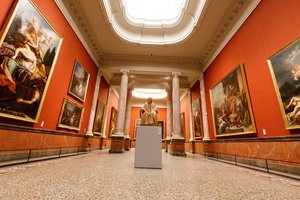 Musée Fabre |
Montpellier | 1 | Le soir après l'orage, environs de Montpellier |
Všechna díla umělce Charles Node s uvedeným datem na této stránce pocházejí z roku 1874: zde jsou jejich nejznámější.
Le soir après l'orage, environs de Montpellier (1874)
63 let: dílo Le soir après l'orage, environs de Montpellier pochází z roku 1874 a Charles Node se narodil/a v roce 1811.
Náš katalog obsahuje 1 děl autora Charles Node.
Většina z nich se nachází v Musée Fabre (Montpellier). V tabulce výše jsou jednotlivé muzea uvedeny postupně.
Ano. Každý obraz na této stránce lze objednat jako ručně malovanou olejovou reprodukci v muzeální kvalitě nebo jako umělecký tisk v požadovaném rozměru přímo z jeho vlastní stránky.
Born in 1811 in Montpellier, France, Charles Node spent his life deeply connected to the landscape of his home. He was a painter who found his purpose in the quiet details of nature, focusing his efforts on the depiction of flowers and landscapes. His life was rooted in the southern French region, where he remained active throughout his career until his death in 1886. Even in his later years, the surroundings of Montpellier continued to be a central part of his existence.
Artistry was a family matter for the Node household. Charles Node was the father of two men who followed in his footsteps: Charles Node-Saint-Ange and Victor Node. This lineage suggests a home filled with the practicalities of painting and the shared language of visual observation. The family name became synonymous with the study of still life and the natural world, passing from father to son in the heart of Montpellier.
Charles Node found his calling in the quiet details of the natural world. As a painter of flowers and landscapes, he focused his attention on the delicate textures of petals and the shifting light of the countryside. His work often took the form of oil on panel, a choice that allowed for a certain density and presence in his compositions. Whether he was capturing a single bouquet or a wide view of the Hérault or Dauphiné regions, his hand remained steady and observant.
There is a clear lineage in his approach to botanical subjects. His flower watercolours, in particular, show the influence of Pierre-Joseph Redouté. This connection is visible in the way he handled the anatomy of plants, seeking to render them with a precision that honored their natural form. He did not merely paint a subject; he studied how light settled on a rose or how a morning glory might drape over a marble ledge. This careful observation helped him secure a place in the Salon, where he began exhibiting his work in 1845.
His landscapes often reflected the atmosphere of the environs of Montpellier. He had a way of capturing specific moments in time, such as the heavy, quiet air that follows a storm. These scenes were not just static images but attempts to record the specific mood of a place, moving between the intimate scale of a terracotta vase and the expansive feeling of a landscape after a summer rain.
Node’s presence in the formal art circles of his time was marked by his participation in the Salon. In 1875, he exhibited a piece under the number 1548, a moment that placed his work among the recognized painters of the era. His landscapes often returned to the familiar scenery of his home, such as in his work titled Le soir après l'orage, environs de Montpellier, or the variation Le soir après l'orage dans les environs de Montpellier.
His ability to capture the quiet details of nature is seen in his 1852 oil on panel, Roses, tulips, morning glory, delphinium and primrose in a terracotta vase on a marble ledge. This piece shows a careful hand in arranging the flowers within their setting. Much of his output remained connected to the landscapes and floral subjects that defined his career in Montpellier.