Charles Brooking: A Pioneer of Naval Romanticism
Charles Brooking (1723 – 1759) stands as a pivotal figure in the burgeoning field of marine painting during the mid-18th century, marking a significant transition from academic tradition to the expressive dynamism that would characterize Romantic art. Born in England, his artistic journey unfolded against the backdrop of Britain’s imperial ambitions and naval prowess, shaping him into one of the foremost practitioners of depicting maritime life with unprecedented realism and emotional intensity.
Early Life and Apprenticeship
Little is known definitively about Brooking's formative years beyond documented evidence suggesting he was born in London. His father, Charles Brooking Sr., a skilled painter and decorator employed by Greenwich Hospital, instilled in him an early appreciation for visual arts and craftsmanship. Crucially, Brooking’s apprenticeship with his father at Greenwich Hospital provided invaluable experience—a cornerstone of his artistic education—and exposed him to the meticulous observation demanded by topographical painting. This formative period cemented his dedication to capturing accurate representations of ships and their surroundings. The careful study of architectural details and perspective techniques honed during this time would become fundamental to Brooking’s later masterpieces.
The Foundling Hospital Commission and Artistic Breakthrough
Brooking's career gained considerable momentum in 1754 when he was commissioned by the Foundling Hospital in London to create “A Flagship Before the Wind Under Easy Sail.” This monumental undertaking, undertaken at the behest of Treasurer Taylor White, catapulted him into public recognition and established his reputation as a master of maritime art. The commission necessitated collaboration with Peter Monamy, whose painting "Fleet in the Downs" served as inspiration—a testament to Brooking’s engagement with contemporary artistic trends. Furthermore, Dominic Serres, a fellow artist who briefly mentored Brooking, acknowledged Brooking's influence on his own style, highlighting the transmission of artistic techniques and sensibilities across generations. This partnership fostered experimentation and broadened Brooking’s artistic horizons.
Technique and Style: Realism Elevated
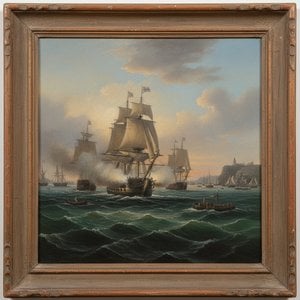
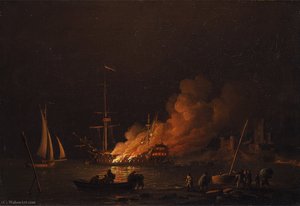
Brooking’s distinctive artistic approach distinguished him from many of his contemporaries. He championed meticulous observation—a hallmark of topographical painting—translating it into breathtakingly detailed depictions of naval vessels and their crews. Unlike some artists who prioritized idealized beauty, Brooking relentlessly pursued realism, meticulously rendering textures, lighting effects, and the turbulent conditions of sea voyages. His canvases pulsate with palpable energy, conveying not merely visual accuracy but also a profound emotional response to the grandeur and drama of maritime experience. The artist’s masterful use of oil paint—particularly his ability to capture shimmering reflections on water surfaces—became synonymous with the Romantic aesthetic. He achieved this remarkable feat through painstaking layering of glazes and impasto, creating surfaces that seemed to vibrate with movement and luminosity.
Legacy and Historical Significance
Despite his untimely death in 1759 at the age of 36 from consumption, Charles Brooking left an indelible mark on British art history. His “Flagship Before the Wind Under Easy Sail” remains a celebrated masterpiece, embodying the spirit of Romanticism’s fascination with nature and heroic endeavor. More broadly, Brooking's pioneering realism paved the way for subsequent generations of marine artists—establishing him as a foundational figure in shaping the visual language of naval art and contributing significantly to Britain’s artistic heritage. His work continues to inspire admiration for its technical brilliance and emotive power, securing his place among the most influential painters of his era. He is remembered not only for his stunning depictions of ships but also for elevating realism to new heights—a legacy that resonates powerfully within the annals of British art.