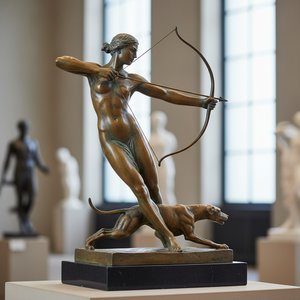
Bartolommeo Bellano (1437-1496): Padua’s Sculptor of Myth and Divine Craftsmanship
Bartolommeo Bellano (c. 1437 – 1496), born in Padua, Italy, stands as a pivotal figure within the Paduan Renaissance sculpture school—a lineage profoundly shaped by the artistic legacy of Donatello. While biographical details remain somewhat sparse, his contribution to Venetian art and sculptural innovation is undeniable. Bellano’s formative years were spent immersed in the vibrant intellectual atmosphere fostered by Donatello's presence in Padua, marking him as a student deeply attuned to humanist ideals and classical influences.
Early Career and Patronage
Bellano quickly established himself as a skilled sculptor, securing commissions from prominent patrons—primarily Antonio Mainardi—demonstrating an early aptitude for capturing expressive dynamism within terracotta reliefs depicting boys. Notably, one of these sculptures, housed in Lyon’s Musée des Beaux-Arts, exemplifies Bellano's distinctive style: powerfully modelled figures imbued with palpable emotion and anatomical precision – a stylistic hallmark that foreshadowed his later explorations of bronze sculpture. The patronage of Mainardi provided invaluable experience and cemented Bellano’s reputation as a craftsman capable of translating humanist concepts into tangible artistic form.
Influence of Donatello and Venetian Mannerism
Bellano's connection to Donatello extended beyond mere apprenticeship; it represented a crucial conduit for disseminating Donatello’s sculptural techniques and aesthetic sensibilities throughout Venice. Following Donatello’s return from Padua in 1456, Bellano collaborated on the monumental bronze statue of Judith Slaying Holofernes commissioned by Florence’s Palazzo Vecchio—a project that further honed his mastery of bronze casting and solidified his engagement with Venetian artistic currents. This collaboration exposed Bellano to the burgeoning influence of Venetian Mannerism, characterized by heightened expressive intensity and a deliberate departure from strict classical proportions. He absorbed these stylistic innovations, adapting them to his own distinctive vision while retaining core humanist principles.
Notable Works: Mythological Reliefs and Venetian Commissions
Bellano’s artistic output encompassed both monumental sculptures and smaller commissions—primarily for ecclesiastical settings in Venice. His reliefs adorning the facade of S. Zaccaria exemplify this versatility, showcasing a refined understanding of classical art alongside an emotive engagement with narrative subjects. Among his most celebrated achievements is ‘Education of Cupid in Vulcan’s Forge,’ a bronze relief depicting mythological figures engaged in dramatic interaction—a testament to Bellano's ability to convey complex psychological states through sculptural form. The meticulous detail and expressive dynamism inherent in this artwork underscore Bellano’s commitment to capturing the spirit of humanist thought within the medium of bronze. Furthermore, his sculptures for St Lorenzo demonstrate a masterful command of technique and an unwavering dedication to conveying emotion—a legacy that continues to inspire admiration among art historians.
Legacy and Historical Significance
Bartolommeo Bellano's influence extended beyond his immediate contemporaries; he fostered the development of Venetian bronze sculpture and mentored Andrea Briosco, known as Riccio, who carried forward Bellano’s stylistic innovations. His sculptures stand as enduring symbols of the Paduan Renaissance—a period marked by a fervent revival of classical ideals and artistic excellence. Bellano's contribution to Venetian art solidified Padua’s position as a center for sculptural innovation and ensured that his distinctive style would resonate through subsequent generations of artists. He remains an important figure in understanding the evolution of Renaissance sculpture and its engagement with humanist thought.