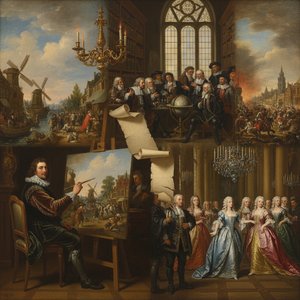
Bartholomeus Assteyn (1607 – 1667): A Master of Floral Still Life
Bartholomeus Assteyn, born in Dordrecht, Netherlands, in 1607, stands as a pivotal figure within the Dutch Golden Age artistic landscape. His legacy resides primarily in his exquisite still-life paintings—a genre he championed with unparalleled precision and sensitivity to natural beauty—particularly those featuring meticulously rendered floral arrangements juxtaposed against stone ledges. While biographical details remain somewhat sparse compared to contemporaries like Rembrandt or Vermeer, scholarly research suggests that Assteyn’s formative years were steeped in the artistic traditions of his father, Abraham Bartolomeusz, a painter himself who instilled in Bartholomeus a profound appreciation for observation and meticulous representation.- Early Training & Guild Membership: Assteyn joined the Dordrecht Saint Luke Guild in 1631, marking him as an established artist within the burgeoning artistic community of his time. This affiliation ensured access to patronage and fostered connections with fellow craftsmen, shaping his professional trajectory.
- Influences & Artistic Style: His work demonstrates a clear indebtedness to artists like Johannes Bosschaert I and Balthasar van der Ast—masters who had already established the conventions of floral still life art. Assteyn’s technique involved painstaking layering of glazes and meticulous attention to detail, capturing the subtle nuances of texture and color with remarkable accuracy.
- Notable Works: Among his approximately 23 dated paintings produced between 1628 and 1659 are masterpieces such as “Still Life of Flowers on a Stone Ledge,” which exemplifies his signature style—a harmonious blend of scientific observation and artistic expression. The composition showcases a vase adorned with an array of blossoms, complemented by insects and stones, reflecting the prevailing fascination with natural history during the Baroque period.
Floral Still Life: A Reflection of Baroque Aesthetics
Assteyn’s paintings embody the core tenets of Baroque aesthetics—drama, grandeur, and an idealized depiction of nature. Unlike earlier Mannerist styles characterized by distorted forms and unsettling perspectives, Assteyn prioritized clarity and balance, striving to convey a sense of serene contemplation amidst vibrant botanical specimens. The use of chiaroscuro—the dramatic interplay between light and shadow—further enhances the visual impact of his compositions, emphasizing textures and contours with remarkable subtlety.
Legacy & Historical Significance
Though Assteyn’s oeuvre remains relatively modest compared to some of his peers, his contribution to Dutch art history is undeniable. He solidified the genre of floral still life as a prominent artistic form, influencing subsequent generations of painters and establishing Dordrecht as a center for botanical illustration and artistic innovation. His meticulous depictions of flowers—often imbued with symbolic meaning—offer valuable insights into the intellectual currents of the 17th century and continue to inspire admiration for his mastery of technique and aesthetic vision.