
1
cows and shepherdess
Ručně malovaná olejná reprodukce od $181 31 × 32 cm
Velikost jako originál $481 102 × 107 cm Objednat v originální velikosti →

cows and shepherdess (1861) je nejslavnější obrazem autora Anton Braith. Sheep (1868) a Calves (1885) jsou dalšími dvěma díly, která svět zná nejlépe. Z 12 děl umělce Anton Braith v našem katalogu uvádíme 11 těch, na které se kolektéři a návštěvníci muzeí nejčastěji dívají, včetně roku vzniku, názvu muzea a příběhu každého díla.
Seřazeno podle našeho skóre popularity, které kombinuje počet vyhledávání, návštěv a objednávek u každého díla. Aktualizováno listopad 2026. Každé dílo na této stránce lze objednat jako ručně malovanou olejovou reprodukci v muzeální kvalitě nebo jako umělecký tisk v požadovaném rozměru.


2 muzea, v nichž je umístěno nejvíce obrazů z této stránky.
| Muzeum | Město | Díla autora Anton Braith | Obrazy z tohoto seznamu |
|---|---|---|---|
 Bavarské státní sbírky malby |
Mnichov | 2 | Calves, Favorites of the Farmer's Wife |
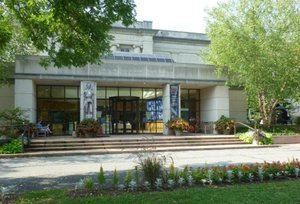 Reading Public Museum |
Reading | 1 | Sheep |


cows and shepherdess (1861). Následují Sheep (1868) a Calves (1885).
25 let: dílo cows and shepherdess pochází z roku 1861 a Anton Braith se narodil/a v roce 1836.
cows and shepherdess, Sheep, Calves, Flock of Sheep with Shepherdess, Favorites of the Farmer's Wife, The Red Umbrella, Procession passing cattle in meadow, Herd of cows, Landscape with grazing calves a Forest. Výše uvedené pořadí uvádí rok a muzeum každého díla.
Náš katalog obsahuje 12 děl autora Anton Braith z let 1861 až 1905.
Většina z nich se nachází v Bavarské státní sbírky malby (Mnichov) a Reading Public Museum (Reading). V tabulce výše jsou jednotlivé muzea uvedeny postupně.
V období 1860s: 3 z 11 děl na této stránce pochází z tohoto období, z nich cows and shepherdess.
Nejstarší dílo na této stránce pochází z cows and shepherdess (1861), nejnovější z The Red Umbrella (1905).
Calves a Favorites of the Farmer's Wife patří mezi 2 děl na této stránce, která má v zastarání Bavarské státní sbírky malby, Mnichov.
Ano. Každý obraz na této stránce lze objednat jako ručně malovanou olejovou reprodukci v muzeální kvalitě nebo jako umělecký tisk v požadovaném rozměru přímo z jeho vlastní stránky.
Anton Braith (1836 – 1905) stands as a singular figure in German landscape painting, particularly celebrated for his monumental depictions of livestock—a genre he pioneered and elevated to unprecedented artistic stature. Born into humble circumstances in Biberach an der Riß, the son of a day laborer who transitioned to farm management, Braith’s early life instilled within him an intimate connection with the rural world. As a child, he helped herd cattle, an experience that would profoundly inform his artistic vision and serve as the emotional bedrock for his oeuvre. His work is characterized by a palpable yearning for simpler times and a deep reverence for the pastoral landscape, capturing a sense of nostalgia that resonated deeply within a Germany undergoing rapid industrialization.
His formal training commenced at the Royal Art School in Stuttgart under the guidance of Bernhard von Neost and Heinrich von Rustige. It was here that he honed the foundational skills that would allow him to blend realism with expressive brushwork. During this formative period, the influence of Friedrich Reinhold Wraake, a prominent German Romantic painter, can be discerned in Braith's early works, reflecting the pervasive aesthetic currents of his era. In 1851, his talent was recognized through a scholarship, propelling him toward a professional path alongside contemporaries such as Albert Kappis and Christian Mali. These artists would become lifelong companions, forming a tight-knit circle that moved to Munich in 1860, where they became central figures in the vibrant local art colonies.
Braith’s contribution to the Munich School was nothing short of revolutionary. Following the death of Friedrich Voltz, Braith was widely considered the greatest painter of animals in Germany. While many of his peers focused on traditional landscapes, Braith sought to portray livestock—cows, calves, and poultry—in large-format, studio-style compositions. This approach transformed animal portraiture from mere decorative subject matter into a profound exploration of presence and dignity. His ability to capture the weight, texture, and quiet majesty of cattle allowed him to create works that felt both monumental and deeply intimate.
The evolution of his style can be viewed through several distinct phases:
His travels also played a significant role in enriching his palette and perspective. In 1867, alongside Kappis and Mali, he traveled to Paris, exposing him to the shifting tides of European art. Later, trips to Italy in the 1880s provided new light and classical influences that breathed fresh life into his compositions. Despite the rise of the Munich Secession in 1892, Braith remained a steadfast loyalist to the Academy, where he eventually served as a professor, passing his mastery down to the next generation of German painters.
The historical significance of Anton Braith lies not only in his canvases but in his enduring commitment to his roots. Having never married, Braith left his estate to his home city of Biberach. This generous bequest allowed for the creation of a museum that preserves the memory of both himself and his friend Christian Mali. Today, the Braith-Mali Museum stands as a testament to their shared legacy, housing their beautifully preserved artist studios—the only completely intact 19th-century studios of their kind still in existence.
Beyond the museum, Braith's impact is felt in the way he bridged the gap between the humble reality of rural life and the high art of the Academy. His paintings serve as a window into a vanishing world, offering a sanctuary of peace and stability through his monumental depictions of livestock. Through his brush, the simple act of grazing in a meadow becomes an epic narrative of nature's enduring grace, ensuring his place in the pantheon of great German masters.
