

Group Scene (1896) je nejslavnější obraz autora Albert Jean Adolphe, který se nachází v muzeu Reading Public Museum ve městě Reading. Z 1 děl umělce Albert Jean Adolphe v našem katalogu uvádíme 1 těch, na které se kolektéři a návštěvníci muzeí nejčastěji dívají, včetně roku vzniku, názvu muzea a příběhu každého díla.
Seřazeno podle našeho skóre popularity, které kombinuje počet vyhledávání, návštěv a objednávek u každého díla. Aktualizováno listopad 2026. Každé dílo na této stránce lze objednat jako ručně malovanou olejovou reprodukci v muzeální kvalitě nebo jako umělecký tisk v požadovaném rozměru.

Muzeum s největším počtem obrazů na této stránce.
| Muzeum | Město | Díla autora Albert Jean Adolphe | Obrazy z tohoto seznamu |
|---|---|---|---|
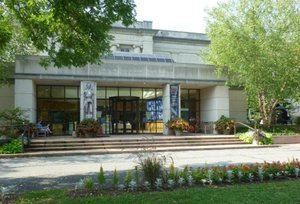 Reading Public Museum |
Reading | 1 | Group Scene |
1896 je rok vzniku všech díel s datem vzniku od Albert Jean Adolphe na této stránce: zde jsou, seřazena podle slávy.
Group Scene (1896)
31 let: dílo Group Scene pochází z roku 1896 a Albert Jean Adolphe se narodil/a v roce 1865.
Náš katalog obsahuje 1 děl autora Albert Jean Adolphe.
Většina z nich se nachází v Reading Public Museum (Reading). V tabulce výše jsou jednotlivé muzea uvedeny postupně.
Ano. Každý obraz na této stránce lze objednat jako ručně malovanou olejovou reprodukci v muzeální kvalitě nebo jako umělecký tisk v požadovaném rozměru přímo z jeho vlastní stránky.
Albert Jean Adolphe was a fixture of the American art scene, a man whose career spanned the transition from the late nineteenth century into the mid-twentieth. Born in Philadelphia, he did not merely inhabit the city; he helped define its visual landscape through a diverse range of professional roles. He was a decorator, a portrait painter, and a landscape artist who moved between the precision of oil and the fluidity of watercolor. His early promise was evident in the life-size portraits of Abraham Lincoln and George Washington he painted on a firehouse fence in Tenth Street, a project that signaled a talent far removed from his father's trade as a shoemaker.
His technical foundation was built through rigorous training at the Pennsylvania Museum School of Art. This local grounding provided the necessary springboard for his departure to Europe, where his development took on a more international character. He was not a solitary dreamer but a disciplined student of the established European tradition, absorbing the methodologies of the era's most significant instructors.
Adolphe’s time in Europe was defined by his proximity to the masters of the day. He sought out specific instruction that shaped his ability to handle both large-scale decorative commissions and intimate portraiture. His education was a deliberate accumulation of skill, moving from the academic rigor of Paris to the specific nuances of the Belgian school.
This period of study allowed him to return to the United States with a sophisticated command of composition and light. His work was not confined to the canvas; he applied his training to the physical environment, undertaking decorative commissions for the Marlborough-Blenheim Hotel in Atlantic City, New Jersey, and collaborating with prominent architects like Frank Furness.
The merit of Adolphe's work was validated by several institutional honors. He secured an honorable mention at the Columbian Exposition in Chicago in 1894 and repeated this success with an honorable mention in Paris in 1899. Within his home city, the Philadelphia Art Club awarded him the Stotesbury Prize. These were not mere accolades; they were markers of a professional who could compete on both a domestic and international stage, exhibiting at the Paris Salon between 1898 and 1902, as well as in Munich and Antwerp.
Beyond his own production, Adolphe contributed to the continuity of American art through teaching. He held positions at the Drexel Institute, the School of Industrial Art, and the LaFrance Art Institute. He was a member of the Graphic Sketch Club and the Philadelphia Art Club, maintaining a presence in the professional circles that governed the era's aesthetic standards. His life ended in 1940, leaving behind a body of work that reflects the disciplined, multifaceted approach of a true professional painter.