


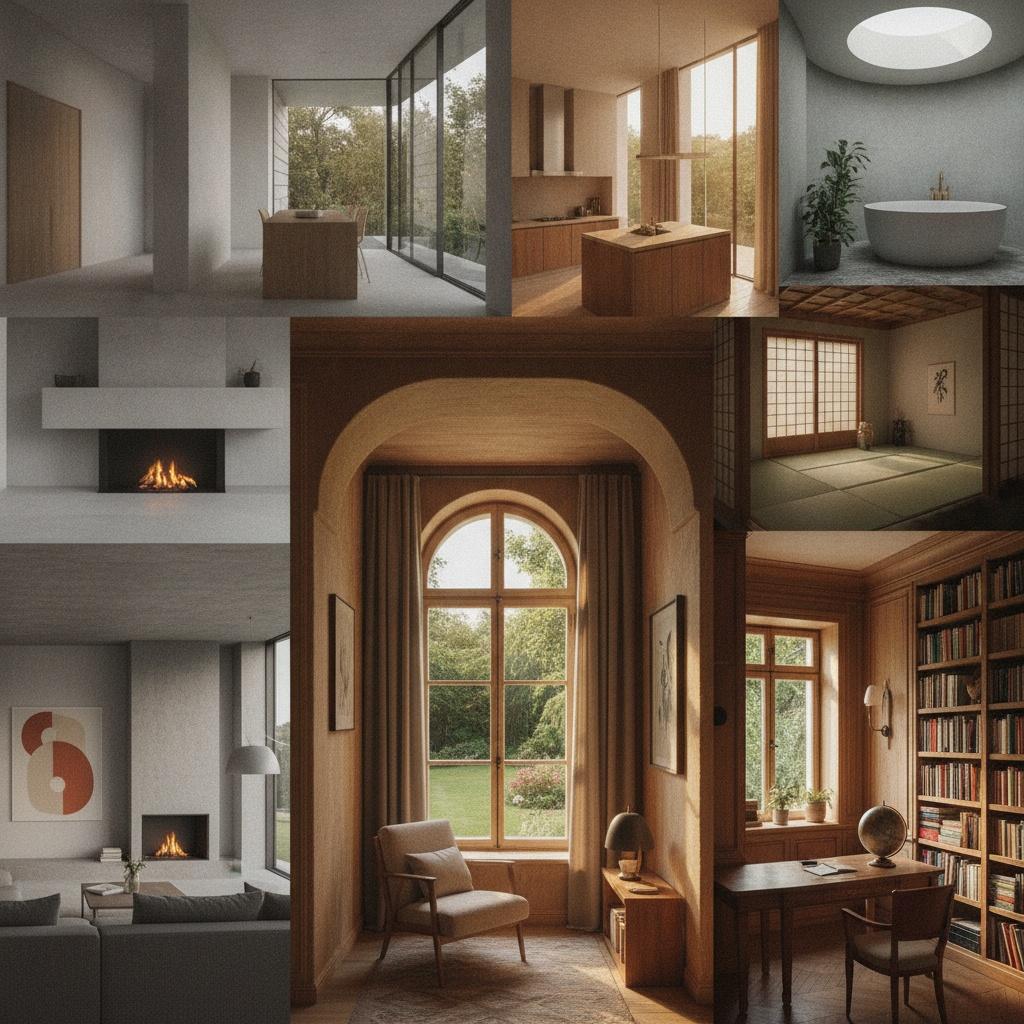
Introduction
To step into an interior is to cross a threshold between the public persona and the private soul. Throughout the history of fine art, the concept of the interior has served as much more than a mere setting for figures or objects; it has acted as a profound psychological landscape. Whether it is the quiet, sun-drenched corner of a Dutch master’s study or the opulent, dizzying grandeur of a Baroque palace, these spaces capture the intimate dialogue between architecture and human emotion. The walls do not merely enclose space; they hold memories, reflect light, and mirror the complexities of the minds that inhabit them.
Historically, the depiction of interiors has evolved alongside our understanding of privacy and domesticity. In the Renaissance, interior scenes often functioned as windows into the divine or the structured order of the world. By the Impressionist era, the focus shifted toward the ephemeral—the way a soft afternoon light dances across a silk curtain or how a room breathes with the presence of its occupants. These works allow us to witness the evolution of culture, from the rigid social hierarchies reflected in formal portraiture to the modern, fragmented perspectives that explore solitude and introspection.
Today, these masterpieces remain deeply resonant because they speak to our universal need for sanctuary. In an increasingly chaotic and digital world, the painted interior offers a sense of stillness and permanence. We find ourselves drawn to the tactile reality of a brushstroke capturing the texture of a velvet chair or the heavy weight of a gilded frame, reminding us of the beauty found in the quiet, enclosed moments of life.
In the following curation, we invite you to wander through ten extraordinary works that masterfully navigate this theme. We will explore how different eras and styles have utilized the concept of the interior to tell stories of intimacy, power, loneliness, and peace. Prepare to move beyond the threshold as we examine a selection of paintings that transform mere rooms into profound explorations of the human condition.
Harmony in Red - Henri Matisse
 Harmony in Red - Henri Matisse
In Harmony in Red by Henri Matisse, the concept of an interior transcends mere architecture to become a visceral, emotional landscape. This 1908 masterpiece does not simply depict a room; it orchestrates a symphony of saturated pigments that dissolve the boundaries between subject and space. As you stand before this work, the overwhelming warmth of the crimson palette envelops you, pulling you into a domestic scene where the walls, tablecloth, and even the very air seem to pulse with life.
Matisse utilizes a revolutionary, flattened perspective, where the patterned wallpaper and the seated figure exist in a rhythmic dance of color. The simple act of peeling an orange becomes a profound moment of stillness amidst a sea of vibrant reds and cool greens. It is a masterclass in how light and hue can transform a private corner into a gallery of the soul . To possess such a work is to invite a radical transformation into your own home, turning a quiet room into a sanctuary of modern genius.
The Child's Brain - Giorgio de Chirico
 The Child's Brain - Giorgio de Chirico
In The Child's Brain , Giorgio de Chirico invites us into an interior that is less a physical room and more a psychological landscape. As a pioneer of Metaphysical art, de Chirico masterfully blurs the boundary between the architectural and the subconscious. The composition presents a hauntingly beautiful stillness; a nude figure rests within a space defined by sharp arches and heavy, curtained thresholds, suggesting a threshold between the waking world and the dream state.
The palette is a sophisticated study in muted earth tones—deep browns, somber grays, and soft beiges—interrupted only by the striking, vibrant orange of an open book. This single splash of color acts as a focal point for contemplation, symbolizing the weight of knowledge or the unfolding of memory. There is a profound sense of introspection here; the figure's closed eyes and the flattened perspective create an atmosphere of quiet prestige and unsettling mystery. To possess such a work is to bring a piece of the infinite into your home, reminding us that our most significant interiors are often those found within ourselves.
Little Girl in a Blue Armchair - Mary Stevenson Cassatt
 Little Girl in a Blue Armchair - Mary Stevenson Cassatt
In Little Girl in a Blue Armchair by Mary Cassatt, there is a gaze that follows you—not with judgment, but with understanding . This 1878 masterpiece does not merely depict an interior; it invites you into a sanctuary of quiet domesticity. As you stand before the canvas, the cool, melancholic blues and the soft, Impressionistic brushwork wrap around you like a velvet shroud, blurring the line between the viewer and the viewed.
The composition captures a profound moment of stillness: a child reclining amidst plush upholstery, accompanied by the peaceful slumber of a dog. It is a study of light and texture, where natural illumination dances across fabric folds and organic shapes, evoking themes of childhood innocence and private leisure. This isn’t just a portrait; it is a mirror . Its inclusion in our exploration of interior-themed art is a testament to its power to make the invisible visible—the quiet, sacred emotions of home life. Now, imagine that gaze in your own space. Not watching you, but reminding you : you are seen. You are part of the story.
Landscape viewed from a Window - Henri Matisse
 Landscape viewed from a Window - Henri Matisse
Imagine standing in a sun-drenched room, where the boundary between your private sanctuary and the vast, breathing world outside begins to dissolve. In Landscape viewed from a Window , Henri Matisse masterfully orchestrates this very moment. The painting serves as a profound exploration of the 'interior' theme, using a deep blue window frame to act as a portal between domestic intimacy and the expansive Mediterranean horizon.
Matisse employs the bold, emotive language of Fauvism , where color takes precedence over mere representation. The foreground is alive with texture; thick, impasto brushstrokes bring weight to the white drapery and the vibrant floral arrangements—one a burst of crisp white, the other a fiery red. These elements anchor the viewer within the room, while the simplified, cool-toned landscape beyond invites a sense of infinite calm. For the modern collector, this masterpiece offers more than decoration; it introduces a rhythmic vitality and a sophisticated play of light that can transform a contemporary living space into a place of deep reflection and atmospheric beauty.
Goldfish - Henri Matisse
 Goldfish - Henri Matisse
In Matisse’s 1911 masterpiece, Goldfish , the lines of the domestic sphere are not merely drawn; they are choreographed . This is not a simple still life; it is a dance frozen in time , where the boundaries between the sanctuary of the home and the vitality of nature dissolve into a singular, rhythmic pulse. As you gaze into the vibrant bowl, the brilliant reds of the fish act as a heartbeat against a lush, verdant backdrop of leaves and soft florals.
The composition invites a profound sense of interior harmony, transforming a quiet corner into an expansive, breathing oasis. Matisse uses bold, Fauvist color to ensure that your walls do not just hold pigment, but breathe rhythm . The interplay of light and flattened perspective creates a shallow, intimate world—a contained universe of prosperity and peace. For the discerning collector, bringing this work into a living space means inviting a sense of meditative balance, where the chaos of the outside world is replaced by the serene, structured beauty of a curated indoor landscape.
Allegory of Faith - Johannes Vermeer
 Allegory of Faith - Johannes Vermeer
What story does the quiet, shadowed corner of Allegory of Faith by Johannes Vermeer tell? In this masterwork of the Dutch Golden Age, the interior is not merely a setting, but a profound vessel for spiritual introspection. Vermeer invites us into a private, domestic sanctuary where every object—from the heavy, textured drapery to the symbolic globe beneath the woman's foot—speaks of the intersection between worldly knowledge and divine devotion.
The composition utilizes a masterful chiaroscuro , casting deep blues and opulent golds into a dance of light and shadow that breathes life into the room's textures. As we gaze upon the scattered books and the luminous chalice, we feel the weight of 17th-century moral virtue. For the modern collector seeking to curate an escape within their own home, this painting offers more than decoration; it provides a window into a timeless, contemplative atmosphere. Integrating such a piece into a contemporary interior allows one to evoke a sense of historical depth and psychological stillness, transforming a living space into a gallery of quiet, soulful reflection.
The Flute Concert at Sanssouci (sketch) - Adolph von Menzel
 The Flute Concert at Sanssouci (sketch) - Adolph von Menzel
In the delicate, gestural strokes of Adolph von Menzel’s The Flute Concert at Sanssouci (sketch) , we find more than just a depiction of a musical gathering; we encounter the very soul of an era. There is a profound, fleeting magic in how Menzel captures the warmth of a gilded ballroom, where the soft glow of chandeliers dances across flowing white silks and the attentive faces of an aristocratic crowd. It is a masterclass in atmosphere, where the boundaries between the architectural grandeur of the interior and the intimate human connection of the performance seem to dissolve into light and shadow.
This work earns its place among the top artworks exploring the theme of interior spaces because it transcends mere room decoration, transforming a historical setting into an emotional experience of cultural elegance. At WahooArt.com, we believe such evocative history should not be confined to museum walls. Our hand-painted oil reproductions are meticulously crafted by skilled artists to preserve Menzel’s energetic brushwork and rich, luminous palette, allowing you to invite this timeless sense of sophistication and rhythmic vitality into your own private collection.
Philosopher in Meditation - Rembrandt van Rijn
 Philosopher in Meditation - Rembrandt van Rijn
Acquiring a piece inspired by Philosopher in Meditation by Rembrandt van Rijn is more than an aesthetic choice; it is an investment in a profound legacy of taste and intellectual depth. As one of the most significant works exploring the theme of the interior, this 1632 masterpiece transcends mere domesticity to capture the very soul of contemplation. Through his legendary mastery of chiaroscuro , Rembrandt directs our gaze through a dimly lit chamber where warm, directional light dances across scattered books and a dramatic spiral staircase, symbolizing the ascent toward enlightenment.
The painting’s provenance and its enduring presence in the Louvre solidify its status among the greatest explorations of private space in art history. The interplay of deep shadows and glowing highlights creates a sensory experience of quiet prestige, making it a cornerstone for any curated collection. For the modern connoisseur, a high-quality, hand-painted oil reproduction of this work brings an unmatched aesthetic authority to luxury interiors, offering a window into the Dutch Golden Age that commands attention and evokes a timeless, scholarly elegance in any sophisticated home.
Young Woman with a Water Pitcher - Johannes Vermeer
 Young Woman with a Water Pitcher - Johannes Vermeer
What story does the quiet, sun-drenched corner of Young Woman with a Water Pitcher tell about the sanctity of the private sphere? In this 1662 masterpiece by Johannes Vermeer , the interior is not merely a setting, but a living character. As the light spills through an open window, it dances across a gilt silver pitcher and illuminates the delicate textures of linen and blue silk, capturing a fleeting moment of morning ritual.
Emerging from the Dutch Golden Age, this work broke ground by moving away from rigid geometric order toward a profound mastery of light and color composition. For the modern collector seeking to curate an escape within their own home, Vermeer’s ability to transform a domestic scene into a luminous sanctuary is unparalleled. His use of soft shadows and atmospheric depth offers a timeless inspiration for those looking to infuse their interior spaces with a sense of historical elegance and tranquil permanence. It remains a definitive pillar in our exploration of art that celebrates the beauty of the inhabited space.
Diana and her Companions - Johannes Vermeer
 Diana and her Companions - Johannes Vermeer
In Diana and her Companions , Johannes Vermeer invites us into a sanctuary of quietude, where the boundaries between the divine and the domestic dissolve. Rather than a grand mythological spectacle, we encounter an intimate interior scene defined by soft, luminous light and a profound sense of stillness. The goddess Diana sits in repose, surrounded by nymphs engaged in gentle, rhythmic tasks—washing feet, tending to preparations, and sharing silent companionship. Vermeer’s mastery is felt in the tactile richness of the earthy tones and the subtle, translucent glazes that lend an ethereal glow to the skin and fabrics.
The atmosphere is one of meditative tranquility, a masterful use of shadow and light that transforms a mythological gathering into a deeply human moment of connection. For the modern collector, this piece serves as a cornerstone for any curated space, offering an anchor of calm and historical depth. Its presence in a room inspires a reflective mood, turning a contemporary interior into a place of timeless grace and sophisticated storytelling.
Conclusion
As the light fades on our journey through these storied rooms, we are reminded that a painting is far more than a window into the past; it is a living presence. These masterpieces do not merely depict walls, furniture, or quiet corners—they breathe life into them. They carry with them the soft glow of Vermeer’s morning sun, the textured shadows of a Dutch study, and the profound stillness of a moment captured forever. To gaze upon these works is to witness the enduring human desire to find sanctuary, meaning, and beauty within the spaces we call home.
We invite you to move beyond the role of a mere observer and become a custodian of this inspiration. Do not let these stories remain confined to the archives of history or the silent halls of a museum. Instead, bring their light, their texture, and their quiet emotions into your own sanctuary. By integrating these timeless narratives into your personal surroundings, you transform your walls into a dialogue with greatness, turning your home into a gallery of daily grace and a constant reminder of the boundless reach of human creativity.
Whether you seek the profound depth of an oil reproduction or the delicate charm of a curated print, we invite you to explore our full collection and discover the piece that speaks to your soul. Let these works inhabit your space, shaping your atmosphere and inspiring your spirit, day after beautiful day.


