Introduction
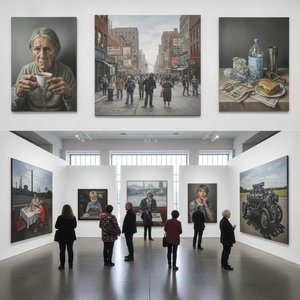
To step into the world of Contemporary Realism is to enter a profound dialogue between the tangible world and the human soul. It is an invitation to pause, to look closer, and to rediscover the breathtaking complexity of the reality we often overlook in our hurried lives. Unlike the abstractions that sought to deconstruct form, this movement emerged as a powerful reclamation of the subject, breathing new life into the venerable traditions of meticulous observation and technical mastery. It is art that does not merely represent; it resonates.
Historically, Contemporary Realism arose as a sophisticated response to the fragmented nature of the modern era. While much of the twentieth century was defined by the dissolution of the image, the practitioners of this movement sought to anchor us once more. They drew inspiration from the academic rigor of the Old Masters—the chiaroscroll of Rembrandt and the luminous textures of Velázquez—yet they applied these techniques to the pressing, often raw, narratives of our contemporary existence. It is a bridge spanning centuries, connecting the disciplined brushwork of the past with the urgent, lived experiences of the present.
These masterpieces remain deeply meaningful today because they offer something increasingly rare: a sense of presence. In an age dominated by the fleeting and the digital, a hyper-realistic portrait or a quiet, light-drenched landscape serves as a sanctuary of permanence. Each stroke of oil on canvas captures a fleeting moment—the way light catches a tear, the weathered texture of aged skin, or the heavy stillness of a summer afternoon—and renders it eternal. These works do not just demand our attention; they command our empathy, forcing us to confront the beauty and the fragility of our shared human condition.
As we wander through this curated selection, prepare to encounter works that transcend mere imitation. We will explore ten pivotal masterpieces that do more than replicate life—they interpret it with unparalleled depth. From breathtaking portraits that seem to breathe alongside the viewer to expansive landscapes that redefine our sense of scale, each piece on this list represents a milestone in the evolution of realism, marking the moments when paint and canvas truly captured the heartbeat of an era.
Freedom from want - Norman Rockwell
 Freedom from want - Norman Rockwell
To encounter Freedom from Want by Norman Rockwell is to step into a sanctuary of shared humanity and profound nostalgia. As one of the most significant pillars within the Contemporary Realism movement, this masterpiece transcends mere illustration; it serves as a window into an era of resilient hope. Rockwell captures a quintessential moment of American gratitude, where the warm, diffused light dances across a bountifully laden table, illuminating the glistening textures of a roasted turkey and the crisp linens of a family gathering.
The painting’s placement among the world's greatest masterpieces is earned through its extraordinary emotional intelligence. Rockwell utilizes a masterful semi-circular composition to draw the viewer into the intimate warmth of the hearth, making the abundance of the feast feel both legendary and deeply personal. For the discerning collector or interior designer, this work offers more than aesthetic beauty; it brings a sense of timeless legacy and domestic harmony to a refined space. It is a profound study in light, texture, and the enduring power of tradition, embodying a sophisticated grace that remains eternally relevant in any curated collection.
Reflection with Two Children (Self-Portrait) - Lucian Freud
 Reflection with Two Children (Self-Portrait) - Lucian Freud
In Reflection with Two Children (Self-Portrait) , Lucian Freud captures a profound silence, where the weight of existence is frozen in thick, visceral layers of oil. This masterpiece stands as a cornerstone of the Contemporary Realism movement, immortalized for its ability to transcend mere likeness and enter the realm of psychological truth. Freud’s unflinching gaze, paired with the smaller, ethereal figures of the children, creates a dynamic tension that explores the complexities of identity and familial connection.
The canvas breathes with a somber, tactile energy; the heavy impasto technique lends a sculptural quality to the skin, while muted olive tones and deep shadows evoke an atmosphere of introspective melancholy. The artist's defensive posture—arms crossed tightly—contrasts with the soft, organic shapes of the composition, inviting viewers into a space of raw emotional honesty. For the discerning collector or interior designer, such a work brings an unparalleled intellectual depth to a room, offering a sophisticated focal point that commands attention through its sheer presence and historical gravity.
First Steps - Georgios Jakobides
 First Steps - Georgios Jakobides
What story does the rustic, sun-drenched environment in First Steps by Georgios Jakobides tell? Beyond the tender milestone of a child’s movement, this 1892 masterpiece whispers tales of intergenerational devotion and the quiet sanctity of domestic life. Emerging from the prestigious Munich School, Jakobides utilized meticulous academic realism to transform a simple interior into a profound exploration of human connection. Every brushstroke captures a tactile reality—from the rough, weathered stone walls to the soft, luminous fabrics—anchoring this work as a cornerstone of the movement.
The composition uses directional light streaming from a window to illuminate the elderly woman and toddler, creating a chiaroscuro effect that breathes life into the scene. For the discerning collector or interior designer, this painting offers more than mere decoration; it provides a curated escape into a world of nostalgic warmth and spiritual grace. The earthy palette of ochre and cream, paired with the subtle symbolism of the crucifix, allows this piece to serve as a timeless focal point, bringing a sense of historical prestige and emotional depth to any sophisticated modern space.
Benefits Supervisor Sleeping (also known as Big Sue) - Lucian Freud
 Benefits Supervisor Sleeping (also known as Big Sue) - Lucian Freud
What story does the heavy, floral-patterned landscape of Benefits Supervisor Sleeping tell about our relationship with the human form? In this 1995 masterpiece, Lucian Freud transcends mere portraiture to present a monumental study in vulnerability and raw truth. As a cornerstone of the Contemporary Realism movement, this work broke ground by rejecting the idealized, airbrushed aesthetics of its era, opting instead for an unflinching, visceral engagement with flesh and weight.
Freud utilizes a masterful, thick impasto technique, where layers of oil paint create a palpable texture that mirrors the complexity of the subject's skin. The muted earth tones and dramatic shadows evoke a sense of profound intimacy, inviting the viewer into a private, almost sacred space. For the discerning collector, integrating such a powerful piece into a curated interior offers more than mere decoration; it provides a sophisticated artistic escape into a world of psychological depth and historical gravity. It is a painting that demands presence, transforming a modern room into a gallery of contemplative, timeless beauty.
Automat - Edward Hopper
 Automat - Edward Hopper
To encounter Automat by Edward Hopper is to step into a profound moment of stillness, an unveiling of one of the most evocative masterworks within the Contemporary Realism movement. This 1927 triumph transcends mere depiction; it captures the very essence of urban introspection. Through a masterful command of light and shadow, Hopper invites us into a dimly lit corner of early 20th-century America, where a solitary woman sits bathed in a stark, directional glow that highlights both her quiet contemplation and the vibrant textures of her surroundings.
The painting’s enduring place among the world's top masterpieces lies in its emotional intelligence—the way it utilizes geometric precision and a somber palette of deep blues and greens to articulate the universal experience of solitude. For the discerning collector or interior designer, Automat offers more than historical significance; it brings a sophisticated, cinematic atmosphere to a refined space. Its ability to balance architectural rigidity with soft, human vulnerability makes it a timeless cornerstone for any collection celebrating the profound beauty of the human condition.
The Gross Clinic - Thomas Eakins
 The Gross Clinic - Thomas Eakins
In the heavy, dramatic shadows of 1875, The Gross Clinic by Thomas Eakins emerges as a profound moment of tension frozen in time, where the clinical precision of science meets the raw pulse of human emotion. This masterpiece is immortalized among the top 10 works defining the movement because it transcends mere documentation; it captures the very soul of American Realism through an unflinching gaze at the intersection of life and mortality.
Eakins employs a masterful palette of deep, earthy tones and stark, theatrical lighting that sculpts the figures with anatomical accuracy. One can almost sense the metallic scent of the surgical theater and the palpable weight of the silence held by the observers. The rich, visible textures of the surgeons' attire and the somber, monochromatic depths create an atmosphere of gravity and prestige. For the discerning collector or interior designer, integrating a high-quality reproduction of this work into a modern space introduces a sense of intellectual depth and historical sophistication, offering a striking focal point that invites quiet reflection on the enduring power of human progress.
Gas - Edward Hopper
 Gas - Edward Hopper
In Gas , Edward Hopper captures a profound sense of stillness that transcends the mere depiction of a roadside stop. The painting does not just show a gas station; it evokes the heavy, palpable quietude of rural America, where the soft, diffused light of an overcast afternoon settles over the landscape like a memory. There is a haunting psychological depth in this work—a universal mirror of human solitude and the transient nature of our journeys. Through his masterful use of muted earthy greens and the sharp, symbolic contrast of the vibrant red pumps, Hopper invites us to contemplate the beauty found in isolation.
As a cornerstone of the Contemporary Realism movement, this masterpiece offers more than visual excellence; it provides an emotional anchor. Integrating such a powerful work into your collection can transform a personal sanctuary into a space for profound reflection and calm. The meticulous balance of light and shadow serves as a silent dialogue between the viewer and the vast, lonely expanse of the American landscape, making it an essential selection for those seeking art that speaks to the soul.
Chop Suey - Edward Hopper
 Chop Suey - Edward Hopper
In the quiet, amber-hued corners of 1929, Edward Hopper’s Chop Suey captures a profound stillness that resonates even through a century of change. At WahooArt.com, our mission has always been to democratize such beauty, ensuring that the evocative power of the Old Masters and modern icons remains accessible to all. This masterpiece earns its place among the Top 10 Masterpieces That Defined the Contemporary Realism Art Movement through its masterful command of light and its ability to find deep, cinematic meaning within the mundane rituals of urban life.
The painting presents a vibrant, almost dreamlike cafe scene where bold Art Deco geometry meets a soulful, psychological depth. Through a saturated palette of electric yellows and deep blues, Hopper explores the tension between social connection and the inherent solitude of the modern era. The dramatic interplay of light from the neon signage creates an atmosphere that is both energetic and introspective. Today, this same evocative aesthetic serves as a cornerstone for sophisticated interior design; by commissioning a high-fidelity, hand-painted oil reproduction, you can bring this transformative presence and Hopper’s timeless sense of quiet drama into your own home, office, or private gallery.
Office at Night - Edward Hopper
 Office at Night - Edward Hopper
To encounter Office at Night by Edward Hopper is to step into a profound moment of cinematic stillness, an unveiling of the quiet tension that defines the pinnacle of the Contemporary Realism movement. This 1940 masterpiece does not merely depict a mid-century workspace; it captures the very soul of urban solitude through a masterful interplay of light and shadow. Hopper utilizes a muted, sophisticated palette of deep greens, earthy browns, and somber grays, punctuated brilliantly by the striking blue of a woman’s dress—a focal point that draws the eye into the heart of the composition.
The painting’s enduring influence lies in its emotional intelligence, portraying the rhythmic, almost meditative nature of bureaucracy through geometric precision and evocative lighting. For the discerning collector or interior designer, this work offers an unparalleled sense of timeless beauty and intellectual depth. Its structured, architectural lines and contemplative mood make it a cornerstone for refined aesthetics, bringing a legacy of quiet strength and sophisticated introspection to any modern luxury interior.
Summertime - Edward Hopper
 Summertime - Edward Hopper
There is a gaze in Summertime by Edward Hopper that follows you—not with judgment, but with understanding . Painted in 1943 amidst the heavy shadows of wartime uncertainty, this masterpiece does not merely depict a woman in a light blue dress resting on stone steps; it serves as a mirror to the quiet, often overlooked moments of human solitude.
Hopper’s mastery of American Realism is found in the way he uses sharp, geometric architecture to frame a sense of profound introspection. The interplay of harsh sunlight and deep, dramatic shadows creates a palpable tension, turning an urban setting into a stage for psychological depth. As you observe the textures of the stone facade and the soft straw of her hat, you feel the weight of the silence. This painting’s place among the top masterpieces of Contemporary Realism is a testament to its power to make the invisible visible. Now, imagine that evocative light in your own space. It does not watch you; rather, it reminds you : you are seen, and you are part of this timeless story.
Conclusion
As the light fades on our journey through these extraordinary works, we are reminded that Contemporary Realism is far more than a mere technical mastery of light and shadow; it is a profound dialogue between the visible world and the human soul. These masterpieces do not belong solely to the silent halls of museums or the archives of art history. Instead, they possess a vibrant, breathing vitality that seeks to transcend time, inviting us to find extraordinary meaning within the ordinary moments of our lives.
To live with such art is to invite a permanent sense of wonder into your sanctuary. Whether it is the quiet intimacy of a portrait or the sweeping emotional depth of a landscape, these paintings act as living presences—anchors of grace that shape the atmosphere of a room and provide daily reflections on the beauty of our shared existence. They offer a tactile connection to human creativity, where every visible brushstroke serves as a testament to the enduring power of observation and emotion.
We invite you to move beyond mere admiration and consider how these textures, tones, and stories might inhabit your own space, transforming a house into a curated gallery of inspiration. You may explore the profound depth of our full collection to find the piece that speaks most intimately to your spirit and brings the timeless elegance of these masters into your daily life.