Introduction
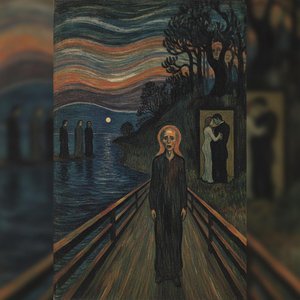
To step into the world of Expressionism is to abandon the comfort of the visible world and surrender to the raw, unbridled pulse of the human psyche. It is an art movement that does not seek to mirror reality, but rather to distort it—using jagged lines, jarring colors, and feverish brushstrokes to externalize the profound anxieties, joys, and spiritual yearnings of the soul. Where Impressionism captured the fleeting dance of light upon a landscape, Expressionism captures the storm raging within the observer.
Emerging at the dawn of the 20th century, primarily from the vibrant, turbulent centers of Germany, this movement was born from a period of intense cultural transformation and social upheaval. As the industrial age accelerated and the shadows of global conflict loomed, artists sought a new visual language to articulate the fragmentation of modern existence. Through groups like Die Brücke and Der Blaue Reiter , they moved beyond mere representation, utilizing color not as a descriptive tool, but as an emotional weapon.
These masterpieces remain profoundly meaningful today because the human condition remains unchanged; we still navigate the same tensions between our inner vulnerabilities and the external pressures of a rapidly evolving world. The visceral energy found in these canvases resonates with a contemporary audience that understands the power of authenticity over artifice. Each stroke serves as a testament to the courage required to face one's own shadows.
In the following curation, we invite you to walk through a gallery of emotional intensity. We have selected ten definitive works that do more than just represent an era—they embody the very essence of the movement. From haunting portraits to landscapes transformed by psychological weight, these are the paintings that redefined the boundaries of what art can communicate.
The Scream - Edvard Munch
 The Scream - Edvard Munch
Few images possess the visceral power to halt a viewer in their tracks quite like The Scream by Edvard Munch. As a cornerstone of the Expressionism movement , this 1893 masterpiece transcends mere paint on canvas; it is a profound psychological landscape that captures the very essence of existential dread. Through swirling, turbulent lines and a hauntingly vibrant palette of fiery oranges and bruised blues, Munch translates an internal state of panic into a universal visual language.
The composition—dominated by a gaunt, androgynous figure clutching their face against a distorted, undulating sky—serves as a raw window into the human condition. In today’s fast-paced, often fragmented world, the painting's themes of anxiety and alienation feel strikingly contemporary, making it a compelling focal point for curated modern interiors. Whether viewed as a historical milestone or a timeless symbol of modern tension, The Scream remains an essential pillar among the top masterpieces of Expressionism , offering a deep, emotive resonance that continues to haunt and inspire collectors globally.
Melancholy - Edvard Munch
In Melancholy by Edvard Munch, we encounter a gaze that does not merely look, but lingers within the depths of profound isolation. As one of the top 10 masterpieces that defined the Expressionism art movement , this 1894 work serves as a visceral window into the human psyche. The solitary figure, seated upon a somber shoreline, becomes a universal mirror for our own moments of introspection and quiet despair.
Munch masterfully employs a palette of bruised purples, deep blues, and murky greens to evoke a sense of psychological weight. The visible, energetic brushstrokes and distorted forms reject mere realism, choosing instead to capture the raw, turbulent energy of an inner storm. There is a haunting beauty in this tension; the way the heavy, dark clothing of the subject anchors them to the earth while the distant, fading horizon suggests a world slipping away. Integrating such a powerful piece into your collection can transform a personal sanctuary into a space for profound reflection, inviting a quiet, contemplative stillness that resonates long after you have left the room.
Composition VII - Wassily Wassilyevich Kandinsky
 Composition VII - Wassily Wassilyevich Kandinsky
In the pantheon of the Expressionism movement, few works command the visceral intensity of Composition VII by Wassily Kandinsky . Created in 1913, this monumental masterpiece serves as a profound bridge between the tangible world and the spiritual realm, marking a pivotal moment when art liberated itself from the constraints of representation. It earns its place among the top masterpieces of Expressionism through its sheer audacity; it is not merely a painting, but a symphonic explosion of color and form that embodies Kandinsky’s concept of "inner necessity truly expressed.
As you gaze into this swirling vortex of saturated oranges, deep blues, and energetic, fragmented lines, you are invited to experience art as a pure sensory event. The work challenges our very perception of beauty, suggesting that meaning resides not in what we recognize, but in what we feel. For the discerning collector or interior designer, the essence of Composition VII offers an unparalleled opportunity to introduce dynamic energy and intellectual depth into a curated space. It remains a timeless conversation between historical chaos and modern elegance, proving that true abstraction is an eternal language of the human soul.
"}Madonna - Edvard Munch
 Madonna - Edvard Munch
To stand before Edvard Munch’s Madonna is to encounter a visceral storm of human emotion. Before the eyes even register the skeletal features of the central figure, one feels a profound sense of psychological weight—a heavy, swirling atmosphere of grief and existential dread. This 1894 masterpiece serves as a cornerstone of the Expressionism movement, marking a definitive departure from objective reality toward the raw, subjective truth of the soul.
Munch utilizes a jarring palette of fiery oranges and abyssal blacks, where thick, frantic brushstrokes create a vortex of chaos around the woman. The symbolism is haunting: a halo that evokes oppression rather than sanctity, and a ghostly, skull-like infant that speaks to the cycle of suffering and mortality. It earns its place among the top masterpieces of Expressionism by daring to confront the shadows of the human psyche. In a modern home, such a powerful work acts as a profound focal point, inviting deep reflection and bringing a sophisticated, emotive depth to one's private sanctuary.
Woman in a Green Jacket - August Macke
 Woman in a Green Jacket - August Macke
In Woman in a Green Jacket , August Macke does not merely paint a scene; he captures the very pulse of modern existence. Created in 1913, this masterpiece serves as a vibrant window into the Expressionism movement, specifically through the lens of the Der Blaue Reiter group. As you stand before this work, you are not just observing figures strolling through a park; you are experiencing a rhythmic dance of color and light.
Macke utilizes a bold, non-naturalistic palette where emerald greens and deep blues collide with energetic, painterly brushstrokes. Influenced by the Orphic Cubism of Robert Delaunay, the composition transforms human silhouettes into geometric harmonies, stripping away the mundane to reveal an emotional truth. There is a profound, bittersweet beauty here—a celebration of social vitality captured just before the shadows of World War I fell upon Europe. To possess such a work is to invite this transformative energy into your home, turning a private space into a gallery of the soul where every hue tells a story of life, movement, and enduring spirit.
The Self-Seers II (Death and Man) - Egon Schiele
 The Self-Seers II (Death and Man) - Egon Schiele
In The Self-Seers II (Death and Man) , Egon Schiele does not merely depict a scene; he orchestrates a visceral encounter with the soul. To gaze upon this 1911 masterpiece is to witness the very language of Expressionism, where light is not reflected but composed to reveal inner turmoil. Schiele uses a somber, earthy palette of ochres and bruised browns to craft a landscape of existential dread.
The painting’s power lies in its tactile, unsettling energy. Through thick, gestural impasto, the artist creates a surface where every visible brushstroke feels like a tremor of anxiety. A skeletal hand emerges from the shadows, a haunting symbol of mortality that pulls the viewer into his claustrophobic vision. This is why it remains a cornerstone of the movement: it does not just represent death; it invents the feeling of it. For the discerning collector, bringing a reproduction of this work into a private study or gallery space offers more than decor—it introduces a profound portal of introspection and a sophisticated, dramatic flair that commands the room.
Self-portrait of a 'Degenerate Artist' - Oskar Kokoschka
 Self-portrait of a 'Degenerate Artist' - Oskar Kokoschka
What if I told you that Self-portrait of a 'Degenerate Artist' by Oskar Kokoschka was born from a moment of profound rebellion—a stroke of defiance against the encroaching shadows of history? This is not merely a portrait; it is a manifesto of the soul . Its inclusion in our selection of the top masterpieces of Expressionism is demanded by its raw, psychological intensity. Through thick, energetic impasto and a haunting palette of bruised purples and deep blues, Kokoschka captures the very essence of resistance against the labels of his era.
The artist’s gaze, unwavering and piercing, confronts the viewer with a vulnerability that is simultaneously unyielding. Every visible brushstroke vibrates with the anxiety and courage of an era in turmoil. At WahooArt.com, we believe such profound emotional depth should not be confined to museum archives. Imagine this masterpiece as a commanding presence in your private study or a sophisticated gallery space—a daily reminder that true creativity remains indomitable. By bringing this textured, historical weight into your home through our hand-painted oil reproductions, you transform your walls into a sanctuary of strength and intellectual depth.
Great Scene of Agony - Max Beckmann
 Great Scene of Agony - Max Beckmann
In Great Scene of Agony by Max Beckmann, a somber, earth-bound palette of deep ochres and bruised shadows establishes an immediate atmosphere of profound introspection. This mastery of muted tones—interspersed with sudden, visceral flashes of dark crimson—is precisely why this work remains a cornerstone among the Top 10 Masterpieces That Defined the Expressionism Art Movement . Beckmann does not merely paint figures; he uses color to sculpt the very essence of human vulnerability and existential tension.
The heavy, tactile impasto and the interplay of light and shadow offer a sophisticated blueprint for modern interior curation. For the discerning collector or designer, integrating such an expressive color scheme can anchor a room with dramatic emotional depth. Imagine the painting’s moody browns and muted greens serving as the focal point in a contemporary dining room, where they can harmonize with dark wood textures to create a space of quiet, cinematic intensity. It is a piece that transforms a wall into a window onto the human soul, providing a powerful, textured anchor for any high-end architectural setting.
Reclining Nude with Blue Cushion - Amedeo Clemente Modigliani
 Reclining Nude with Blue Cushion - Amedeo Clemente Modigliani
In the presence of Amedeo Clemente Modigliani’s Reclining Nude with Blue Cushion , one does not merely observe a painting; one encounters a profound legacy of modern sensuality. This masterpiece stands as a cornerstone of the Expressionism movement, where the artist transcends anatomical precision to capture the very soul of his subject. Through his signature elongated forms and almond-shaped eyes, Modigliani invites us into a world of hauntingly beautiful melancholy.
The composition is a masterclass in emotional tension, featuring a striking contrast between the warm, fiery reds of the background and the cool, grounding presence of the vibrant blue cushion. As you trace the fluid, expressive brushstrokes across the canvas, the figure’s languid pose evokes a sense of both vulnerability and otherworldly grace. Owning such a piece is not a mere acquisition; it is an inheritance of taste. At WahooArt, we bring this lineage of prestige to your private collection, allowing you to host a dialogue with history on your own walls, where every glance at these iconic textures serves as a nod to the masters.
Three Studies for Figures at the Base of a Crucifixion - Francis Bacon
 Three Studies for Figures at the Base of a Crucifixion - Francis Bacon
To stand before Francis Bacon’s Three Studies for Figures at the Base of a Crucifixion is to confront the very marrow of human anguish. This 1944 triptych does not merely depict suffering; it breathes it, capturing that primal, existential ache that resonates long after one turns away. The searing orange backdrops and the distorted, amorphous figures create a claustrophobic theater of trauma, making it an essential pillar in our exploration of the Top 10 Masterpieces That Defined the Expressionism Art Movement .
Bacon’s genius lies in his ability to transform post-war anxiety into a visceral, tactile experience through heavy impasto and haunting, skeletal forms. It is this raw, emotional intensity—the way the light catches every deliberate, agonizing brushstroke—that makes such works timeless. At WahooArt.com, we strive to preserve this profound legacy. Our master artists meticulously recreate the textured depth and haunting atmosphere of Bacon’s vision on 100% cotton canvas, ensuring that the visceral power of Expressionism can be curated within your own private collection, bringing a piece of art history's most profound shadows into the light of your home.
Conclusion
As the light fades on our journey through these visceral landscapes and distorted figures, we find that Expressionism is far more than a mere chapter in an art history textbook; it is a profound, enduring pulse that beats within the modern soul. These masterpieces do not reside solely behind museum glass, frozen in time; rather, they exist as living presences, inviting us to confront our deepest anxieties and most radiant joys. When we bring these works into our private sanctuaries, they transform walls into windows of introspection, echoing the eternal dialogue between the raw intensity of human emotion and the quiet intimacy of everyday life.
To live with such art is to embrace a certain vulnerability, allowing the bold brushstrokes and emotive palettes to breathe alongside us, shaping our interiors into spaces of deep resonance and cultural connection. Whether through the haunting shadows of a nocturnal street or the vibrant, swirling energy of a dreamscape, these works continue to inspire a new generation of collectors to seek authenticity in an increasingly digital world. We invite you to continue this exploration and find your own emotional anchor within our full collection , where the legacy of the masters remains eternally present, waiting to move your heart once more.