Introduction: The Enigmatic World of Max Klinger
 Max Klinger
Discover Max Klinger (1857-1920), a German Symbolist painter & sculptor. Explore his evocative etchings like 'Finding a Glove' and pioneering modern art blending realism with psychological depth.
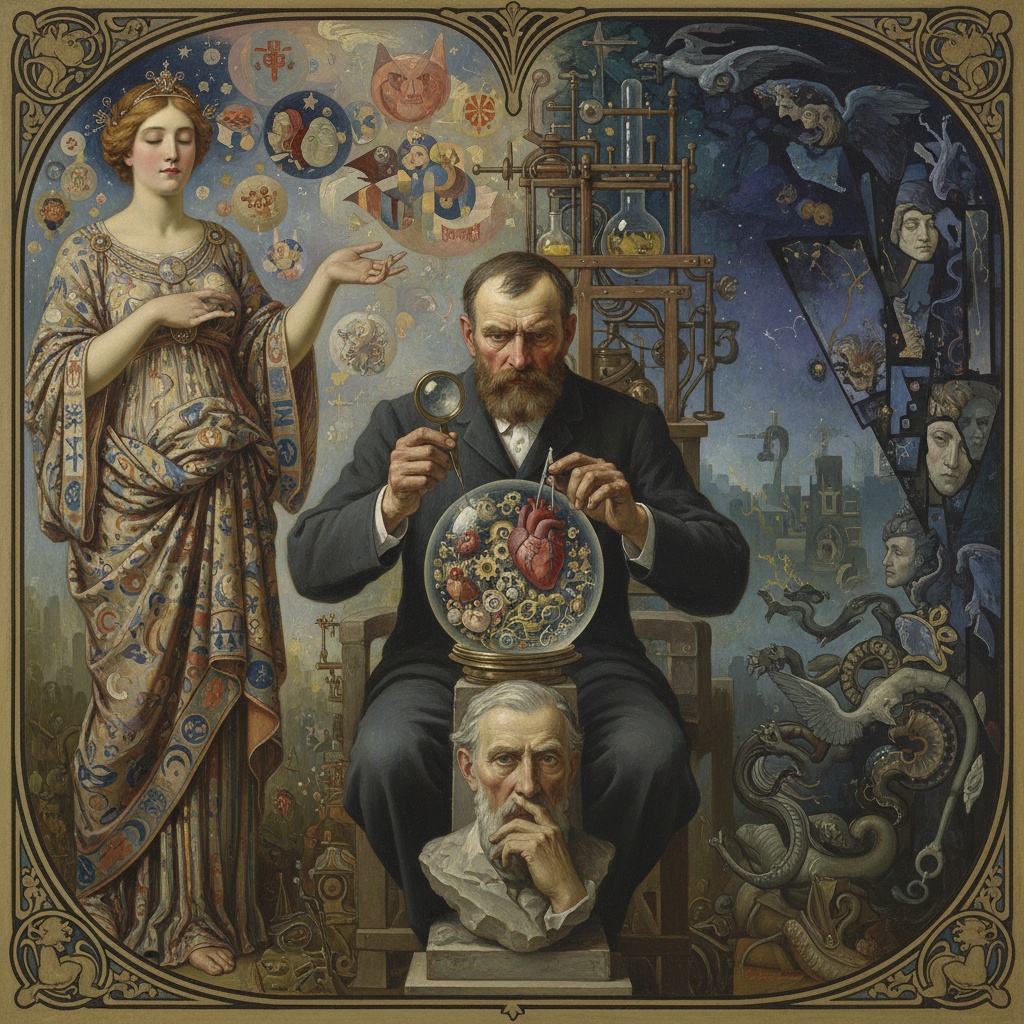
Max Klinger (1857-1920) occupies a fascinating, often paradoxical position within the landscape of late 19th and early 20th-century art. He wasn’t neatly categorized; he resisted easy labels, forging his own path between realism, symbolism, and an increasingly introspective exploration of the human psyche. While contemporaries embraced Impressionism or Post-Impressionism, Klinger delved into the realms of myth, dreamscapes, and the unsettling anxieties simmering beneath the surface of Wilhelmine Germany. His work is not merely visually striking—it’s a complex tapestry woven with intellectual rigor, scientific curiosity, and a profound sensitivity to the darker currents of human experience. He stands as a bridge between traditional artistic techniques and the burgeoning modernism that would soon reshape the art world.
From Realism to Symbolism: Klinger's Artistic Evolution
Klinger’s early training was firmly rooted in realism, influenced by artists like Karl Gussow who emphasized social observation. He initially pursued depictions of everyday life, but a growing dissatisfaction with what he perceived as the limitations of purely representational art led him to explore more subjective and evocative forms. This shift wasn't abrupt; it was a gradual process fueled by his engagement with contemporary philosophical currents—particularly the writings of Darwin and Schopenhauer—and an increasing fascination with the power of dreams and the subconscious. His time in Paris, absorbing influences from Goya and other masters of graphic art, proved pivotal. He began to experiment with printmaking techniques – etching, drypoint, aquatint – not as a means of simply reproducing images, but as a distinct artistic medium capable of conveying nuance and psychological depth unavailable through painting alone. This dedication revived printmaking in Germany at a time when it was often overshadowed by other forms.
Paraphrase on the Finding of a Glove: Decoding Psychological Depth
 Awakening
Discover "Awakening" by Max Klinger – a powerful Symbolist etching exploring psychological depth. Explore Klinger's legacy & captivating art history.
Perhaps no work better exemplifies Klinger’s unique artistic vision than his series *Paraphrase on the Finding of a Glove* (1881). This ten-part cycle, initially met with both acclaim and bewilderment, defies straightforward narrative interpretation. It begins innocently enough—the discovery of a single glove—but quickly descends into a surreal and unsettling sequence of events. The lost object becomes a catalyst for a dreamlike journey filled with symbolic imagery: shipwrecks, monstrous birds, and ambiguous encounters. The brilliance lies not in *what* happens, but in the emotional resonance and psychological weight Klinger imbues each scene with. It’s a visual exploration of desire, loss, and the hidden anxieties that lurk beneath the veneer of polite society. The series demonstrates his mastery of intaglio techniques; he skillfully combined etching, drypoint, and aquatint to create striking tonal contrasts and textures that heighten the sense of unease and mystery. The glove itself functions as a *fetish*, an object imbued with potent psychological significance.
Science, Myth & the Subconscious in Klinger’s Oeuvre
Klinger wasn't simply interested in depicting dreams; he sought to understand their underlying mechanisms. His work reveals a deep engagement with contemporary scientific theories, particularly those concerning evolution and the physiology of perception. He believed that art could access and express truths beyond the reach of rational thought, tapping into the primal instincts and subconscious drives that shape human behavior. This fascination is evident in works like *Brahmsphantasie* (1894), a series inspired by the music of Johannes Brahms. Here, Klinger attempted to visualize his embodied response to the composer’s work, translating sound into visual form. He explored themes of terror and despair through distorted figures and unsettling landscapes, reflecting the emotional power he found within the music. Beyond science, Klinger frequently drew upon mythology—not as a source of literal narratives, but as a repository of archetypal symbols that resonated with universal human experiences. His sculptures, often monumental in scale, further demonstrate this exploration of primal forces and subconscious anxieties.
Klinger and the Vienna Secession: A Modernist Pioneer
Despite his unconventional approach, Klinger became an important figure within the burgeoning modernist movement, particularly associated with the Vienna Secession. He actively promoted artistic dialogue and supported younger artists through initiatives like the Villa Romana Prize, providing a space for creative experimentation and exchange. His participation in the Secession exhibitions signaled a rejection of traditional academic standards and a commitment to exploring new forms of expression. While he didn’t fully align with all aspects of the Secession’s aesthetic program—his work often retained a darker, more unsettling quality than that of many of his contemporaries—he played a crucial role in fostering an environment where radical ideas could flourish. His monumental sculptural installation dedicated to Beethoven at the 1902 Vienna Secession exhibition was particularly influential, showcasing his ambition and technical prowess.
Legacy and Influence: Klinger's Impact on Expressionism and Beyond
 The Raw Emotion of Expressionism: A Revolution in 20th-Century Art
Explore the revolutionary world of Expressionism with . Discover key artists like Kirchner & Nolde, understand its emotional impact, and learn how to collect this influential art movement.
Although his popularity waned in the decades following World War I, Max Klinger’s influence has been increasingly recognized in recent years. His pioneering work in printmaking paved the way for a generation of artists who embraced graphic art as a powerful medium for psychological exploration. His emphasis on subjective experience and emotional intensity foreshadowed the rise of Expressionism, with artists like Käthe Kollwitz drawing inspiration from his unflinching depictions of human suffering and social injustice. Klinger’s legacy extends beyond specific stylistic influences; he challenged conventional notions of artistic representation, demonstrating that art could be a powerful tool for probing the depths of the subconscious and confronting the anxieties of modern life. Today, WahooArt.com offers high-quality reproductions of his most iconic works, allowing collectors to experience the captivating power and enduring relevance of this remarkable German master.