The Genesis of Feeling: Post-War America and the Rise of Abstract Expressionism
 The Raw Emotion of Expressionism: A Revolution in 20th-Century Art
Explore the revolutionary world of Expressionism with . Discover key artists like Kirchner & Nolde, understand its emotional impact, and learn how to collect this influential art movement.
The aftermath of World War II left a deep scar on the collective psyche, shattering established norms and prompting an urgent search for new meaning. In this climate of disillusionment, a radical artistic movement emerged in New York City – Abstract Expressionism. It wasn’t merely a stylistic shift; it was a profound response to trauma, anxiety, and existential questioning. Artists sought to move beyond representational art, believing that traditional forms could no longer adequately convey the depth of human experience. This rejection of figuration wasn't simply about *what* was depicted, but *how* it was expressed. The focus shifted inward, prioritizing emotion, spontaneity, and the artist’s individual gesture as paramount. The weight of history demanded a new visual language, one that bypassed conventional beauty in favor of raw honesty and visceral impact. This burgeoning scene, fueled by European émigré artists fleeing political turmoil and a uniquely American spirit of individualism, quickly established New York as the new epicenter of the art world, wresting the mantle from Paris.
Action Painting: The Canvas as Arena – Pollock, de Kooning, and Beyond
 Untitled (612)
Explore Bernard Buffet’s "Untitled (612)", a melancholic Expressionist still life featuring vibrant flowers & textured brushwork. Discover this unique piece from the 1950s.
Within Abstract Expressionism, Action Painting represented perhaps the most dramatic departure from tradition. Artists like Jackson Pollock didn’t simply paint *on* the canvas; they engaged with it in a dynamic, almost performative dance. His revolutionary “drip” technique – pouring, splattering, and flinging paint directly onto the floor-laid canvas – eliminated the traditional tools of brush and easel. This wasn't about meticulous control but about surrendering to instinct, allowing the subconscious to guide the flow of color and form. The resulting works are not compositions in the conventional sense; they’re records of energy, movement, and a deeply personal struggle. Willem de Kooning, while also embracing gestural abstraction, approached it with a different sensibility. His paintings, often featuring fragmented figures and aggressive brushstrokes, exuded a raw, almost violent energy. De Kooning's work, particularly his *Woman* series, explored themes of femininity, sexuality, and the complexities of human relationships with an unflinching intensity. These artists weren’t interested in depicting objects; they were interested in capturing the very act of creation itself – the emotional weight of each stroke, the physicality of the process, and the artist's internal state.
Color Field Painting: Rothko, Still, and the Pursuit of Pure Emotion
 born new york city 1924 died new york city 2007 michael goldberg
Michael Goldberg (1924-2007) was a prominent American Abstract Expressionist painter known for his gestural action paintings, vibrant abstractions & still lifes. A key figure of the 'second generation' New York School, exhibited alongside Pollock & R
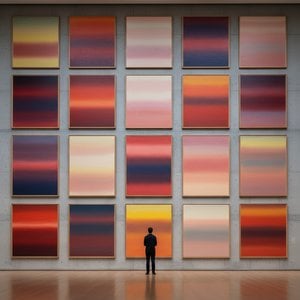
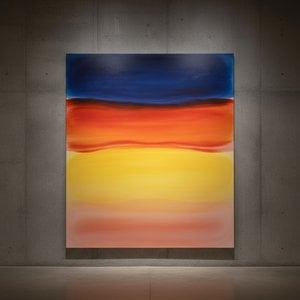
While Action Painting emphasized dynamic gesture, Color Field painting sought to evoke emotion through the power of color itself. Mark Rothko’s monumental canvases, often composed of large, rectangular blocks of luminous color, are profoundly meditative experiences. He aimed to create paintings that resonated with universal human emotions – tragedy, ecstasy, and everything in between. Rothko believed that color had a spiritual dimension, capable of bypassing the intellect and speaking directly to the soul. Clyfford Still, another key figure in this sub-movement, approached color field painting with a different aesthetic. His works are characterized by jagged, irregular shapes and intense, often somber hues. Still’s paintings evoke a sense of primordial power, suggesting landscapes both earthly and otherworldly. Unlike Rothko's layered washes, Still's canvases feature dramatic contrasts and textured surfaces, creating a feeling of depth and turbulence. Both artists shared a commitment to abstraction as a means of expressing profound emotional truths, but they achieved this through distinct visual languages.
Beyond New York: International Influences and Diverse Voices within the Movement
 LeRoy Neiman
Explore the abstract expressionist paintings of Norman Bluhm (1921-1999). Influenced by European modernism & American action painting, Bluhm's vibrant works—including his acclaimed poem paintings with Frank O’Hara—are gaining recognition for their un
Although Abstract Expressionism is often associated with New York City, its roots were surprisingly diverse. The influx of European artists fleeing political instability in the 1930s and 40s played a crucial role in shaping the movement’s aesthetic. Surrealist techniques, particularly automatism – championed by artists like André Masson and Max Ernst – encouraged American painters to explore the subconscious and embrace spontaneous creation. Furthermore, the influence of Cubism, with its fragmentation of form and perspective, can be seen in the work of many Abstract Expressionists. However, it’s important to recognize that the movement wasn't monolithic. Artists like Norman Bluhm, influenced by both European modernism and American action painting, developed a unique style characterized by vibrant colors and dynamic compositions. Grace Gardner, with her textured impasto and evocative use of blues and reds in works like “Formerly Yugoslavia II,” brought a distinct sensibility to the movement. And while often overlooked, female artists such as Lee Krasner played an integral role, challenging conventional notions of artistic expression.
Collecting Abstract Expressionism: Navigating Value, Authenticity, and Emotional Resonance
 Abstract Art's Evolution: A Collector's Guide to Its Impact & Investment Value
Explore the evolution of abstract art with . Discover key movements, influential artists & expert collecting advice. Invest in timeless masterpieces.
Today, Abstract Expressionist paintings are highly sought after by collectors worldwide. However, navigating the market requires careful consideration. Authenticity is paramount; provenance – the documented history of ownership – is crucial in establishing a work’s legitimacy. The value of an Abstract Expressionist painting depends on several factors, including the artist's reputation, the size and condition of the work, and its historical significance. Beyond financial considerations, however, collecting Abstract Expressionism should be driven by emotional resonance. These paintings are not simply decorative objects; they’re powerful expressions of human experience. Consider what resonates with *you* – do you respond to the energy of Pollock's action paintings? Are you drawn to the meditative quality of Rothko's color fields? Choosing a work that speaks to your soul is far more important than acquiring a piece solely for investment purposes.
The Enduring Legacy: How Abstract Expressionism Continues to Inspire Contemporary Art
Abstract Expressionism’s impact on contemporary art is undeniable. Its emphasis on individual expression, spontaneity, and the exploration of emotion continues to inspire artists today. The movement paved the way for a wide range of subsequent styles, including Minimalism, Pop Art, and Post-Painterly Abstraction. Artists like Peter Upward, with his gestural minimalism, demonstrate a clear lineage from Abstract Expressionism, while others continue to explore the possibilities of color field painting. The legacy extends beyond specific stylistic influences; it’s about a fundamental shift in how art is conceived – as a deeply personal and subjective experience. WahooArt.com offers a curated selection of museum-quality reproductions of Abstract Expressionist masterpieces, allowing you to bring the power and emotion of this revolutionary movement into your own home. Explore our collection today and discover the timeless beauty and enduring relevance of these iconic works. From Milton Resnick’s dynamic abstractions to Bernard Buffet's melancholic expressionism, we strive to make these important artworks accessible to all.