The Renaissance: Rebirth & Revolution in Art
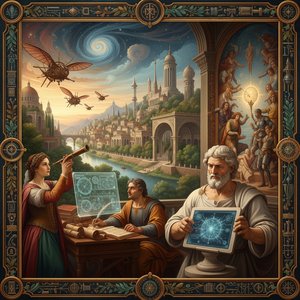
The very word “Renaissance,” meaning rebirth, encapsulates a seismic shift that rippled through Europe beginning in the 14th century. It wasn’t simply a revival of classical forms—though the rediscovery of Greek and Roman art, literature, and philosophy was undeniably central—but a fundamental reorientation of human perspective. For centuries, medieval art had largely focused on the divine, serving as a visual catechism for a world preoccupied with salvation. The Renaissance, however, turned its gaze inward, celebrating human potential, intellect, and earthly beauty. Florence, cradled in the hills of Tuscany, became the epicenter of this transformation, fueled by wealthy patrons like the Medici family who commissioned works that reflected their power and sophistication.
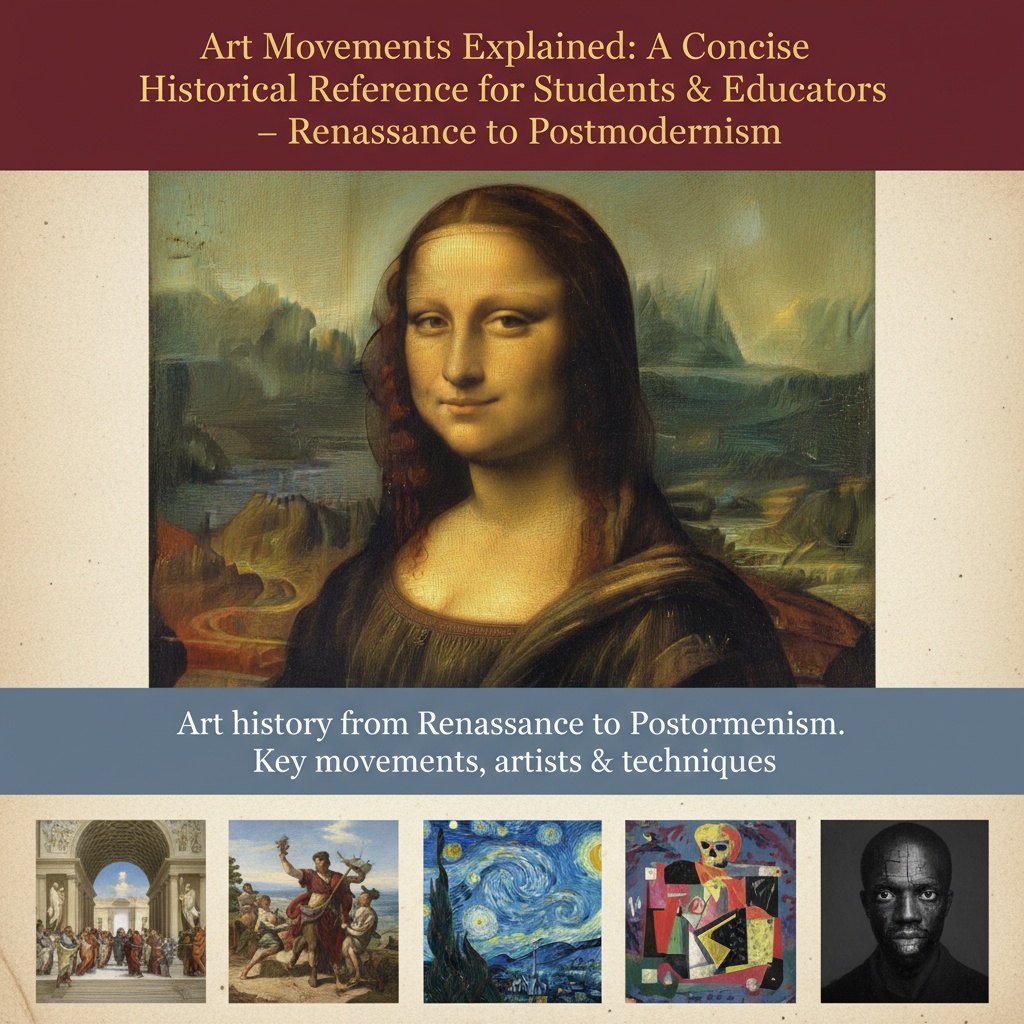
Artists began to meticulously study anatomy, not merely to depict the human form accurately but to understand its underlying structure and grace. Leonardo da Vinci’s relentless pursuit of knowledge—from engineering to botany—informed his art with an unprecedented level of realism and psychological depth. His Mona Lisa, with her enigmatic smile, isn't just a portrait; it’s a study in human emotion, capturing a fleeting moment of inner life. Michelangelo, driven by an almost obsessive dedication to his craft, sculpted figures like David with a muscularity and emotional intensity that had never been seen before. The Sistine Chapel ceiling stands as a testament to the Renaissance ambition—a breathtaking panorama of biblical scenes rendered with unparalleled skill and vision. Raphael, known for his harmonious compositions and graceful figures, exemplified the Renaissance ideal of balance and clarity in works such as *Portrait of a Man holding an Apple*, where subtle symbolism hints at deeper meanings.
The development of linear perspective, often credited to Filippo Brunelleschi, was arguably the most significant technical innovation of the period. It allowed artists to create the illusion of depth on a flat surface, transforming painting into a window onto another world. This wasn’t merely about visual trickery; it reflected a growing interest in scientific observation and mathematical precision. The Renaissance spirit wasn't confined to Italy. Artists across Europe embraced these new ideas, adapting them to their own cultural contexts and creating unique interpretations of classical ideals.
From Baroque Drama to Rococo Elegance: Shifting Styles and Societal Influences
As the High Renaissance waned, a new aesthetic sensibility began to emerge—Baroque art. Where the Renaissance sought balance and harmony, Baroque embraced drama, emotion, and grandeur. This shift wasn’t accidental; it coincided with the Counter-Reformation, as the Catholic Church sought to reaffirm its authority in the face of Protestant challenges. Artists like Caravaggio employed a technique known as chiaroscuro—the dramatic contrast between light and dark—to create intensely emotional scenes that evoked religious fervor. His paintings weren’t merely depictions of biblical stories; they were visceral experiences designed to move the viewer.
Bernini, a master sculptor and architect, took Baroque drama to new heights with works like *Ecstasy of Saint Teresa*, capturing moments of spiritual ecstasy with breathtaking realism. While often associated with religious themes, Baroque art also explored secular subjects, as seen in Rembrandt’s self-portraits which reveal a raw honesty about the human condition. The 18th century witnessed yet another stylistic shift—the emergence of Rococo. Rejecting the grandeur of the Baroque, Rococo embraced frivolity, elegance, and refined aesthetics. Artists like Watteau and Fragonard depicted aristocratic life with delicate brushstrokes and a focus on pleasure and romance. Pastel hues, elaborate ornamentation, and playful themes characterized this style.
However, beneath the surface frivolity often lay subtle social commentary or a sense of melancholy. Rococo wasn’t merely about pretty pictures; it reflected the tastes and values of the French aristocracy—a world on the cusp of revolution.
Romanticism, Realism, and the Rise of Modern Artistic Expression
The late 18th and early 19th centuries saw a profound shift in artistic priorities with the emergence of Romanticism. A reaction against the Enlightenment’s emphasis on reason and order, Romanticism prioritized emotion, imagination, and individuality. Artists like Turner and Friedrich celebrated the power and beauty of nature, often depicting dramatic landscapes and sublime scenes that evoked a sense of awe and wonder. Delacroix’s *Liberty Leading the People* captured the revolutionary spirit of the time, while Goya explored darker themes of war and human suffering.
As the Industrial Revolution transformed society, another movement began to take shape—Realism. Artists like Courbet and Millet sought to depict life as it truly was, without idealization or romantic embellishment. Their works often focused on ordinary people – laborers, farmers, and the urban poor – portraying their lives with unflinching honesty. This wasn’t merely about subject matter; it involved a shift in technique towards photographic accuracy. Realism challenged social norms and provoked controversy, forcing viewers to confront uncomfortable truths about their world.
Both Romanticism and Realism paved the way for modern artistic expression, rejecting traditional conventions and embracing new forms of subjectivity and experimentation.
Impressionism: Capturing Light, Moment, and Subjectivity
Perhaps no art movement is as instantly recognizable or beloved as Impressionism. Emerging in the late 19th century, Impressionism revolutionized painting with its focus on capturing fleeting moments and the effects of light. Monet, Renoir, Degas, and other artists abandoned traditional studio practices, choosing instead to paint *en plein air* – outdoors – to capture the immediacy of their observations. They used quick brushstrokes and vibrant colors to depict the play of light and atmosphere, often sacrificing detail for a sense of overall impression.
The focus was on subjective perception rather than objective representation. Impressionists weren’t trying to paint what they *saw*; they were trying to capture how they *felt* when looking at something. This emphasis on personal experience marked a radical departure from traditional artistic norms. The movement faced initial criticism for its perceived lack of finish and disregard for academic conventions, but it quickly gained popularity as viewers embraced its fresh perspective and vibrant energy.
Impressionism wasn’t merely about technique; it reflected a changing world—a world increasingly focused on individual experience and the fleeting nature of modern life.
The Avant-Garde: Exploring 20th Century Art Movements (Cubism, Surrealism & Beyond)
The 20th century witnessed an explosion of artistic experimentation as artists challenged established norms in unprecedented ways. From Post-Impressionism’s subjective explorations of color and form to the radical fragmentation of Cubism, each movement represented a rejection of traditional conventions. Picasso and Braque, pioneers of Cubism, deconstructed objects into geometric shapes, presenting multiple perspectives simultaneously. This wasn’t merely about visual innovation; it reflected a changing understanding of space and reality.
Surrealism, led by artists like Dalí and Magritte, delved into the subconscious mind, creating dreamlike imagery that challenged rational thought. Abstract Expressionism, with figures like Pollock and Rothko, embraced non-representational forms, focusing on emotion and gesture. These movements weren’t isolated phenomena; they were interconnected responses to societal changes, philosophical ideas, and a growing sense of uncertainty.
The avant-garde wasn't about creating beautiful objects; it was about pushing the boundaries of artistic expression and challenging viewers to question their assumptions.
Postmodernism: Deconstructing Tradition and Embracing Fragmentation
Emerging in the latter half of the 20th century, Postmodernism represented a rejection of grand narratives and universal truths. Artists questioned authorship, originality, and meaning, embracing fragmentation, irony, and appropriation. Pop Art, with figures like Warhol and Lichtenstein, blurred the boundaries between high and low art, incorporating elements from popular culture into their works. Conceptual art prioritized ideas over aesthetics, challenging traditional notions of artistic skill.
Postmodernism wasn’t a unified style; it was a diverse range of approaches that shared a common skepticism towards established norms. Artists often incorporated historical references, diverse media, and self-reflexive commentary into their works. This movement reflected a changing world—a world increasingly fragmented, globalized, and skeptical of authority.
Postmodernism continues to influence contemporary art today, challenging us to question our assumptions about beauty, meaning, and the role of art in society. Exploring these movements – from the Renaissance’s rebirth of classical ideals to Postmodernism’s deconstruction of tradition – offers a profound understanding of human history and culture.