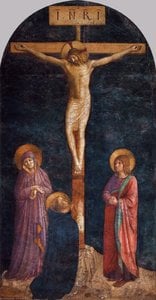
Fra Angelico’s “Cosme y Damián ante la hogera”: A Vision of Judgment
Fra Angelico’s “Cosme y Damián ante la hogera 1” – often simply referred to as “Cosme y Damián ante la hogera” – is far more than a mere depiction of biblical judgment; it's an immersive experience, a profound meditation on mortality and divine grace rendered in the luminous palette of Early Renaissance Florence. Painted around 1442 for the Dominican friary of San Marco, this fresco isn’t merely a historical illustration but a deeply moving tableau that invites contemplation long after the eye has moved on. The scene unfolds within a meticulously constructed courtyard, a space simultaneously earthly and otherworldly – an ingenious device that anchors the dramatic narrative within a tangible reality, making the terrifying prospect of eternal damnation feel strangely relatable.
The composition is remarkably dynamic, immediately drawing the viewer into the heart of the drama. At its center stand Cosme and Damián, two thieves condemned to burn eternally in hellfire, their faces etched with an agonizing blend of terror and regret. Their postures mirror each other perfectly – arms outstretched in supplication, eyes fixed on the inferno before them – a poignant symbol of shared fate. However, it’s not just these central figures that command attention; surrounding them is a throng of onlookers: Dominican friars, monks, and ordinary citizens, each reacting to the impending judgment with varying degrees of fear, sorrow, or quiet contemplation. This inclusion elevates the scene beyond a simple punishment narrative; it transforms it into a communal experience, a stark reminder of our own mortality and the consequences of our actions in this life.
The Quattrocento Context: Humanism and Divine Revelation
“Cosme y Damián ante la hogera” is inextricably linked to the artistic and intellectual currents of the Quattrocento – the 15th-century Italian Renaissance. This period witnessed a remarkable revival of interest in classical antiquity, coupled with a burgeoning humanist philosophy that emphasized human potential and earthly experience. Yet, Fra Angelico’s work transcends mere imitation; it seamlessly integrates these influences with deeply rooted Christian beliefs. The painting reflects the humanist fascination with perspective and spatial relationships, evident in the carefully constructed courtyard and the dramatic foreshortening of the figures – techniques borrowed from classical art but applied to a profoundly religious subject. However, at its core, “Cosme y Damián” remains a powerfully religious image, conveying a potent message about sin, judgment, and ultimately, redemption.
The choice to depict Cosme and Damián – two thieves historically condemned to burn in hellfire – is particularly significant. Their inclusion isn’t simply a morbid detail; it serves as a potent reminder of the consequences of wrongdoing and the urgent need for repentance. The Dominican friary of San Marco, where this fresco resides, was a center for spiritual reflection and education. By presenting this scene with such clarity and emotional intensity, Fra Angelico aimed to inspire his fellow monks – and indeed, all viewers – to live virtuous lives and seek divine grace. The entire composition feels like a carefully orchestrated sermon, visually communicating a timeless truth.
Symbolism and Interpretation: A Window into the Soul
Beyond its immediate narrative, “Cosme y Damián ante la hogera” is rich in symbolic meaning. The courtyard itself represents the earthly realm – a space of temptation and sin, fraught with peril. The imposing castle looming in the background, often interpreted as representing Florence or even God’s judgment, casts a long shadow over the scene, emphasizing the inescapable nature of divine authority. Scattered across the ground are swords, symbols of death and destruction, while a bowl – perhaps representing an offering or a plea for mercy – adds another layer of complexity to the composition.
Crucially, the figures surrounding Cosme and Damián aren’t merely passive observers; they represent the collective conscience of humanity. Their expressions range from despair and resignation to moments of horrified recognition, reflecting the diverse ways in which people respond to the threat of judgment. Fra Angelico's masterful use of gesture and facial expression conveys a profound understanding of human psychology, inviting viewers to contemplate their own moral choices and consider how they might fare in the face of divine reckoning.
A Legacy of Beauty: Reproduction and Artistic Inspiration
“Cosme y Damián ante la hogera 1” stands as a testament to Fra Angelico’s extraordinary artistic talent and his deep spiritual devotion. Reproductions of this iconic fresco capture the luminosity, detail, and emotional power of the original. When commissioning a high-quality reproduction, pay particular attention to the nuances of color – the subtle *sfumato* effect that defines Angelico's style, creating an atmospheric depth that is both captivating and unsettling. This painting continues to inspire artists and interior designers alike, offering a timeless vision of judgment, repentance, and the enduring quest for spiritual redemption. It’s a piece that speaks volumes about the human condition, rendered with unparalleled beauty and profound insight.



 Náhled
 Koupit tisk
 Sdílet
 Sdílet
 Podrobnosti o díle

 Stáhnout
 Podobné položky
 Rentgenové snímky
 Slideshow

 Zobrazit více






































 Skleněná varianta je dostupná pouze u rozměrů menších než 110 cm