BEZPLATNÉ UMĚLECKÉ PORADENSTVÍ

x
Koupit tisk Koupit tiskObjednat reprodukci Objednat reprodukci SdíletSdílet
PodrobnostiPodrobnosti Přidat do oblíbených Přidat do oblíbených StáhnoutStáhnout Podobné položkyPodobné položky Rentgenové snímkyRentgenové snímky SlideshowSlideshow

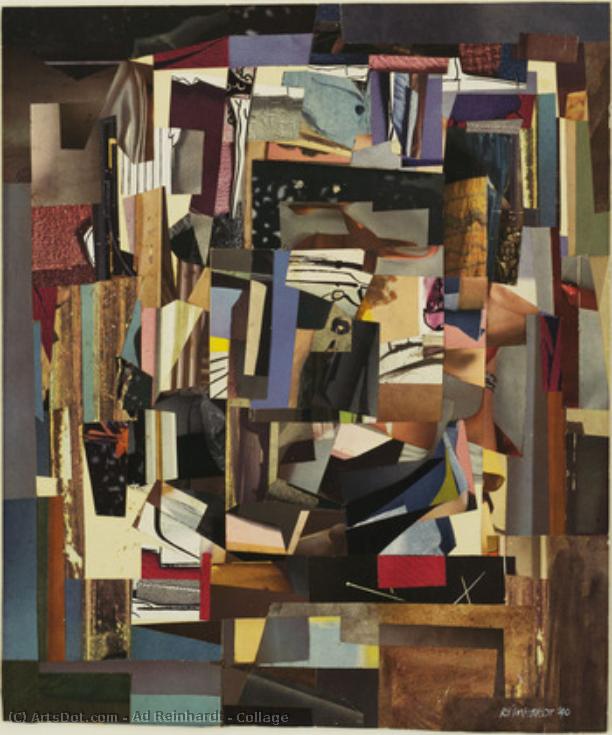
Collage

Explore Ad Reinhardt's 1940 abstract collage featuring muted geometric forms; discover this seminal piece of early modern art for your collection.

"meta_description": "Ad Reinhardt (1913-1967) byl americký malíř známý svými ikonickými černými plátny a minimalistickým přístupem k umění. Jeho dílo zpochybňuje tradiční představy o reprezentaci a je klíčovým představitelem moderního umění."

Koupě vysoce rozlišeného, vylepšeného digitálního obrazu, který je mnohem kvalitnější než online náhled.

Každý soubor je pečlivě připraven našimi odborníky pomocí pokročilých nástrojů a expertní manuální retuše. Zajišťujeme, aby každý obraz disponoval výjimečnou ostrostí, přesnou barevnou věrností a jemnými detaily.

Finální soubor vám bude do 72 hodin zaslán e-mailem, optimalizovaný pro okamžité použití v profesionálním, redakčním i tiskovém prostředí. Nabízíme stejnou kvalitu, které důvěřují špičková designová studia, nakladatelství i galerie.

Digitální obrazy

Stáhněte si soubor ve vysokém rozlišení pro osobní prohlížení, tisk a kreativní projekty.

Celková cena

$9.99

Součást každé objednávky digitálního obrazu

Profesionální digitální doručení, zaručeno.

Když si vyberete WahooArt.com, nezískáváte pouze obrázek – získáváte digitální umělecké dílo s profesionálně vylepšenými detaily, zpracované s precizností a podpořené zárukou za spokojenost. Zde je vše, co vaše objednávka automaticky obsahuje:

shipping_icon
Rychlé doručení e-mailem

Váš digitální obraz ve vysokém rozlišení vám bude zaslán e-mailem do 72 hodin od objednávky – připraven k okamžitému použití.

canvas_icon
Digitální soubor s využitím AI

Vaše umělecké dílo je profesionálně optimalizováno pomocí pokročilých nástrojů umělé inteligence a manuální úpravy, což zajišťuje maximální úroveň detailu, ostrosti a přesnosti barev.

insurance_icon
Bezplatné doživotní znovuodeslání

Soubor jste omylem smazali nebo ztratili? Žádný problém – kdykoliv vám ho znovu zašleme zcela zdarma.

tax_icon
Bez poplatků za dovoz – navždy

Užijte si své umělecké dílo okamžitě bez celních poplatků, daní nebo nákladů na dopravu – digitální stažení je vždy bez daňových povinností.

color_icon
Záruka přesnosti barev

Pomocí profesionálních nástrojů a správy barev zajišťujeme, aby váš digitální obraz odrážel původní barvy co nejvěrněji.

return_icon
60denní záruka spokojenosti

Pokud nebudete s digitální fotografií spokojeni, provedeme její revizi nebo vám vrátíme 100% během 60 dnů – bez jakýchkoliv dotazů.

guarantee_icon
100% záruka vrácení peněz

Nespokojeni? Získejte plnou částku zpět do 60 dní od přijetí vašeho digitálního souboru – bez jakýchkoliv dotazů.

discount_icon
Slevy při hromadných objednávkách

Koupěte si 3 obrazy, ušetřete 10% - Koupěte si 5, ušetřete 15% - Koupěte si 10+, ušetřete 20%. Ideální pro kreativní projekty, galerie a agentury.

Základní informace

  • Subject or theme: None discernible.
  • Influences:
    • Pablo Picasso
    • Georges Braque
  • Movement: Synthetic Cubism
  • Title: Collage
  • Artist: Ad Reinhardt
  • Medium: Collage
  • Location: Museum of Modern Art (MoMA)

Kvíz o umění

U každé otázky je pouze jedna správná odpověď.

Otázka 1:
What artistic movement is Ad Reinhardt’s ‘Collage’ primarily associated with?
Otázka 2:
The color palette of 'Collage' predominantly features:
Otázka 3:
What is the dominant geometric shape used in ‘Collage’?
Otázka 4:
'Collage' exemplifies a technique characterized by:
Otázka 5:
According to the description, what is the overall impression conveyed by the composition?

Popis sběratelského kusu

The Architecture of Abstraction: Ad Reinhardt's "Collage"

To stand before Ad Reinhardt’s Collage from 1940 is to encounter an intellectual puzzle rendered in paper and pigment. This work does not whisper; it asserts a complex, almost architectural dialogue with the viewer. It is a composition that refuses singular focus, instead inviting the eye on a meandering journey across its surface. Reinhardt masterfully employs the collage technique—the careful assemblage of disparate elements—to build an environment where structure and apparent chaos coexist in delicate tension. The overall impression is one of profound meditation, a visual field built from overlapping planes that suggest depth without ever committing to illusionistic space.

A Study in Muted Geometry

The formal language of Collage is dominated by the rectangle. These geometric forms, varying wildly in size and orientation, are layered one upon another like strata of memory or geological time. The palette itself speaks volumes about its era and its intent: it is restrained, earthy, and deeply considered. Browns, grays, beiges, and blacks form a somber foundation, occasionally punctuated by whispers of muted pink, blue, or orange. These colors are not meant to dazzle; rather, they absorb the light, encouraging the viewer to look closer, to discern the subtle shifts in tone where one piece meets another. The lines defining these shapes are sharp, unwavering vectors that impose a grid-like order over what might otherwise dissolve into pure randomness.

Historical Resonance and Intellectual Depth

Created at a pivotal moment in art history, this piece sits at the fascinating intersection of early abstraction and the burgeoning modernist impulse. While it shares some visual vocabulary with Abstract Expressionism, its cool, calculated arrangement distinguishes it. Reinhardt was always concerned with defining the very essence of painting—what could remain when all narrative and representation were stripped away? This collage is a testament to that rigorous inquiry. It suggests an art that is self-referential, focusing not on depicting the world outside, but on exploring the possibilities inherent within the medium itself. For the collector or designer, this piece offers a sophisticated anchor of intellectual weight for any space.

Symbolism and Emotional Echoes

What does such an arrangement of non-objective shapes evoke? One might interpret the fragmentation as a reflection of modern life—a sense of being composed of many disparate, yet necessary, parts. The quietude emanating from the muted tones can settle over a room, bringing a sense of contemplative calm or even poignant melancholy. It is art that demands patience; it rewards the viewer who slows their breath and allows their gaze to wander without expectation. Owning a reproduction of Collage is not merely acquiring decoration; it is curating an atmosphere of thoughtful engagement.

Podobná umělecká díla


Biografie umělce

A Life Dedicated to the Essence of Art

Ad Reinhardt, born Adolph Friedrich Reinhardt in Buffalo, New York, on December 24, 1913, was a figure who dedicated his life not merely to creating art, but to defining what art *could* be. His early years were marked by a familial mobility—his father’s work led the family to New York City—and a close bond with his cousin Otto. Even as a child, Reinhardt displayed an exceptional talent for drawing and painting, winning accolades in school that hinted at the rigorous artistic journey ahead. He wasn't simply interested in *making* images; he was driven by a need to understand the very foundations of visual expression. This intellectual curiosity led him to Columbia University where he studied art history under the influential Meyer Schapiro, an experience that profoundly shaped his thinking about aesthetics and the role of the artist. Further training at Columbia’s Teachers College, the American Artists School with Carl Holty and Francis Criss, and portraiture studies at the National Academy of Design under Karl Anderson solidified his technical skills—skills he would later deliberately attempt to transcend. Reinhardt believed he had mastered traditional techniques early on, freeing him to pursue a more conceptual path.

From Geometric Beginnings to the “Ultimate” Black

Reinhardt’s artistic evolution was far from linear. He began with works rooted in geometric abstraction, exploring form and color with a precision that demonstrated his technical mastery. However, this early work served as a stepping stone toward something more radical. His involvement with the WPA Federal Art Project during the 1930s provided him with crucial support and exposure, allowing him to hone his craft while contributing to public art initiatives. The 1940s saw Reinhardt become an active member of American Abstract Artists (AAA), a group he considered pivotal to his development. He found kinship with fellow artists who shared a commitment to non-representational art, exhibiting regularly alongside them and engaging in lively debates about the future of painting. His association with Betty Parsons Gallery further cemented his place within the burgeoning New York art scene. Throughout the 1950s, Reinhardt embarked on a series of paintings exploring subtle variations within single hues—all red, all blue, all white—a deliberate reduction that foreshadowed his most iconic works. It was in the 1960s, however, that he achieved what many consider his defining achievement: the “black” paintings. These weren’t simply black canvases; they were meticulously crafted explorations of near-black shades, subtle gradations and textures designed to challenge perception and push the boundaries of painting itself. He referred to them as his "ultimate" paintings, suggesting a culmination of artistic endeavor—a point beyond which further progress was impossible.

Art-as-Art: A Philosophy of Pure Aestheticism

Central to understanding Reinhardt’s work is his philosophy of *Art-as-Art*. He vehemently believed in the autonomy of art, rejecting any notion that it should serve political, social, or narrative purposes. For Reinhardt, the value of a painting lay solely in its aesthetic qualities—its form, color, composition, and the way it engaged with the viewer on a purely visual level. This conviction led him to critique what he saw as problematic tendencies within the art world, particularly artists who prioritized messaging over aesthetics. He expressed these critiques through satirical cartoons and writings, often challenging prevailing artistic norms with wit and intellectual rigor. His friendships with Robert Lax and Thomas Merton, both of whom explored themes of simplicity in their respective fields, further informed his aesthetic principles. Reinhardt’s work resonated with a growing interest in minimalism and conceptual art, influencing artists who sought to strip away extraneous elements and focus on the essential qualities of their medium. He wasn't merely creating paintings; he was articulating a theoretical position about the nature of art itself.

The “Black Paintings” and Their Significance

Reinhardt’s “black” paintings represent more than just a shift in color palette; they embody a profound philosophical statement. These works, created between 1954 and 1967, were not intended to depict anything recognizable. Instead, Reinhardt sought to create paintings that were utterly self-contained—independent of any external reference or interpretation. He famously stated that his black paintings were “the ultimate,” suggesting they represented the purest form of abstract expression, devoid of all traces of emotion, narrative, or symbolism. The subtle variations in tone and texture within these canvases – achieved through painstaking layering and manipulation of paint – invited viewers to engage with the work on a purely sensory level, focusing on the experience of seeing rather than attempting to decipher meaning. They became a challenge to conventional notions of representation, demonstrating that art could exist solely as an object of aesthetic contemplation.

A Lasting Legacy: Minimalism, Conceptualism, and Beyond

Ad Reinhardt’s influence extends far beyond his own body of work. His “black” paintings are now recognized as seminal contributions to minimalist and monochrome painting, challenging conventional notions of representation and pushing the boundaries of visual perception. His writings on *Art-as-Art* continue to be studied by artists and critics alike, sparking debate about the role of art in society and the relationship between form and content. Though he was a key figure within Abstract Expressionism through his association with AAA and Betty Parsons Gallery, Reinhardt ultimately transcended categorization, paving the way for subsequent generations of conceptual and minimalist artists. He taught at numerous institutions—Brooklyn College, California School of Fine Arts, University of Wyoming, Yale University, and Hunter College—imparting his rigorous intellectual approach to aspiring artists. Even his involvement in protests – against MoMA in the 1940s, with “The Irascibles” against the Metropolitan Museum of Art in the 1950s, and through a lithograph for Artists and Writers Protest Against the Vietnam War in 1967—demonstrated a commitment to artistic freedom and social responsibility. Ad Reinhardt died on August 30, 1967, in New York City, leaving behind a legacy that continues to inspire and provoke. His work remains a powerful testament to the enduring power of abstract art and the importance of questioning fundamental assumptions about the nature of creativity itself. The Ad Reinhardt Estate is currently represented by David Zwirner Gallery, ensuring his continued presence within the contemporary art world.
Ad Reinhardt

Ad Reinhardt

1913 - 1967 , Spojené státy americké

Stručné informace

  • Artistic Movement Or Style: Abstr. expresionismus, Minimalismus
  • Artists Or Movements Influenced By This Artist: ['Konceptuální umění']
  • Artists Who Influenced This Artist:
    • Meyer Schapiro
    • Robert Lax
  • Date Of Birth: 24. prosinec 1913
  • Date Of Death: 30. август 1967
  • Full Name: Adolph Friedrich Reinhardt
  • Nationality: Američan
  • Notable Artworks:
    • Untitled
    • Černá malba
  • Place Of Birth: Buffalo, USA