



The History of The Lobkowicz Collections
The House of Lobkowicz is an important Bohemian noble family that dates back to the 14th century. Over many centuries, the family expanded its presence through marriage and the acquisition of vast territories across central Europe. This long lineage has maintained a presence in the region for hundreds of years, establishing a legacy that remains tied to the history of the Czech Republic. Today, The Lobkowicz Collections are housed in Prague, representing a continuity of ownership and stewardship that has survived significant political shifts.
Following the Velvet Revolution, the collection was recently returned to the family. In 1994, a non-profit organisation was established to curate and maintain the holdings. This organization manages a diverse assembly of objects, including fine art, music, arms, decorative arts, a vast library, and a historic archive. These items have been gathered and preserved through the generations, reflecting the specific tastes and interests of the family members who served as collectors and performers.
The Lobkowicz Palace and Architecture
Situated within the Prague Castle complex in Prague, Czech Republic, the Lobkowicz Palace holds a singular position as the only privately owned building in the entire precinct. The structure originated in the second half of the 16th century, initiated by the Czech nobleman Jaroslav of Pernštejn. His brother, Vratislav of Pernštejn, oversaw the completion of the edifice. The architecture reflects the historical weight of the Pernštejn family, whose presence in the region dates back to the 14th century.
The palace was opened to the public on 2 April 2007 as the Lobkowicz Palace Museum. Within its walls, the architecture provides a setting for a collection that has been assembled over centuries. The building itself remains a significant part of the Hradčany Hill landscape, occupying the utmost wing of the vast Prague Castle area. It functions as a repository for the family's accumulated treasures, including fine art and historical manuscripts.
The interior spaces house various objects that have been preserved through generations of the House of Lobkowicz. These include:
- The original score of Beethoven's Symphony No. 3 in E-flat major
- 18th-century lute tablatures
- Renaissance arms
Art and Masterpieces of the Collection
The collection brings together a significant selection of European painting, ranging from the Northern Renaissance to the eighteenth century. Pieter Brueghel the Elder is represented by Haymaking (1565), a work that captures a specific sense of rural life. Nearby, the spiritual gravity of the sixteenth century is felt in Lucas Cranach the Elder’s The Virgin and Child with Saint Barbara and Saint Catherine of Alexandria (about 1520). These works exist alongside portraits that document the lineage and presence of the nobility, such as the 1585 portrait of Polyxena von Pernstein by Rolan de Mois and the 1540 likeness of Mary of Pernstein by Jakob Seisenegger.
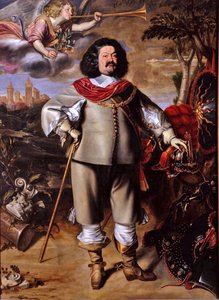
The presence of the Baroque era is felt through the portraiture of Anselm van Hulle, specifically his 1655 depiction of Wenzel Eusebius, Prince of Lobkowicz. This era also finds expression in the luminous landscapes of Antonio Canaletto. His views of the River Thames, including The River Thames with St. Paul's Cathedral on Lord Mayor's Day (about 1746) and The River Thames looking towards Westminster from Lambeth (about 1747), offer a precise observation of London's topography and light. The collection also includes works attributed to Diego Velázquez, adding to the breadth of the holdings.
- Haymaking, 1565 - Pieter Brueghel the Elder
- The Virgin and Child with Saint Barbara and Saint Catherine of Alexandria, about 1520 - Lucas Cranach the Elder
- Portrait of Wenzel Eusebius Prince of Lobkowicz (1609-1677), 1655 - Anselm van Hulle
- Portrait of Polyxena von Pernstein, 1585 - Rolan de Mois
- Portrait of Mary of Pernstein, 1540 - Jakob Seisenegger
- The River Thames with St. Paul's Cathedral on Lord Mayor's Day, about 1746 - Canaletto
The Music Archive and Manuscripts
The Music Archive contains some 5,000 items, a collection assembled over three centuries by members of the family. These holdings reflect the personal affinities and tastes of aristocratic amateurs who were both collectors and performers. The archive includes 18th-century lute tablatures, oratorios, and operas in both manuscript and early print. Performing parts for symphonies and quartets by Haydn, Mozart, and Beethoven are also held within these records.
Among the most significant holdings are the original manuscripts of compositions by Wolfgang Amadeus Mozart and Ludwig van Beethoven. One particular manuscript holds a central place in the collection: the original score of Beethoven's Opus 55, Symphony No. 3 in E-flat major, composed about 1803/04. To stand before such a score is to encounter the physical presence of a musical history that has been preserved through generations.
Research and Scholarly Opportunities
The Lobkowicz Collections and Library & Archives provide resources for deep inquiry. The organization works to provide access to the art, music, and literature contained within the collection to both academic researchers and the general public. This commitment ensures that the historical materials remain available for study and preservation.
The Lobkowicz Library & Archives is open to visiting scholars, researchers, and university students engaged in thesis programs. Access is granted for general or specialized research by prior appointment. Through these openings, the institution facilitates a connection between the physical objects and the scholars who study them.
The organization welcomes and collaborates with an international community of scholars, researchers, and institutions. Such partnerships support the advancement of knowledge through the study of the collection's diverse holdings. These efforts contribute to the broader understanding of the historical and cultural contexts surrounding the items held in Prague.