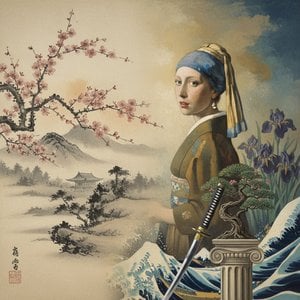
Reisai Gukyoku: A Silent Voice of Zen
Reisai Gukyoku (approximately 1369 – 1452), a Japanese Buddhist monk painter, stands as an enigmatic figure within the artistic landscape of Nanbokuchō period Japan. Though his life remains shrouded in relative obscurity compared to contemporaries like Sesshu Toyokuni or Kano Hanshi, Gukyoku’s contribution to Zen calligraphy and scroll painting is undeniable—a testament to understated elegance and profound spiritual contemplation. His work embodies the core tenets of Zen Buddhism: simplicity, directness, and an unwavering focus on achieving enlightenment through mindful observation.
Early Life and Training
Information regarding Reisai Gukyoku's formative years is scarce. He was born in Yamashiro Province (modern Kyoto Prefecture), a region deeply rooted in Buddhist tradition. Precise details about his family lineage are unavailable, reflecting the common practice of monastic families prioritizing spiritual pursuits over genealogical documentation. Records indicate he entered Tengyō-ji Temple at a young age—a pivotal decision that shaped his entire artistic trajectory and intellectual worldview. Within Tengyoku’s walls, he diligently studied Zen Buddhism under influential masters, absorbing the principles of shikantaza (“just sitting”) and koans (“paradoxical riddles”), practices designed to dismantle conceptual thought and cultivate intuitive understanding. These formative experiences profoundly impacted his artistic style—characterized by meticulous brushwork and a deliberate avoidance of ornamentation. The emphasis on meditative practice instilled in him a deep appreciation for stillness and observation—values that would permeate his subsequent artistic endeavors.
Style and Technique: The Essence of Zen Expression
Gukyoku’s artistic signature lies in his masterful execution of calligraphy, specifically hanging scrolls (rokuban). Unlike the flamboyant styles prevalent during Nanbokuchō, Gukyoku's approach prioritized conveying spiritual essence over visual spectacle. His brushstrokes were remarkably restrained—precise, deliberate, and imbued with a palpable sense of stillness. He favored ink wash techniques (sumi-e), utilizing varying shades of black to create textured surfaces that mirrored the natural world—particularly landscapes reminiscent of Mount Yoshino, a sacred site venerated by Zen monks. The resulting scrolls are notable for their subtle gradations of tone and their masterful control over line weight, reflecting Gukyoku’s unwavering commitment to capturing the fleeting beauty of impermanence—a central concept in Zen philosophy. His compositions often incorporated minimalist arrangements—single branches or rocks—serving as visual anchors for meditative contemplation. This technique aimed not merely to depict a scene but to evoke a state of mind—to invite the viewer into a contemplative experience akin to shikantaza itself.
Notable Works: Reflections of Buddhist Thought
While Reisai Gukyoku's oeuvre remains relatively modest compared to other prominent artists of his era, several scrolls bear witness to his artistic prowess and intellectual depth. “Fenggan, Hanshan, and Shide” exemplifies his signature style—a serene depiction of Mount Yoshino bathed in moonlight, rendered with exquisite attention to detail. The scroll’s understated beauty underscores the Zen ideal of perceiving reality without preconceptions—allowing oneself to be absorbed by the present moment. Similarly, "Buddhist Maxim on the Saving Power of Amida" presents a concise koan inscription executed in elegant cursive script—a testament to Gukyoku's ability to distill complex philosophical concepts into visually arresting forms. These works are not merely aesthetically pleasing; they serve as conduits for conveying profound spiritual truths—reflecting Gukyoku’s unwavering devotion to Zen Buddhism and its pursuit of enlightenment. The careful selection of materials and the deliberate application of ink were considered crucial elements in achieving this goal – a reflection of Zen's belief that simplicity is key to unlocking deeper understanding.
Legacy and Significance
Reisai Gukyoku’s influence extends beyond his individual creations. He represents a crucial link in the chain of Zen calligraphy tradition—a lineage that continues to inspire artists today. His meticulous technique and contemplative aesthetic established precedents for subsequent generations of Zen painters, emphasizing simplicity, directness, and an unwavering focus on capturing the essence of Buddhist thought. Although he remains largely unrecognized by mainstream art historians, Reisai Gukyoku’s work stands as a poignant reminder of the transformative potential of artistic practice when guided by spiritual aspiration. His legacy resides not in grand gestures or flamboyant displays but in the subtle beauty and profound stillness of his scrolls—expressions of Zen Buddhism's core values that resonate across centuries. He embodies the spirit of Zen – quiet contemplation, mindful observation, and an acceptance of impermanence – principles that continue to inspire artists and scholars alike.