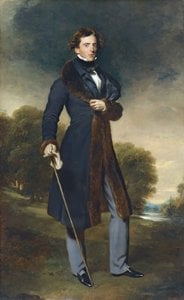
Томас Лоуранс, 1769 – 1830

Картини на Томас Лоуранс: 100-те най-известни произведения, подредени по рейтинг

Най-известната картина на Томас Лоуранс е Satan Summoning His Legions (1797). С John Philip Kemble (1757–1823), as Coriolanus (1798) и Lord Granville Leveson Gower, later 1st Earl Granville (1809) се допълват трите произведения, които всеки разпознава. Нашият каталог включва 466 произведения на Томас Лоуранс; 100-те по-долу са най-гледаните от света, всяко от тях с годината си, музея, в който се съхранява, и причината за неговата значимост.

Класирани според нашия коефициент за популярност, който съчетава търсенията, посещенията и поръчките за всяко произведение. Обновено Октомври 2026. Всяко шедьовър на тази страница може да бъде поръчано като маслено репродукция на ръка с музейно качество или като художествен принт, в избран от Вас размер.

Портрет на Томас Лоуранс
Томас Лоуранс · 1769 – 1830
Роден · починал
1769 – 1830, Бристъл
Движение
Romanticism
Работи в нашия каталог
466
Най-известни
Satan Summoning His Legions (1797)
Най-много творби в
Кралска колекция

10-те най-известни картини на Томас Лоуранс

Satan Summoning His Legions (1797) на Томас Лоуранс
1

Satan Summoning His Legions

1797 · Oil On Canvas

In the vast, dramatic expanse of Sir Thomas Lawrence’s 1797 masterpiece, Satan Summoning His Legions, viewers are transported into the heart of a cosmic rebellion. This monumental oil on canvas, measuring an imposing 432 x 274 cm, serves as a breathtaking window into the depths of Miltonic epic. The painting captures the precise moment of transition described in John Milton’s Paradise Lost—the chilling command to "Awake, arise, or be for…

John Philip Kemble (1757–1823), as Coriolanus (1798) на Томас Лоуранс
2

John Philip Kemble (1757–1823), as Coriolanus

1798 · Oil On Canvas · Guildhall Art Gallery, Лондон

To stand before this portrait of John Philip Kemble as Coriolanus is to step directly into the tempestuous heart of the late eighteenth century. Sir Thomas Lawrence has captured not merely a likeness, but an overwhelming emotional state—a moment suspended between public grandeur and private turmoil. The composition immediately draws the viewer into its dramatic embrace, dominated by the figure shrouded in shadow. It is a masterclass in Romantic sensibility,…

Lord Granville Leveson Gower, later 1st Earl Granville (1809) на Томас Лоуранс
3

Lord Granville Leveson Gower, later 1st Earl Granville

1809 · Oil On Canvas · Yale Center for British Art, Ню Хейвън

In the sweeping annals of British portraiture, few eras capture the intoxicating blend of aristocratic poise and romantic idealism quite like the Regency period. Sir Thomas Lawrence’s portrait of Lord Granville Levan Gower, completed between 1804 and 1809, serves as a breathtaking window into this gilded age. As a quintessential emblem of high society, the painting transcends a mere physical likeness; it is a meticulously crafted tableau that speaks to…

Уилям ван Милдхерт (1829) на Томас Лоуранс
4

Уилям ван Милдхерт

1829 · Акрил върху платно · Auckland Castle, Auckland

William van Mildhert (1765–1836), Bishop of Durham (1826–1836) – A Portrait Steeped in Dignity and Atmospheric Depth Sir Thomas Lawrence’s depiction of William van Mildhert, Bishop of Durham, transcends mere representation; it embodies the spirit of late Neoclassical portraiture—a genre defined by meticulous realism, formal composition, and an unwavering commitment to conveying character with profound grace. Painted in 1829, this monumental canvas (143 x 111 cm) captures not just a…

John, Count Capo d'Istria (1776-1831) (1819) на Томас Лоуранс
5

John, Count Capo d'Istria (1776-1831)

1819 · Oil On Canvas · Кралска колекция, Лондон

In the sweeping landscape of early 19th-century portraiture, few works capture the intersection of political gravity and aristocratic grace as masterfully as Sir Thomas Lawrence’s 'John, Count Capo d'Istria (1776-18ABS)'. Painted in 1819, this exquisite oil on canvas serves as a profound window into an era defined by shifting borders and the rise of influential statesmen. The subject, John, Count Capo d'Istria, emerges from the frame not merely as a…

The 3rd Marquess of Hertford (1823) на Томас Лоуранс
6

The 3rd Marquess of Hertford

1823 · Painting · Wallace Collection, Лондон

To stand before this portrait of The 3rd Marquess of Hertford is to step directly into the polished drawing rooms and sophisticated salons of early nineteenth-century England. Painted in 1823, this work captures not merely a likeness, but an entire epoch—the height of Regency elegance and aristocratic confidence. Sir Thomas Lawrence, master chronicler of the British elite, has rendered the Marquess with a masterful blend of formality and undeniable vitality.…

LA COMTESSE D'INCHIQUIN на Томас Лоуранс
7

LA COMTESSE D'INCHIQUIN

Oil On Canvas · Лувър, Пари

In this portrait, we encounter the Comtesse d'Inchiquin, captured in a moment of quiet composure. The sitter is presented in a three-quarter view, her presence defined by an air of dignity and refinement that speaks to her social standing. There is a certain stillness here; she sits facing us slightly, her hands resting upon the soft folds of a draped garment or perhaps the arm of a chair. The composition…

William Windham (1750–1810), MP, Lord Lieutenant of Ireland (1783), Secretary for War (1792–1801), Secretary for War and the Colonies (1806) (1803) на Томас Лоуранс
8

William Windham (1750–1810), MP, Lord Lieutenant of Ireland (1783), Secretary for War (1792–1801), Secretary for War and the Colonies (1806)

1803 · Oil On Canvas · University College, Оксфорд

In the grand tapestry of British portraiture, few works capture the intersection of political gravity and artistic elegance as profoundly as Sir Thomas Lawrence’s 1803 masterpiece, William Windham. This portrait is far more than a mere recording of a statesman's features; it is a compelling visual narrative of power, intellect, and the pervasive influence of aristocratic patronage during the Napoleonic era. As the viewer encounters Windham, they are met with…

Томас Лоуранс, картини от 11 до 100

George IV (1822) на Томас Лоуранс
#13

George IV

1822 · Wallace Collection

To stand before Sir Thomas Lawrence’s “George IV” is to be transported directly into the opulent drawing rooms of early nineteenth-century England, where every brushstroke whispers of a…

Поръчайте репродукция →
Queen Charlotte (1789) на Томас Лоуранс
#14

Queen Charlotte

1789 · Национална галерия

In the grand tapestry of British portraiture, few works capture the delicate balance between sovereign authority and human vulnerability as exquisitely as Sir Thomas Lawrence’s 1789 masterpiece, Queen…

Поръчайте репродукция →
Portrait of David Lyon (1825) на Томас Лоуранс
#16

Portrait of David Lyon

1825 · Музей Тисен-Борнемица

Sir Thomas Lawrence's “Portrait of David Lyon,” completed in 1825, stands as a quintessential emblem of the English Romantic era’s preoccupation with aristocratic grandeur and psychological nuance. Currently…

Поръчайте репродукция →
Ewan Law, M.P. (1788) на Томас Лоуранс
#29

Ewan Law, M.P.

1788 · Детройтският институт за изкуства

The gaze of Ewan Law, M.P., meets the viewer from within a frame that captures a specific moment of political and social standing. This portrait, titled Ewan Law,…

Поръчайте репродукция →
Sir Samuel Romilly (1808) на Томас Лоуранс
#31

Sir Samuel Romilly

1808 · Национална портретна галерия

In this bust-length portrait of Sir Samuel Romilly, Thomas Lawrence presents an elderly gentleman with a quiet, commanding presence. The subject is positioned slightly off-center, his body turned…

Купете го за дома си →

Картини на Томас Лоуранс по периоди

Обичаните сюжети на Томас Лоуранс

Четирите най-често срещани сюжета сред тези шедьоври, с най-добрия пример за всеки от тях.

Къде могат да се видят картините на Томас Лоуранс

8 музея, които притежават най-голям брой от картините на тази страница.

Музеи Град Творения на Томас Лоуранс Картини от този списък
Кралска колекция, ЛондонКралска колекция Лондон 43 John, Count Capo d'Istria (1776-1831), Ercole, Cardinal Consalvi (1757 1824), Princess Amelia (1783-1810)
Музей на изкуствата във Бостън, БостънМузей на изкуствата във Бостън Бостън 5 Portrait of a Man in a Blue Coat, William Lock of Norbury (1732–1810), William Eden (1744–1814), Baron Auckland
Wallace Collection, ЛондонWallace Collection Лондон 6 The 3rd Marquess of Hertford, George IV, Portrait of a Lady
Държавен музей „Ермитаж“, Санкт ПетербургДържавен музей „Ермитаж“ Санкт Петербург 4 Portrait of Klemens Wenzel von Metternich, Portrait of Count Mikhail S. Vorontsov (1782-1856), Portrait of Emily Harriet Wellesley-Pole (Lady Raglan) (1792-1881)
Лувър, ПариЛувър Пари 10 LA COMTESSE D'INCHIQUIN, Portrait of the Children of John Angerstein, MRS ISAAC CUTHBERT
Yale Center for British Art, Ню ХейвънYale Center for British Art Ню Хейвън 5 Lord Granville Leveson Gower, later 1st Earl Granville, Admiral John Markham, Samuel Lyson
Баварски държавни списъци с произведения на изкуството, МюнхенБаварски държавни списъци с произведения на изкуството Мюнхен 3 Henry Phipps, 1st Earl of Mulgrave, Portrait of George Canning, Lady Orde with her Daughter Anne
Guildhall Art Gallery, ЛондонGuildhall Art Gallery Лондон 5 John Philip Kemble (1757–1823), as Coriolanus, George Dance the Younger (1741–1825), Architect and Surveyor

Най-известната картина на Томас Лоуранс за всяко десетилетие

  1. 1780s
    Queen Charlotte (1789) на Томас Лоуранс
    #14 от 100

    Queen Charlotte

    Възраст 11 – 20 · Национална галерия

    In the grand tapestry of British portraiture, few works capture the delicate balance between sovereign authority and human vulnerability as exquisitely as Sir Thomas Lawrence’s 1789 masterpiece, Queen…

  2. 1790s
    Satan Summoning His Legions (1797) на Томас Лоуранс
    #1 от 100

    Satan Summoning His Legions

    Възраст 21 – 30

    In the vast, dramatic expanse of Sir Thomas Lawrence’s 1797 masterpiece, Satan Summoning His Legions, viewers are transported into the heart of a cosmic rebellion. This monumental oil…

  3. 1800s
    Lord Granville Leveson Gower, later 1st Earl Granville (1809) на Томас Лоуранс
    #3 от 100

    Lord Granville Leveson Gower, later 1st Earl Granville

    Възраст 31 – 40 · Yale Center for British Art

    In the sweeping annals of British portraiture, few eras capture the intoxicating blend of aristocratic poise and romantic idealism quite like the Regency period. Sir Thomas Lawrence’s portrait…

  4. 1810s
    John, Count Capo d'Istria (1776-1831) (1819) на Томас Лоуранс
    #5 от 100

    John, Count Capo d'Istria (1776-1831)

    Възраст 41 – 50 · Кралска колекция

    In the sweeping landscape of early 19th-century portraiture, few works capture the intersection of political gravity and aristocratic grace as masterfully as Sir Thomas Lawrence’s 'John, Count Capo…

  5. 1820s
    Уилям ван Милдхерт (1829) на Томас Лоуранс
    № 4 от 100

    Уилям ван Милдхерт

    Възраст 51 – 60 · Auckland Castle

    William van Mildhert (1765–1836), Bishop of Durham (1826–1836) – A Portrait Steeped in Dignity and Atmospheric Depth Sir Thomas Lawrence’s depiction of William van Mildhert, Bishop of Durham,…

  6. 1830s
    George IV (1762–1830) (1830) на Томас Лоуранс
    № 35 от 100

    George IV (1762–1830)

    Възраст 61 · Walker Art Gallery

    In this formal portrait, Sir Thomas Lawrence captures the essence of George IV through a lens of neoclassical majesty. The composition is centered on the figure of the…

Въпроси относно картините на Томас Лоуранс

Коя е най-известната картина на Томас Лоуранс?Покажи отговора

Satan Summoning His Legions (1797). Следват John Philip Kemble (1757–1823), as Coriolanus (1798) и Lord Granville Leveson Gower, later 1st Earl Granville (1809).

На колко години е бил Томас Лоуранс, когато е нарисувана Satan Summoning His Legions?Покажи отговора

28 години: Satan Summoning His Legions е от 1797 г., а Томас Лоуранс е роден/а в 1769.

Кои са 10-те най-добри картини на Томас Лоуранс?Покажи отговора

Satan Summoning His Legions, John Philip Kemble (1757–1823), as Coriolanus, Lord Granville Leveson Gower, later 1st Earl Granville, Уилям ван Милдхерт, John, Count Capo d'Istria (1776-1831), The 3rd Marquess of Hertford, LA COMTESSE D'INCHIQUIN, William Windham (1750–1810), MP, Lord Lieutenant of Ireland (1783), Secretary for War (1792–1801), Secretary for War and the Colonies (1806), The Two Sons of the 1st Earl of Talbot и Portrait of the Children of John Angerstein. Класацията по-горе посочва годината и музея на всяко от тях.

Колко картини е създал Томас Лоуранс?Покажи отговора

В нашия каталог са изброени 466 произведения на Томас Лоуранс, датирани от 1780 до 1830.

Къде се намират най-известните картини на Томас Лоуранс?Покажи отговора

Повечето от тях се намират в Кралска колекция (Лондон), Музей на изкуствата във Бостън (Бостън) и Wallace Collection (Лондон). В горната таблица музеите са изброени един по един.

Кога Томас Лоуранс е създал най-известните си произведения?Покажи отговора

В 1800s: 32 от 100 произведенията на тази страница са от този период, като сред тях са Lord Granville Leveson Gower, later 1st Earl Granville.

Кои са най-ранните и най-късните известни картини на Томас Лоуранс?Покажи отговора

Най-старата творба на тази страница е от Portrait of Georgina Lennox, later Countess Bathurst (1780), а най-новата е от George IV (1762–1830) (1830).

Какво най-често е рисувал Томас Лоуранс?Покажи отговора

Portraiture (14), Regency era (13) и Portrait (13), сред 100 произведения на тази страница.

Коя техника използва най-често Томас Лоуранс?Покажи отговора

Oil On Canvas: 31 от общо 100 произведения на тази страница.

Към коهто художествено направление принадлежи Томас Лоуранс?Покажи отговора

Romanticism и Neoclassicism, както показват картините на тази страница.

Кои картини на Томас Лоуранс мога да видя в Кралска колекция?Покажи отговора

John, Count Capo d'Istria (1776-1831), Ercole, Cardinal Consalvi (1757 1824) и Princess Amelia (1783-1810) са сред 8-те произведения на тази страница, съхранявани в Кралска колекция, Лондон.

Мога ли да купя репродукция на картина на Томас Лоуранс?Покажи отговора

Да. Всяка картина на тази страница може да бъде поръчана като ръчно рисувано маслено репродукция музейно качество или като художествен принт в избран от Вас размер, директно от страницата на съответната картина.

За Томас Лоуранс

A Brushstroke of Regency Splendor: The Life and Art of Sir Thomas Lawrence

Sir Thomas Lawrence, a name synonymous with the elegance and sophistication of the Regency era, was more than just a portrait painter; he was a chronicler of his time. Born in Bristol in 1769 amidst the bustling port city’s vibrant atmosphere, his early life was marked by a nomadic existence, following his father's innkeeping ventures through Devizes and Bath. It was within these convivial settings – the Bear Hotel in Devizes and the various inns of Bath – that Lawrence first discovered his artistic talent, sketching remarkably accurate portraits for patrons, a skill he honed without formal instruction, fueled by innate ability and keen observation. Even at a young age, he demonstrated an entrepreneurial spirit, supporting his family with his pastel drawings while still a teenager in Bath, showcasing a remarkable independence and drive. This early experience shaped his career, fostering self-reliance and a dedication to his craft that would define his life’s work.

Ascension to Portraiture's Pinnacle

The move to London at the tender age of eighteen marked a dramatic shift for Lawrence – an ascent into the heart of British society. He swiftly established himself as a portrait painter in oils, securing his first royal commission – a captivating portrait of Queen Charlotte in 1789 – which catapulted him to immediate fame and recognition. This wasn’t merely about technical skill; Lawrence possessed an extraordinary ability to capture not just likeness but also *character*, imbuing his subjects with a flattering yet insightful presence. He became renowned for his mastery of portraying the glamour, sophistication, and social dynamics of the Regency period, painting nobility, royalty, and prominent figures with a virtuoso handling of paint that drew comparisons to Sir Joshua Reynolds, whom he deeply admired. His election as an associate, then full member, of the Royal Academy in 1791 and 1794 respectively solidified his position within the established art world, cementing his status as one of Britain’s leading artists. Lawrence's style evolved subtly over time, always maintaining a commitment to grace, elegance, and meticulous detail – hallmarks that defined his enduring appeal.

Patronage, Prestige, and the Waterloo Chamber

The patronage of the Prince Regent (later King George IV) proved pivotal in Lawrence’s career trajectory. This influential relationship led to one of his most ambitious and historically significant commissions: the creation of portraits for the Waterloo Chamber at Windsor Castle. This vast undertaking demanded not only technical brilliance but also a profound understanding of grand scale and historical narrative. Lawrence meticulously painted 24 full-length portraits of allied military leaders – figures instrumental in Napoleon’s defeat – capturing their gravitas, authority, and strategic importance. These monumental works were intended to commemorate the victory at Waterloo and served as a powerful symbol of British power and prestige. The project brought Lawrence widespread acclaim across Europe, solidifying his reputation as a master portraitist capable of handling complex historical themes with both artistry and sensitivity. In 1815, he was knighted in recognition of his service to the Crown, further elevating his status within British society.

A Legacy Tempered by Complexity

Despite his considerable success and widespread acclaim, Lawrence’s life was not without its complexities and challenges. He struggled with persistent financial difficulties throughout much of his career, often burdened by debt despite earning substantial sums from his commissions. His personal life was marked by tumultuous relationships, most notably with Sally and Maria Siddons, daughters of the celebrated actress Sarah Siddons – connections that provided inspiration but also brought heartache and scandal. Furthermore, Lawrence’s sitters reflected the social realities of Regency England, including both slave owners and abolitionists, a poignant reminder of the moral ambiguities inherent in the era. His reputation experienced a decline during the Victorian period as tastes shifted towards more overtly didactic art forms, yet his legacy has since been partially restored, recognizing him as a significant figure in British artistic history – a master of portraiture who captured the spirit and essence of his time.

Influences and Enduring Impact

Lawrence’s artistic development was profoundly shaped by Sir Joshua Reynolds, whose emphasis on capturing character and employing a fluid brushstroke resonated deeply with the young artist. He diligently studied Old Master drawings, particularly those by Michelangelo and Raphael, absorbing their anatomical precision and compositional skills. While rooted in tradition, Lawrence's work also reflected the emerging Romantic sensibilities of his time, embracing glamour, emotional intensity, and a heightened sense of drama. His influence can be seen in the works of later portrait painters who sought to emulate his style and capture the spirit of an era. Lawrence’s legacy endures as a testament to his talent, charm, and enduring contribution to the world of art – a captivating glimpse into the opulent and complex world of Regency England.

Всички 466 произведения на Томас Лоуранс →