

Saint Louis Forgiving Pierre de Bretagne (1817) е най-известната картина на Georges Rouget, която се намира в Musée des Beaux-Arts de Quimper в Quimper. Sketch for the church Saint Gervais "Ecce Homo" (1819) и Jean-Nicolas Houchard (1835) са следните две най-известни творби в света. От 39 произведения на Georges Rouget в нашия каталог, ето 39-те, които колекционерите и посетителите на музеи разглеждат най-често, с годината, музея и историята на всяко от тях.
Класирани според нашия коефициент за популярност, който съчетава търсенията, посещенията и поръчките за всяко произведение. Обновено Октомври 2026. Всяко шедьовър на тази страница може да бъде поръчано като маслено репродукция на ръка с музейно качество или като художествен принт, в избран от Вас размер.


A middle-aged man sits in a moment of profound stillness, his gaze drifting toward the upper right as if caught by a sudden, unspoken thought. He is draped in the heavy, dark navy blue of a jacket that absorbs the light, contrasting sharply against the crisp, creamy white of his cravat. The light strikes the left side of his face with a deliberate intensity, sculpting the sharp lines of his…


The canvas before you presents not merely a likeness, but an embodiment of the 19th century’s fascination with portraiture – a meticulously rendered study in dignity and quiet authority. Painted by Georges Rouget between 1803 and 1857, this depiction of Jean Pierre Thenot is more than just a representation; it's a window into a specific moment in French history, imbued with the formal elegance and restrained emotion characteristic of his…


Georges Rouget's "Mesdemoiselles Mollien," painted in 1811, is more than just a portrait; it’s a window into the refined world of early 19th-century French society and a testament…
Поръчайте репродукция →
Георг Ружет е художник, чиито творби са свидетелство за първото половие на XIX век – времето на Наполеоновите велики амбиции. Той не е сред известните имена като Давид…
Поръчайте ръчно рисувана копия →
This striking portrait depicts Emmanuel de Grouchy, Colonel du 2e Dragon in 1792. Painted by Georges Rouget, a neoclassical French painter known for his historical scenes and association…
Поръчайте репродукция →Четирите най-често срещани сюжета сред тези шедьоври, с най-добрия пример за всеки от тях.
8 музея, които притежават най-голям брой от картините на тази страница.
| Музеи | Град | Творения на Georges Rouget | Картини от този списък |
|---|---|---|---|
 Opera House |
Versailles | 6 | Achille Alexandre Alphonse, Viscount de Cailleux (1788-1876), Director of the Musées royaux, ALEXANDRE FRANCOIS MARIE, VICOMTE DE BEAUHARNAIS, GENERAL EN CHEF DE L'ARMEE DU RHIN (1760 1794), VICTOR GUY BARON DUPERRE, MATELOT EN 1792 (1775 1846) |
 Лувър |
Пари | 2 | JEAN PIERRE THENOT (1803 1857), MESDEMOISELLES MOLLIEN |
 Musée des Beaux-Arts de Quimper |
Quimper | 1 | Saint Louis Forgiving Pierre de Bretagne |
 Petit Palais |
Париж | 1 | Sketch for the church Saint Gervais "Ecce Homo" |
 Музее де ларме |
Париж | 1 | Jean-Nicolas Houchard |
 Баварски държавни списъци с произведения на изкуството |
Мюнхен | 1 | Jacques-Louis David |
 Музей Феш |
Акс-ан-Прованс | 1 | The King of Rome in the Tuileries Garden |
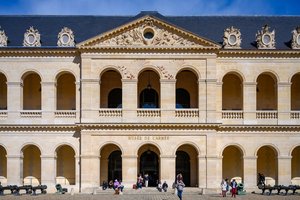 Ministère de la Défense Nationale |
Париж | 1 | ФРАНКОИС ЧАСЕЛУОП ЛАУБАТ, ГЕНЕРАЛ ДЕ ДИВИЗИЯН |


Saint Louis Forgiving Pierre de Bretagne (1817), Musée des Beaux-Arts de Quimper, Quimper. Следват Sketch for the church Saint Gervais "Ecce Homo" (1819) и Jean-Nicolas Houchard (1835).
34 години: Saint Louis Forgiving Pierre de Bretagne е от 1817 г., а Georges Rouget е роден/а в 1783.
Saint Louis Forgiving Pierre de Bretagne, Sketch for the church Saint Gervais "Ecce Homo", Jean-Nicolas Houchard, Jacques-Louis David, Achille Alexandre Alphonse, Viscount de Cailleux (1788-1876), Director of the Musées royaux, The King of Rome in the Tuileries Garden, JEAN PIERRE THENOT (1803 1857), DEBARQUEMENT DE SAINT LOUIS EN EGYPTE.4 JUIN 1249, ALEXANDRE FRANCOIS MARIE, VICOMTE DE BEAUHARNAIS, GENERAL EN CHEF DE L'ARMEE DU RHIN (1760 1794) и FRANCOIS CHRISTOPHE KELLERMAN, GENERAL EN CHEF DE L'ARMEE DE LA MOSELLE EN 1792 (1735 1820). Класацията по-горе посочва годината и музея на всяко от тях.
В нашия каталог са изброени 39 произведения на Georges Rouget, датирани от 1817 до 1850.
Повечето от тях се намират в Opera House (Versailles), Лувър (Пари) и Musée des Beaux-Arts de Quimper (Quimper). В горната таблица музеите са изброени един по един.
В 1810s: 2 от 39 произведенията на тази страница са от този период, като сред тях са Saint Louis Forgiving Pierre de Bretagne.
Най-старата творба на тази страница е от Saint Louis Forgiving Pierre de Bretagne (1817), а най-новата е от The King of Rome in the Tuileries Garden (1850).
Portrait (4), Dignified (3) и Formal (2), сред 39 произведения на тази страница.
Oil On Canvas: 3 от общо 39 произведения на тази страница.
Neoclassicism, както показват картините на тази страница.
Achille Alexandre Alphonse, Viscount de Cailleux (1788-1876), Director of the Musées royaux, ALEXANDRE FRANCOIS MARIE, VICOMTE DE BEAUHARNAIS, GENERAL EN CHEF DE L'ARMEE DU RHIN (1760 1794) и VICTOR GUY BARON DUPERRE, MATELOT EN 1792 (1775 1846) са сред 6-те произведения на тази страница, съхранявани в Opera House, Versailles.
Да. Всяка картина на тази страница може да бъде поръчана като ръчно рисувано маслено репродукция музейно качество или като художествен принт в избран от Вас размер, директно от страницата на съответната картина.

