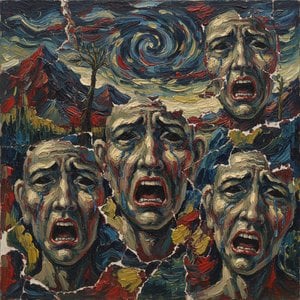
Stanley Pinker: A Namibian Visionary Embracing Fauvist Color
Stanley Faraday Pinker (1924-2012) stands as a pivotal figure in Namibian art history and a prominent voice within the international Fauvist movement. Born in Windhoek, Namibia—then South West Africa—his formative years instilled an enduring fascination with the dramatic landscapes of his homeland, influencing his artistic vision throughout his prolific career. Pinker’s journey from youthful exploration to celebrated artist exemplifies dedication to craft and unwavering commitment to capturing the essence of visual experience.Early Life & Education
Pinker's upbringing in Windhoek exposed him to the rugged beauty of Namibia, shaping his artistic sensibilities early on. He pursued formal art training at the Continental Art School of Cape Town under Maurice van Essche, gaining invaluable insight into Impressionistic techniques and stylistic considerations. Subsequently, he honed his skills at Hammersmith School of Art in London with Alistair Grant, broadening his artistic horizons beyond Namibian borders and immersing himself in European avant-garde movements. This dual formative experience proved instrumental in shaping Pinker’s distinctive artistic approach.Fauvist Influence & Artistic Style
Pinker's artistic style is undeniably rooted in Fauvism—a movement characterized by bold, unrestrained color palettes and expressive brushstrokes—which emerged in France during the early 20th century. He embraced this revolutionary aesthetic, prioritizing emotional impact over realistic representation; a conscious decision to convey feeling rather than meticulous observation. Consequently, his canvases burst forth with vibrant hues that communicate a palpable sense of energy and immediacy – reds, yellows, blues – colors deliberately chosen to heighten visual drama and evoke profound emotion. This stylistic choice reflects Pinker’s belief in art as a vehicle for conveying subjective experience.Notable Works & Exhibitions
Pinker's oeuvre encompasses a diverse range of subjects—primarily landscapes—executed with meticulous attention to detail and infused with Fauvist fervor. Among his most celebrated pieces are “Sun and Moon Flower,” a captivating depiction of Namibian flora rendered in luminous shades of orange and violet, capturing the ethereal beauty of the desert bloom. Equally impressive is “The Wheel of Life,” which embodies the artist's exploration of spiritual themes through color and gesture—a swirling composition dominated by blues and greens – symbolizing cyclical renewal and conveying a contemplative mood. His work has graced prestigious galleries internationally, including The Stanley & Audrey Burton Gallery in Leeds and the University of Iowa Museum of Art, cementing his reputation as a respected artistic innovator. Furthermore, Grahams Gallery hosted a retrospective exhibition highlighting his artistic evolution and showcasing the breadth of his oeuvre.Legacy & Recognition
Stanley Pinker’s contribution to Namibian art extends beyond his individual artworks; he represents a cornerstone of Namibian art history and embodies the spirit of Fauvist experimentation. His unwavering devotion to capturing the beauty and dynamism of the natural world—combined with his masterful command of color and expressive brushstrokes—continues to inspire artists today, ensuring that Stanley Pinker's vision persists as a testament to artistic innovation and enduring aesthetic power. He was recognized as one of Namibia’s most influential painters, leaving an indelible mark on the cultural landscape of his nation.Въпроси и отговори
Къде могат да бъдат намерени творбите на Stanley Faraday Pinker, организирани по цвят?
Спектрален индекс на Stanley Faraday Pinker е страница, която организира творбите на художника според техните цветове.
Мога ли да проуча използването на цветове от Stanley Faraday Pinker в цялата му/ѝ творческа дейност?
Геном на палитрата на Stanley Faraday Pinker е страница, която представя цветния профил от творчеството на художника.
В коя историческа епоха е творил Stanley Faraday Pinker?
Stanley Faraday Pinker е творил в периода на Модерно изкуство. Този период определя историческия контекст на творчеството на художника.
Колко произведения на Stanley Faraday Pinker са налични за разглеждане?
Можете да разгледате 1 произведения на изкуството творби на Stanley Faraday Pinker на страницата Всички произведения.
В кой град и държава е роден/а Stanley Faraday Pinker?
Stanley Faraday Pinker е роден в Виндхок, Намибия.
Мога ли да разгледам творбите на Stanley Faraday Pinker чрез ключови думи?
Работите на Stanley Faraday Pinker могат да бъдат разгледани по ключови думи на страницата за произведения на Stanley Faraday Pinker чрез По ключови думи. Всяка ключова дума групира съответните произведения на изкуството.
Къде мога да видя творбите на Stanley Faraday Pinker в 3D галерия?
Възможно е виртуално посещение: страницата 3D Музей на Stanley Faraday Pinker представя творбите на художника в триизмерна галерия.
Кога и къде е роден/а Stanley Faraday Pinker?
Stanley Faraday Pinker е роден в Виндхок през 1924 г.