Макс Клингер, 1857 – 1920

100-те най-известни картини на Макс Клингер

Картината, която донесе слава на Макс Клингер, е The death peeing. The Isle of the Dead и Presa следват след тях в сърцата на колекционери и музейни посетители. От 281 произведения на Макс Клингер в нашия каталог, тези 100 са най-обожавани – всяко от тях е представено с дата, музей и описание на това, което го прави уникално.

Класирани според нашия коефициент за популярност, който съчетава търсенията, посещенията и поръчките за всяко произведение. Обновено Октомври 2026. Всяко шедьовър на тази страница може да бъде поръчано като маслено репродукция на ръка с музейно качество или като художествен принт, в избран от Вас размер.

Портрет на Макс Клингер
Макс Клингер · 1857 – 1920
Роден · починал
1857 – 1920, Лайпциг
Движение
Symbolism
Работи в нашия каталог
281
Най-известни
The death peeing
Най-много творби в
Баварски държавни списъци с произведения на изкуството

Макс Клингер: десетте шедьовъра

The death peeing на Макс Клингер
1

The death peeing

Painting

The air hangs heavy near the riverbank where a skeletal figure stands, stripped of the terrifying dignity often assigned to the Grim Reaper. This figure, a personification of death, occupies the shoreline with a startlingly mundane presence. He stands with legs apart, facing the water, engaged in the most basic of biological functions. The act of urination into the stream demystifies the specter, pulling the concept of mortality away from…

Ръчно рисувана маслена репродукция от $181 22 × 46 cm
The Isle of the Dead на Макс Клингер
2

The Isle of the Dead

Painting

The Isle of the Dead emerges from the vision of Max Klinger, a German artist who leaves a profound mark on the landscape of late 19th-century thought. Born in Leipzig in 1857, Klinger moves through a world of shifting aesthetics, eventually passing away in 1920. In this specific work, titled The Isle of the Dead, he captures a moment that feels suspended in a quiet, heavy stillness.

Ръчно рисувана маслена репродукция от $181 41 × 25 cm
Presa на Макс Клингер
3

Presa

Lithograph

The artwork presents a monochrome scene rendered in grayscale, utilizing a range of black, white, and gray tones. At the bottom center of the frame, a reclining nude female figure is positioned as the primary focal point. Above her, a large group of men in formal attire occupies the upper portion of the composition. These figures are partially obscured by shadow, creating a sense of depth through overlapping forms. The…

Ръчно рисувана маслена репродукция от $531 26 × 38 cm
Y sin embargo! на Макс Клингер
4

Y sin embargo!

Graphite

Max Klinger, born in Leipzig in 1857, produced Y sin embargo! as part of a career that bridged the transition from Realism to Symbolism. The artist, who died in 1920, was a significant figure in German art, known for his ability to move beyond mere visual representation to explore the psychological and the subconscious. This specific work reflects his interest in the intersection of the human form and the natural…

Ръчно рисувана маслена репродукция от $181 27 × 38 cm
Rescue на Макс Клингер
5

Rescue

Etching

The artwork titled Rescue (also known as Rettung) is a significant work by the German artist Max Klinger. It exists as the fourth plate within the larger series known as Paraphrase on the Finding of a Glove. This specific piece is part of the Glove (Ein Handschuh) series, a collection that explores the fragmented, dreamlike nature of memory and loss. The work emerged from the artist's creative period between 1878/1880…

Ръчно рисувана маслена репродукция от $181 27 × 37 cm

Още шедьоври от Макс Клингер, от 11 до 100

Картини на Макс Клингер по периоди

Обичаните сюжети на Макс Клингер

Четирите най-често срещани сюжета сред тези шедьоври, с най-добрия пример за всеки от тях.

Къде могат да се видят картините на Макс Клингер

4 музея, които притежават най-голям брой от картините на тази страница.

Музеи Град Творения на Макс Клингер Картини от този списък
Баварски държавни списъци с произведения на изкуството, МюнхенБаварски държавни списъци с произведения на изкуството Мюнхен 2 At the Beach, Seaside Idyl
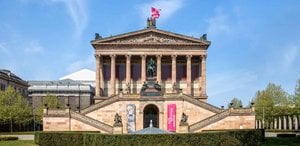
Alte Nationalgalerie, БерлинAlte Nationalgalerie Берлин 3 Venus in the Shell Carriage. Part of the Wall Decoration of Villa Albers in Berlin-Steglitz
Национална галерия в Прага, ПрагаНационална галерия в Прага Прага 1 Evening
Städel Museum, ФранкфуртStädel Museum Франкфурт 1 Portrait of a Roman Woman on a Flat Roof in Rome

Макс Клингер, десетилетие по десетилетие: най-значимата картина за всяко от тях

  1. 1870s
    Evening (1879) на Макс Клингер
    #9 от 100

    Evening

    Възраст 13 – 22 · Национална галерия в Прага
  2. 1880s
  3. 1890s
    At the Beach (1890) на Макс Клингер
    Место 11 от 100

    At the Beach

    Възраст 33 – 42 · Баварски държавни списъци с произведения на изкуството
  4. 1910s
    Female Nude (1910) на Макс Клингер
    Место 14 от 100

    Female Nude

    Възраст 53 – 62

Шедьоври на Макс Клингер: въпроси и отговори

С коя картина е най-известен Макс Клингер?Покажи отговора

The death peeing. Следват The Isle of the Dead и Presa.

Кои са десетте най-велики картини на Макс Клингер?Покажи отговора

The death peeing, The Isle of the Dead, Presa, Y sin embargo!, Rescue, Mermaid holding a shell up, the philosopher, Venus in the Shell Carriage. Part of the Wall Decoration of Villa Albers in Berlin-Steglitz, Evening и Play in the meadow. Класацията по-горе посочва годината и музея на всяко от тях.

Колко произведения е нарисувал Макс Клингер?Покажи отговора

В нашия каталог са изброени 281 произведения на Макс Клингер, датирани от 1879 до 1912.

В кои музеи мога да видя шедьоврите на Макс Клингер?Покажи отговора

Повечето от тях се намират в Баварски държавни списъци с произведения на изкуството (Мюнхен), Alte Nationalgalerie (Берлин) и Национална галерия в Прага (Прага). В горната таблица музеите са изброени един по един.

Кога Макс Клингер е създала своите шедьоври?Покажи отговора

В 1880s: 3 от 100 произведенията на тази страница са от този период, като сред тях са Venus in the Shell Carriage. Part of the Wall Decoration of Villa Albers in Berlin-Steglitz.

Кои са първата и последната известни картини на Макс Клингер?Покажи отговора

Най-старата творба на тази страница е от Evening (1879), а най-новата е от Bathing Women (1912).

Кои бяха любимите теми на Макс Клингер?Покажи отговора

Gods (7), Symbolic imagery (6) и Man (3), сред 100 произведения на тази страница.

Коя техника е предпочитала Макс Клингер?Покажи отговора

Painting: 2 от общо 100 произведения на тази страница.

Към кое художествено направление принадлежи Макс Клингер?Покажи отговора

Symbolism, както показват картините на тази страница.

Кои шедьоври на Макс Клингер се съхраняват в Баварски държавни списъци с произведения на изкуството?Покажи отговора

At the Beach и Seaside Idyl са сред 2-те произведения на тази страница, съхранявани в Баварски държавни списъци с произведения на изкуството, Мюнхен.

Мога ли да притежавам репродукция от шедьовър на Макс Клингер?Покажи отговора

Да. Всяка картина на тази страница може да бъде поръчана като ръчно рисувано маслено репродукция музейно качество или като художествен принт в избран от Вас размер, директно от страницата на съответната картина.

Животът на Макс Клингер

The Shadowed World of Max Klinger: A Pioneer of Symbolism

Max Klinger, born in Leipzig in 1857, emerged as a pivotal figure bridging the gap between Realism and the burgeoning world of Symbolism. His artistic journey wasn’t one of immediate recognition but rather a gradual unfolding of a unique vision—a descent into the psychological depths that would profoundly influence modern art. Klinger's early training at the Academy of Fine Arts in Karlsruhe, under Karl Gussow, provided him with a solid foundation in traditional techniques, yet it was his fascination with the etchings of artists like Menzel and Goya that truly ignited his imagination. These masters demonstrated the power of printmaking to convey not merely visual representation but also narrative complexity and emotional intensity—qualities Klinger would masterfully employ throughout his career. He wasn’t content simply to depict the world as it appeared; he sought to unveil its hidden currents, its anxieties, and its dreams.

From Realism's Embrace to Symbolic Depths

Klinger’s artistic evolution was marked by a deliberate shift away from straightforward realism towards a more subjective and symbolic language. Initially, his work reflected the prevailing aesthetic of the time—detailed depictions of everyday life. However, this phase proved merely a stepping stone. The turning point came with his series of etchings, Paraphrase on the Finding of a Glove (1881). This ambitious project, comprising ten plates, wasn’t a literal illustration of an event but rather a fragmented, dreamlike exploration of desire, loss, and the complexities of human relationships. The glove itself became a potent symbol—a relic imbued with memory and longing. This series established Klinger as a leading voice in the Symbolist movement, demonstrating his ability to transform ordinary objects into vehicles for profound psychological insight. He wasn’t interested in simply showing what things looked like; he wanted to convey what they *felt* like, what they represented on a deeper, more subconscious level. The intricate details and layered symbolism within each plate invite viewers to contemplate the hidden narratives beneath the surface of seemingly mundane events.

Sculpture, Printmaking and the Exploration of Myth

Klinger's artistic output was remarkably diverse, encompassing painting, sculpture, and printmaking—though it’s arguably in the realm of graphic arts that he achieved his most enduring legacy. His prints are characterized by their meticulous technique, dramatic use of light and shadow, and haunting imagery. He wasn’t afraid to tackle challenging themes—mortality, sexuality, and the darker aspects of the human psyche. Beyond Paraphrase on the Finding of a Glove, works like his depictions of Faustian bargains and mythological scenes reveal a fascination with archetypal narratives and universal human struggles. His sculptural work, though less prolific than his prints, was equally ambitious. A prime example is his monumental installation in homage to Beethoven at the Vienna Secession in 1902—a powerful testament to the composer’s genius and a bold statement of artistic innovation. Klinger's sculptures were often deliberately unsettling, challenging conventional notions of beauty and form. The sheer scale and dramatic intensity of these works invite viewers to confront uncomfortable truths about human ambition and mortality.

Influences and Artistic Development

Klinger’s artistic development was shaped by a confluence of influences. His early training at the Karlsruhe Academy instilled in him a solid grounding in traditional techniques, but it was his exposure to the graphic art of Menzel and Goya that truly awakened his creative spirit. These masters demonstrated the power of printmaking to convey not just visual representation but also narrative complexity and emotional depth—qualities Klinger would masterfully employ throughout his career. He also drew inspiration from Japanese woodblock prints, which introduced him to new approaches to composition, perspective, and tonal shading. Furthermore, he was deeply influenced by the philosophical ideas of Arthur Schopenhauer and Friedrich Nietzsche, whose explorations of pessimism, irrationality, and the subconscious profoundly shaped his artistic vision. Klinger’s work reflects a complex interplay between these diverse influences—a synthesis of traditional techniques, Symbolist aesthetics, and psychological insights.

Legacy and Influence: A Bridge to Modernity

Max Klinger’s influence extended far beyond his own lifetime. He paved the way for Expressionism, Surrealism, and other avant-garde movements that sought to explore the inner world of human experience. His emphasis on symbolism, psychological depth, and subjective interpretation resonated with artists grappling with the anxieties and uncertainties of the modern age. The artist’s exploration of dreamlike states and subconscious desires anticipated the work of later Surrealists like Salvador Dalí and René Magritte. Even in more recent times, Klinger's ideas continue to inspire contemporary artists. In 1991, the Moscow art collective Inspection Medical Hermeneutics created “Klinger’s Boxes,” an installation directly inspired by his work—a testament to the enduring power of his vision. He remains a crucial figure in understanding the transition from 19th-century academic traditions to the radical experimentation of the 20th century. His art invites us to confront our own shadows, to delve into the mysteries of the human psyche, and to recognize the profound beauty that can be found even in the darkest corners of existence.