The Enigmatic Master of the Lanckoronski Annunciation
The identity of the “Master of the Lanckoronski Annunciation” remains one of art history’s most enduring mysteries. Born in Florence sometime around 1450, he emerged from the vibrant artistic milieu of Lorenzo de Medici's court—a period defined by humanist ideals and a fervent embrace of classical antiquity. Despite the lack of definitive biographical details, scholars agree that his output aligns perfectly with the stylistic conventions of Florentine Renaissance painting during its zenith. The attribution to him stems primarily from a single masterpiece: an exquisite Madonna and Child panel housed in the Lanckoronski Family Collection at Wawel Royal Castle in Krakow—a testament to his unparalleled skill and sensitivity to devotional imagery.
- Early Influences & Artistic Training: Precise records of his formative years are scarce, fueling speculation about connections with Fra Angelico’s workshop and the broader humanist circle circulating around Florence. However, stylistic analysis reveals a profound absorption of Byzantine iconographic traditions alongside the burgeoning fascination with linear perspective championed by Filippo Brunelleschi.
- Style & Technique: The Master's distinctive style is characterized by an astonishing delicacy of color—particularly ultramarine blue—and a masterful manipulation of light and shadow. His brushstrokes are remarkably smooth, conveying a sense of ethereal beauty that distinguishes him from his contemporaries. He skillfully employs glazing techniques to achieve luminous surfaces and subtle tonal gradations, mirroring the artistic innovations prevalent in Venetian painting during this era.
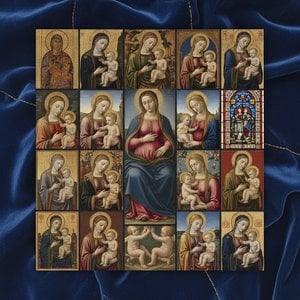
- Notable Works: Beyond the Lanckoronski Annunciation, only fragments of other paintings have surfaced—primarily small devotional panels bearing traces of his signature. These works demonstrate a remarkable command of composition and anatomical accuracy, reflecting an unwavering commitment to portraying human figures with profound realism while simultaneously elevating them to spiritual grandeur.
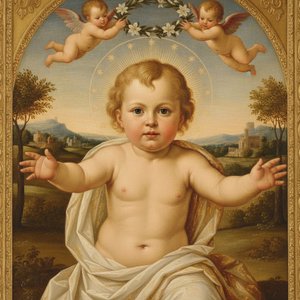
- The Lanckoronski Madonna: The Madonna and Child panel is arguably the Master’s crowning achievement. Its serene beauty—captured in breathtaking detail—captures the essence of Florentine Renaissance spirituality. The luminous Virgin Mary, cradling her son Jesus, embodies compassion and grace, while the infant Christ radiates divine innocence. The painting's masterful use of color and texture elevates it beyond mere representation, transforming it into a vessel for contemplation.
- Legacy & Historical Significance: Although his oeuvre remains remarkably limited, the Master’s influence extends far beyond Krakow. His stylistic innovations—particularly his luminous palette and refined brushwork—served as inspiration for subsequent generations of Florentine painters. He stands as a pivotal figure in bridging the gap between Byzantine iconographic tradition and Western Renaissance artistic ideals—a testament to the enduring power of beauty and devotion.
Connections & Debate
The attribution to him has been debated fiercely by art historians for decades. Some argue that stylistic similarities with Andrea Mantegna suggest a collaborative effort, while others contend that he represents an independent Florentine artist operating within the shadow of Fra Angelico’s workshop. Despite these scholarly disagreements, the Lanckoronski Annunciation—and its undeniable artistic merit—continues to solidify his position as one of Florence's most celebrated painters of the fifteenth century. Further research into surviving fragments and comparative stylistic analysis may eventually illuminate more about this elusive genius and unlock deeper insights into the artistic landscape of Renaissance Italy.