Jacob Knyff (1639 - 1681): A Pioneer of Atmospheric Landscape Painting
Jacob Knijff, born in Haarlem on January 1st, 1640, was a Dutch Golden Age painter whose artistic legacy resides primarily in his evocative depictions of coastal landscapes and maritime scenes. As the elder brother of Leendert Knyff—another accomplished artist known for his engravings—Jacob’s career unfolded amidst the burgeoning artistic fervor of Amsterdam during its zenith. His formative years were steeped in Flemish artistic traditions, influencing his stylistic choices and fostering a profound appreciation for meticulous observation and nuanced tonal gradations.
- Early Life & Training: Little is known about Knyff's formal training beyond familial connections to established artists. However, anecdotal evidence suggests he honed his skills under the tutelage of Willem van de Velde the Elder, a master of Dutch maritime painting who championed realism and atmospheric perspective—techniques that would become hallmarks of Knyff’s oeuvre.
- Move to London & Artistic Innovation: In 1673, Knyff embarked on a transformative journey to London, seeking patronage and expanding his artistic horizons. This relocation proved pivotal in shaping his distinctive style; he pioneered the innovative approach of painting houses from an elevated vantage point—a technique that captured the grandeur of urban architecture against the backdrop of expansive skies—marking him as one of the earliest artists to document London’s evolving cityscape.
Notable Works & Artistic Style
Knyff's artistic output is characterized by a remarkable sensitivity to light and color, reflecting the influence of Caravaggio and Rembrandt—artists who similarly prioritized dramatic chiaroscuro effects to convey emotion and psychological depth. His landscapes are imbued with an atmospheric quality that transcends mere topographical representation; they strive to capture not just what is seen but also how it feels—a palpable sense of airiness, moisture, and seasonal change. Consider his celebrated painting “Corney House in Chisiwick from the River,” completed sometime between 1675 and 1680. This masterpiece exemplifies Knyff’s mastery of perspective and tonal modulation, presenting a walled garden bathed in sunlight—a testament to his ability to transform visual observation into emotionally resonant art.
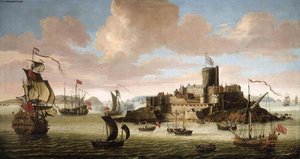
- Key Paintings: Among his most enduring works are depictions of Guernsey harbors and coastal vistas, showcasing meticulous detail and masterful brushwork. These canvases exemplify Knyff’s commitment to capturing the essence of maritime life—the bustle of activity, the interplay of light on water surfaces, and the subtle nuances of weather conditions.
- Technique & Influences: Knyff's technique involved layering thin glazes of pigment onto prepared canvas—a method that allowed him to achieve luminous color palettes and subtle tonal variations. He drew inspiration from Flemish landscape painters like Jacob Savertijns and Pieter Bruegel the Elder, whose works championed realism and symbolic storytelling—values that resonated deeply within Knyff’s artistic sensibility.
Legacy & Historical Significance
Jacob Knyff's contribution to Dutch landscape painting is undeniable. He stands as a precursor to Romanticism, anticipating the movement’s emphasis on sublime landscapes and emotional expression—a legacy that continues to inspire artists today. His pioneering use of aerial perspective—the gradual blurring of distant objects due to atmospheric haze—established a crucial precedent for subsequent generations of painters striving to convey the grandeur and majesty of nature. Furthermore, Knyff's depiction of London’s urban environment represents an early attempt to document the city’s architectural landscape from a bird’s eye view—a perspective that would become increasingly prevalent in topographical art throughout the eighteenth century. His work remains treasured for its artistic merit and its role in shaping the visual culture of his time, cementing his place as a pivotal figure in European art history.
Further Exploration
For more information about Jacob Knyff’s life and works, consult resources such as: