Hugo Ballin: Pioneer of California Muralism and Silent Film Artistry
Hugo Ballin (1879-1956) stands as a singular figure in American art history—a classically trained artist who seamlessly transitioned into the vibrant world of Hollywood filmmaking, leaving an indelible mark on both visual arts and cinematic storytelling. Born in New York City, Ballin’s early artistic pursuits focused on idealized depictions of mythological subjects and narratives, reflecting the Romantic sensibilities prevalent at the turn of the century. However, his life took a dramatic shift following World War I when he relocated to Los Angeles, embarking on a prolific career as an art director and producer for Samuel Goldwyn Pictures—a pivotal moment that cemented his connection with California’s burgeoning film industry.
- Early Life & Artistic Training: Ballin honed his skills at the Art Students League of New York, immersing himself in classical painting techniques and establishing a foundation for his future endeavors.
- Hollywood Debut & Film Production: Recognizing the transformative potential of moving images, he joined Goldwyn Pictures in 1917, quickly mastering the craft of film design and directing silent films under Goldwyn’s banner. His production company produced numerous classics of the era, showcasing his versatility as a storyteller.
- Marriage & Family Life: Ballin married actress Mabel Croft Ballin, forming a creative partnership that further enriched his artistic life and personal experiences.
Ballin's artistic legacy truly blossomed in California during the Golden Age of Hollywood. He became one of the foremost muralists in the region, undertaking ambitious projects that celebrated California’s history and landscape—most notably the monumental murals adorning Griffith Observatory and Wilshire Boulevard Temple. These works exemplify his masterful command of color, composition, and stylistic innovation, blending influences from Art Deco and Romanticism to create breathtaking visual narratives. His commitment to public art solidified his reputation as a visionary artist dedicated to enriching the cultural fabric of Los Angeles.
- Griffith Observatory Murals: Ballin’s murals at Griffith Observatory depict California's geological history, capturing the grandeur of the Mojave Desert and the majesty of Mount Whitney—a testament to his ability to translate scientific concepts into evocative artistic representations.
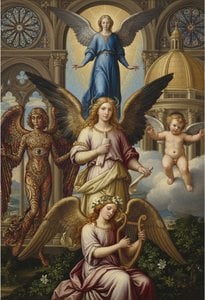
- Wilshire Boulevard Temple Murals: These murals explore themes of faith and spirituality, portraying biblical scenes with meticulous detail and conveying a profound sense of serenity and contemplation.
Ballin’s contributions extended beyond visual art; he was recognized as a National Academician in 1906, receiving the Thomas B. Clarke Prize for “Mother and Child”—a prestigious honor bestowed upon artists demonstrating exceptional talent and dedication. Furthermore, he achieved unparalleled acclaim when awarded the Clarke Prize twice for "The Deposition," marking one of only five Academy Awards given to a single artist—a remarkable achievement reflecting his enduring influence on American art and culture. His final commission, frescoes depicting Christ’s life and death at Woodlawn Memorial Cemetery in Santa Monica, served as a poignant reminder of his artistic vision until his passing in 1956. Hugo Ballin remains an inspiring figure whose multifaceted career continues to captivate audiences and scholars alike.