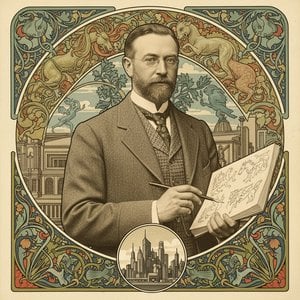
George Sanders: A Scottish Portraitist Capturing Victorian Dignity
George Sanders (1774 – 1846) stands as a notable figure in the annals of Scottish portrait painting during the Victorian era, primarily recognized for his meticulous depictions of aristocratic subjects and skillfully executed copies of celebrated Dutch Masters. His artistic legacy resides largely within the confines of the National Gallery’s collection, where several canvases bearing his signature grace its walls—a testament to his enduring reputation as a craftsman dedicated to capturing the essence of his time.
Born in Edinburgh, Sanders received an education that fostered both classical scholarship and artistic inclination. While biographical details remain somewhat sparse, evidence suggests he honed his skills under the tutelage of John Ramsay, a prominent Scottish landscape painter who championed Neoclassical ideals. This formative influence undoubtedly shaped Sanders’ approach to composition and technique—characterized by careful observation and adherence to established conventions.
Sanders' oeuvre predominantly comprises portraits commissioned by wealthy families across Scotland and England. He possessed an exceptional ability to convey dignity and refinement, meticulously rendering facial expressions and postures that reflected the status and character of his subjects. His canvases frequently portray members of the nobility – Earls, Dukes, Lords – often adorned in opulent attire and posed within richly decorated interiors. These portraits aren’t merely representations of individuals; they are embodiments of Victorian social hierarchy and aspiration.
Beyond replicating Dutch masterpieces—particularly Rembrandt and Vermeer—Sanders demonstrated considerable versatility. He tackled genre scenes with a sensitivity to detail and tonal subtlety, capturing moments of domestic life with remarkable realism. His paintings frequently incorporate symbolic elements reflecting clan affiliations or familial histories – a practice indicative of the artistic sensibilities prevalent in Scotland during this period.
A significant contribution to British art history is Sanders’ role as a teacher and mentor. He nurtured the talents of younger artists, fostering a tradition of portraiture that continued well into the 20th century. His influence extended beyond individual pupils; he helped establish standards for artistic excellence and promoted a commitment to stylistic integrity. George Sanders' enduring fame rests upon his ability to translate Victorian grandeur onto canvas—a skill that secures his place as one of Scotland’s most accomplished portrait painters.