The Quiet Presence of Georg Herz
In the annals of European painting, certain names emerge not through loud proclamations, but through the steady, quiet preservation of a likeness. Georg Herz, a painter born in 1566, belonged to this more reserved tradition. His life was rooted in the artistic currents of his time, finding his place within the professional landscape of Nuremberg. He was a man of his era, a practitioner whose hand contributed to the visual record of the late sixteenth century.
His work reflects the meticulous attention to detail required of a professional painter during this period. Rather than seeking to disrupt the established order, Herz focused on the essential task of capturing the human form and the character of his subjects. His existence as an artist was defined by this commitment to the craft, a steady application of skill that sought to fix a moment in time through pigment and brush.
A Singular Legacy
The historical footprint of Georg Herz is marked by a specific, preserved connection to the past. While many artists of the sixteenth century fade into the anonymity of history, his contribution remains anchored by a single, significant subject. This connection allows us to glimpse the technical focus of his hand through the lens of a specific portrait.
- His primary known subject is Madam Cecilia Herz.
- His work is held within the collections of the Israel Museum, Jerusalem.
The Weight of the Portrait
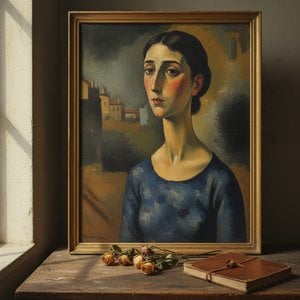
To look upon the work of Georg Herz is to encounter the stillness of the late Renaissance. His portrait of Madam Cecilia Herz remains his most notable contribution to the visual record. It is a work that speaks to the social realities of his time, capturing a figure that was clearly significant within her own sphere. The painting serves as a window into a vanished social structure, preserved through the careful application of oil and intent.
The significance of his work lies in its survival. Through the preservation efforts of institutions like the Israel Museum, the hand of Georg Herz continues to reach across the centuries. He remains a painter of the specific, a man who used his brush to ensure that certain faces were not lost to the passage of time.