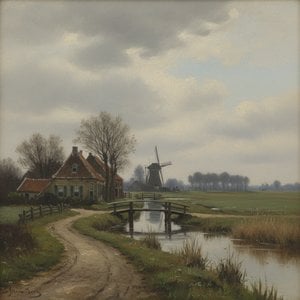
Живот, потапен в детайла: Светът на Франс ван Мьерис Старейшината
Франс ван Мьерис Старейшината, име, синоним на прецизност и изтънчена артистичност, заема значимо място в Златната епоха на Нидерландия. Роден в Льоден през 1635 г., неговият път се отклонява от семейния занаят на златника – ремесло, практикувано от бака му, Ян Бастиенсз ван Мьерис – към завладяващия свят на живописта. Това ранно влечение към рисуването подготви сцената за кариера, която ще дефинира стила „fijnschilder“ и ще предложи интимен поглед върху нидерландското общество през XVII век. Първоначалното му обучение под ръководството на Абрахам Тооренфлиет, последвано от решаващите напътствия от уважаваемия Герит Доу, полага солидна основа, върху която той изгражда своя отличителен артистичен глас. Тези формиращи години му вдъхват не само техническо майсторство, но и дълбоко чувство за повествователните нюанси и силата на фината, деликатна наблюдателност.Издигането на „финия живописец“
Ван Мьерис бързо става прочут като майстор на fijnschilder – нидерландски термин, означаващ „фина живопис“. Тази техника се характеризира с почти обсебващо внимание към детайла, гладка и полирана маза, както и предпочитание за мащабни, миниатюрни платна. Тук не става въпрос само за репликиране на реалността; става въпрос за нейното възвисяване чрез невъобразима прецизност. Повърхностите в неговите картини сякаш проблясват с живот – лъскавият блясък на сатина, деликатната текстура на кадифето, отблясъкът на метала – всичко е предадено с изумителна точност. Той не просто рисува стая; той пресъздава самата атмосфера в нея, канейки зрителите в сцени на домашен уют и изобилие. Тематиката му често се върти около живота на богатите: елегантни събирания, сложни интериори, портрети, които улавят не само външната прилика, но и характера. Повторяващи се мотиви като закуски с устрици, лекари, посещаващи пациенти и жени, ангажирани с ежедневни задачи, предоставят прозорци към обичаите и социалните ритуали на горните класове. Въпреки че първоначално е бил силно повлиян от стила на Герит Доу, Ван Мьерис постепенно развива свой собствен уникален подход. Той се отдалечава от прекомарата на детайли в посока на по-голям акцент върху взаимодействието между фигурите и разгръщащите се истории в неговите композиции. По-късните му творби понякога показват по-тъмни тоналности в сравнение с по-ярките палитри на ранните му картини, отразявайки нарастващата зрялост и артистично проучване.Значими творби и вечно наследство
Няколко ключово произведения стоят като свидетелства за уменията и еволюиращия стил на Ван Мьерис. „Визит при лекар“ (1657), считана за една от най-ранните му датирани и най-важни творби, демонстрира неговата израстваща независимост от влиянието на Доу. Картината е майсторски клас в улавянето на тихото напрежение при медицински преглед, предадено с поразително ниво на реализъм. Неговият „Автопортрет с цитерна“ е също толкова завладяващ, демонстрирайки способността му да изобразява пищни облекла, като същевременно предава усещане за личност и интроспекция. „Портрет на съпругата на художника, Кунера ван дер Кок“ е пример за неговото майсторство в портретирането, подчертавайки както техническото умение, така срещу разбирането на chiaroscuro – драматичната игра на светлина и сянка. Извън жанровите сцени и портретите, Ван Мьерис се е посмял и на алегорични картини, като такително изобразяващи пороци като пиене, пушене и хазарт, демонстрирайки широтата на своите артистични възможности. Въздействието на Франс ван Мьерис се простира далеч отвъд неговия собствен живот. Неговото влияние е прозвучало в рамките на семейството му; неговият син Вилем ван Мьерис (1662–1747) и внукът му Франс ван Мьерис Млади (1689–1763) също стават успешни жанрови художници, продължавайки артистичната традиция. Популярността на неговия стил е породила и множество имитатори, най-вече А. Д. Снафан, който е работил в Лейпциг и е се ползвал с покровителството на двора в Анхалт-Десау.Трайна принос към нидерландската изкуство
Франс ван Мьерис играе решаваща роля в оформянето на движението fijnschilder в нидерландската живопис от Златната епоха. Неговата отдаденост на прецизния детайл, реалистичните изображения на ежедневието и висшето общество, както и техническото му бледост, допринасят значително за една епоха, вече прочута със своята артистична иновация. Той се е ползвал с покровителството на видни фигури, включително архидук Леополд и Козимо III де Медичи, което е доказателство за международното признание на неговия талант. Дори днес неговите творби продължават да очароват публиката със своята изискана майсторност и проницателно изображение на културата от XVII век. Кражбата на автопортрет от Художествената галерея на Ню Южен Уелс в Сидни служи като трогателно напомняне за трайната стойност и привлекателност на неговото изкуство – наследство, което продължава да вдъхновява и интригува колекционери и любители на изкуството по едно и също време. Неговите картини не са просто исторически артефакти; те са прозорци към една отминала епоха, прецизно изработени и изпълнени с безвременна красота.Въпроси и отговори
Как мога да разгледам всички произведения на Frans van Mieris?
Всички произведения на Frans van Mieris в ето този уебсайт могат да бъдат разгледани на неговата страница с всички творби: Всички произведения на изкуството.
Как мога да проследя творчеството на Frans van Mieris хронологично?
Творбите на Frans van Mieris могат да бъдат разгледани в хронологичен ред на страницата Хронология на произведенията на художника.
Има ли преглед на всички теми, които Frans van Mieris е изобразявал?
Работите на Frans van Mieris могат да бъдат разгледани по теми на страницата за тематичен атлас на артиста Атлас по теми.