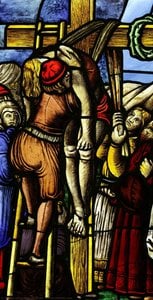
Corrado de Mochis: A Fusion of German and Italian Renaissance Glass
Born in Cologne, Germany, in 1525, Corrado de Mochis (also known as Corrado de’Mochis) emerged as one of the most significant master glassmakers of the late 16th century. His career unfolded primarily in Milan, where he left an indelible mark on the magnificent Milan Cathedral, crafting a series of stained-glass windows that exemplify the dynamic interplay between German and Italian artistic traditions – a style he himself dubbed ‘arcimboldesque.’ De Mochis’s life was tragically cut short in 1569, but his legacy endures through his breathtaking creations, offering a window into the vibrant world of Renaissance art and craftsmanship.
Early Life and Artistic Training: While precise details of de Mochis's formative years remain somewhat elusive, it’s believed he received his initial training in Cologne, a city renowned for its glassmaking heritage. The exact nature of this early education is debated amongst scholars, though many speculate that he was influenced by the established German glass traditions prevalent at the time. However, it was in Milan that de Mochis truly blossomed, immersing himself in the burgeoning artistic scene and absorbing the innovative techniques characteristic of Italian Renaissance art.
The Milan Cathedral: A Masterwork of Collaboration
De Mochis’s most celebrated achievement is undoubtedly his contribution to the stained-glass windows of the Milan Cathedral (Duomo). Commissioned during a period of extensive renovation, he worked alongside a diverse group of artists – including Italian painters and glassmakers – creating a complex and ambitious project that spanned several decades. His involvement was particularly crucial in the northern sections of the cathedral, where his ‘arcimboldesque’ style shone most brilliantly. This distinctive approach blended the meticulous detail and symbolic richness associated with German art with the vibrant color palettes and dynamic compositions favored by Italian masters.
The windows themselves are a testament to de Mochis's technical skill and artistic vision. He employed innovative techniques, such as layering different colored glasses and incorporating intricate leadwork, to achieve remarkable depth and luminosity. The subjects depicted – often biblical scenes and stories of saints – were rendered with an extraordinary level of detail, capturing both the spiritual significance and the beauty of the materials themselves. Notable amongst his work are panels depicting “Stories of Saint James the Great,” a stunning example of his Nordic & Roman style.
An ‘Arcimboldesque’ Style: A Synthesis of Traditions
The term ‘arcimboldesque,’ coined by art historians, perfectly encapsulates de Mochis's unique artistic approach. It refers to a distinctive fusion of German and Italian influences – a synthesis that resulted in stained-glass windows characterized by an extraordinary richness of color, intricate detail, and a dynamic sense of movement. De Mochis skillfully combined the precision and symbolic depth of German glassmaking with the vibrant colors and dramatic compositions associated with Italian Renaissance painting. This blending created a style that was both deeply rooted in tradition and remarkably innovative.
The use of color is particularly noteworthy. De Mochis employed a wide range of pigments, meticulously applied to create luminous hues and subtle gradations. He also experimented with different glass types – including ruby red, sapphire blue, and emerald green – to achieve the desired effects. His work demonstrates a profound understanding of how light interacts with colored glass, transforming the windows into dazzling displays of color and form.
Legacy and Influence
Corrado de Mochis’s influence extended far beyond his own creations. He served as an inspiration for subsequent generations of glassmakers and artists, who continued to develop and refine the ‘arcimboldesque’ style. His work stands as a powerful reminder of the cross-cultural exchange that characterized the Renaissance period – a time when artistic ideas and techniques were freely shared across Europe.
Today, de Mochis's stained-glass windows remain a treasured part of the Milan Cathedral’s collection, attracting visitors from around the world. His legacy is celebrated through reproductions like those offered on platforms such as WahooArt.com, ensuring that his breathtaking creations continue to inspire and delight audiences for years to come. His work exemplifies the enduring power of art to transcend time and connect us with the artistic achievements of the past.
Въпроси и отговори
Къде могат да бъдат намерени произведенията на Corrado De Mochis, групирани по техника?
Страницата Всички техники групира произведенията на Corrado De Mochis според техниката им.
Къде мога да разгледам всички произведения на Corrado De Mochis?
Всички произведения на Corrado De Mochis в ето този уебсайт могат да бъдат разгледани на неговата страница с всички творби: Всички произведения на изкуството.
В кои художествени направления е работил/а Corrado De Mochis?
Страницата Всички художествени направления групира произведенията на Corrado De Mochis според тяхното художествено направление.