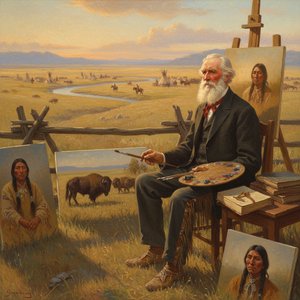
The Architect of Dreams: The Dual Legacy of Dr. A.P.J. Abdul Kalam
To contemplate the life of Avul Pakir Jainulabdeen Abdul Kalam is to witness a rare convergence of scientific precision and profound humanistic spirit. Born in 1931 amidst the salt-scented air of Rameswaram, India, Kalam’s early years were defined by a modest existence that belied a cosmic curiosity. While history remembers him as the "Missile Man of India," a title earned through his monumental contributions to aerospace engineering and national defense, there existed within him a soul deeply attuned to the rhythms of nature and the nuances of creative expression. His journey from a small fishing village to the highest office in the land—the Presidency of India—was not merely a political ascent, but a continuous exploration of how technology and humanity might coexist in harmony.
His scientific odyssey was marked by an unwavering commitment to self-reliance and innovation. As a pivotal figure within the Indian Space Research Organisation (ISRO) and the Defence Research and Development Organisation (DRDO), Kalam spearheaded the development of the SLV-III, India's first indigenous satellite launch vehicle. This achievement was more than a technical milestone; it was a symbolic moment of national empowerment, placing India within an elite global space club. His work on the Integrated Guided Missile Development Programme, including the creation of the Agni and Prithvi missiles, solidified his reputation as a guardian of national security. Yet, even amidst the complex mathematics of trajectories and the heavy responsibilities of nuclear-era defense, Kalam remained a man of deep spiritual and aesthetic sensitivity.
A Symphony of Science and Spirit
Beyond the cold steel of rockets and the rigorous calculations of aeronautical engineering, Kalam possessed an evocative inner world that found expression through art and literature. His creative inclinations were never separate from his scientific pursuits; rather, they were two sides of the same coin—both driven by a desire to understand the fundamental truths of existence. His paintings and artistic reflections often utilized vibrant colors and evocative imagery to explore themes that science alone could not capture: the sanctity of nature, the resilience of the human spirit, and the interconnectedness of all living things. In his work, one can sense a bridge being built between the empirical observations of a scientist and the intuitive perceptions of an artist.
This duality made him a unique figure in the modern era, often referred to as the "People's President." His ability to communicate complex scientific concepts through the lens of storytelling and inspirational thought allowed him to touch the hearts of millions, particularly the youth of India. He viewed education not just as the acquisition of knowledge, but as the cultivation of character and imagination. His literary contributions, ranging from autobiographical reflections to motivational texts, serve as a testament to his belief that progress is hollow if it does not include the enrichment of the human soul.
An Enduring Influence on the Global Canvas
The historical significance of Dr. Kalam extends far beyond the borders of India or the boundaries of aerospace technology. He remains a global icon of what can be achieved through perseverance, humility, and vision. His life serves as a masterclass in integrating disparate disciplines—showing that the analytical mind of a scientist can coexist beautifully with the emotive heart of an artist. Even after his passing in 2015, his influence continues to ripple through contemporary design, literature, and scientific thought.
His legacy is characterized by several enduring pillars:
- Technological Sovereignty: The establishment of India as a formidable power in space and missile technology.
- Educational Inspiration: A lifelong dedication to empowering the next generation of thinkers, scientists, and dreamers.
- Cultural Synthesis: The seamless blending of scientific advancement with deep-rooted spiritual and artistic values.
- National Unity: Serving as a unifying figure who transcended political and religious divides through his simple, ascetic lifestyle.
In the grand tapestry of human history, Dr. Kalam occupies a space where the stars meet the earth. He taught us that while science provides the tools to reach the heavens, it is art and empathy that provide the reason to go there.
Въпроси и отговори
Мога ли да разгледам творбите на Avul Pakir Jainulabdeen Abdul Kalam според цветния спектър?
Работите на Avul Pakir Jainulabdeen Abdul Kalam могат да бъдат разгледани по цвят на страницата Спектрален индекс на художника.
Как е разделена кариерата на Avul Pakir Jainulabdeen Abdul Kalam на периоди?
Хроника на Avul Pakir Jainulabdeen Abdul Kalam е хронологична линия с функция за превъртане, която представя творбите на художника в хронологичен ред, групирани по периоди от кариерата му.
В кой град и държава е роден/а Avul Pakir Jainulabdeen Abdul Kalam?
Avul Pakir Jainulabdeen Abdul Kalam е роден в Rameswaram, India.