Преглед в реален мащаб Преглед с AR Поръчайте ръчно рисувано репродукция на този колекционерски предмет Превключване към дигитално изображение Сподели
Подробности Ръководство Добави в любими Изтегляне Подобни артикули Рентгенова снимка Слайдшоу Статистика

Куполът на Рока

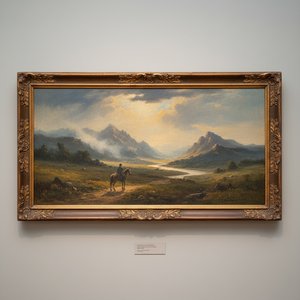
Огледален преглед на древен град, доминиран от Храмния връх и неговия купол в тази изразителна картина от Антони Уишоу. Тежки маслени бои и земни тонове предават историческа тежест и духовна значимост.

Discover Anthony Whishaw RA (b.1930), a British abstract painter celebrated for evocative works exploring memory, illusion & experience. Royal Academician & London Group member.

Жикле / Художествен принт

Giclée печат или принт върху платно с музейно качество, бързо производство и гъвкави опции за завършен вид. ( Поръчайте ръчно рисувано репродукция на този колекционерски предмет Превключване към дигитално изображение)

P118B $10
P118H $10
P118W $10
P438Z $10
P508JH $12
P508YH $12
P805H $10
P805Z $10
P919BZ $10
P919G $10
P919XJ $10
P959ZH $10
P968JZ $12
W106C $8
W218G $10
W218JH $8
W218Y $10
W307PJ $10
W316G $10
W316PJ $8
W316Y $10
W398PJ $8
W4111J $10
W500HY $15
W500JH $15
W692G $12
W849H $8
W940BG $15
W953PJ $8

Стандартен размер
по поръчка
CM
INCH

Изберете от нашите предварително зададени размери, които съответстват на оригиналните пропорции на произведението.

ширина
височина

Можете да въведете собствени размери, за да паснат на конкретна рамка или пространство. Ако избраният от Вас размер не съвпада с пропорциите на оригиналното изображение, ние ще изрежем произведението или ще разширим изображението с огледален или едноцветен ръб. Дигитален макет ще бъде изпратен за Ваше одобрение преди започването на производството.
Моля, имайте предвид, че предпрегледът на екрана не отразява реалното изрязване или разширяване. Само макетът ще покаже точно финалната композиция.
Въпреки че са налични персонализирани размери, препоръчваме да изберете размер от предварително дефинирания списък, за да запазите оригиналните пропорции.

Доставка по целия свят () в рамките на 2 седмици вместо стандартните 4/5 седмици. (21 Септември)

why_choose_icon
Безплатна експресна доставка по целия свят
why_choose_icon
Висококачествено ленено платно
why_choose_icon
Пълно застраховане на доставката
why_choose_icon
Гаранция за възстановяване на митнически такси
why_choose_icon
Гаранция за пълно съответствие на цветовете
why_choose_icon
Политика за връщане в рамките на 100 дни (само при дефекти)
why_choose_icon
100% Гаранция за връщане на сумата
why_choose_icon
Отстъпка при поръчка на повече произведения

Обща сума

$ 68

reproduction

Куполът на Рока

Жикле / Художествен принт

Размер на репродукцията

-

Крайна цена

$ 68

Бърза информация

  • Artist: Anthony Whishaw
  • Medium: Oil on board
  • Artistic style: Expressive
  • Title: Dome of the Rock
  • Influences: Goya
  • Notable elements or techniques: Thick brushstrokes; Impasto
  • Movement: Post-Impressionism

Квиз за изкуство

За всеки въпрос има само един верен отговор.

Въпрос 1:
What is the primary subject matter of ‘Dome of the Rock’?
Въпрос 2:
Which artistic movement is most closely associated with Anthony Whishaw’s style?
Въпрос 3:
What technique did Whishaw employ to create the textured surface of ‘Dome of the Rock’?
Въпрос 4:
What color palette dominates the image?
Въпрос 5:
The flattened perspective in ‘Dome of the Rock’ contributes to what overall impression?

Dome of the Rock – An Exploration of Faith and Geometry

Anthony Whishaw’s “Dome of the Rock” isn't merely a depiction of Jerusalem’s Temple Mount; it’s an invitation to contemplate the profound intersection of history, spirituality, and artistic vision. This striking oil painting captures the essence of one of Islam’s holiest sites—a testament to architectural grandeur and symbolic resonance.

The composition immediately draws the eye upwards towards the dominant dome, rendered in shades of ochre and beige that convey both warmth and a sense of timelessness. Thick brushstrokes dominate the surface, creating a textured landscape that speaks to Whishaw’s deliberate rejection of photographic realism. Instead, he prioritizes conveying emotion and atmosphere—a palpable feeling of reverence for this sacred space.

Stylistic Influences: Expressionism Meets Geometric Precision

Whishaw's artistic approach leans heavily towards Expressionist tendencies, evident in the loose application of paint and the emotive handling of color. However, beneath the expressive surface lies a carefully considered geometric framework. The rectangular blocks representing buildings contribute to a sense of order and stability—a counterpoint to the dynamism suggested by the brushwork.

The artist’s technique is masterful: layering oil paints builds depth and luminosity while maintaining an overall tonal harmony. Impasto – applying paint thickly – amplifies texture, enhancing the visual experience and reinforcing the impression of monumental scale. This deliberate disregard for meticulous detail underscores Whishaw's belief that “each painting and work on paper makes its own separate demands,” focusing instead on capturing the spirit of the subject.

Symbolism and Historical Context

The Dome of the Rock holds immense significance within Islamic tradition, representing the site of Abraham’s pilgrimage to Jerusalem and the revelation of God's Torah to Moses. Whishaw subtly communicates this historical context through his palette—earthy tones reflecting the ancient landscape—and through the overall mood of solemn contemplation.

The painting’s muted color scheme contributes to its contemplative atmosphere, inviting viewers to engage with themes of faith and remembrance. It's a piece that transcends mere visual representation, aiming instead for an emotional connection—a reflection of Whishaw’s unwavering dedication to exploring the expressive potential of abstraction.

A Legacy of Artistic Exploration

Anthony Whishaw’s “Dome of the Rock” stands as a compelling example of his artistic philosophy: prioritizing intuition and emotion over strict adherence to stylistic conventions. It exemplifies his commitment to creating art that resonates deeply with its audience—a celebration of both geometric precision and expressive brushwork, rooted in a profound understanding of history and symbolism.


Биография на художника

A Life Immersed in Abstraction: The World of Anthony Whishaw

Born in London in 1930, Anthony Whishaw RA stands as a quietly resolute figure within the landscape of British art. His journey has been one of sustained exploration, a dedication to the possibilities of abstraction that resists easy categorization or adherence to prevailing trends. From his early years spent between England and Brazil – a formative period shaping his perspective – to his current status as a celebrated Royal Academician, Whishaw’s work embodies a commitment to allowing each canvas to dictate its own terms. He famously asserts that “each painting and work on paper makes its own separate demands,” a philosophy that underscores his intuitive approach and the deeply personal nature of his artistic process. This isn't an artist seeking to illustrate a pre-conceived notion, but rather one listening intently to the evolving language of paint, shape, and color.

Early Influences and Artistic Foundations

Whishaw’s educational path laid a solid foundation for his future artistic endeavors. After attending Brunswick School in Sussex – an institution relocated to Cornwall during the upheaval of World War II – he continued his studies at Tonbridge School, where he was awarded a Judd Scholarship. This academic success paved the way for enrollment at Chelsea School of Art, followed by the prestigious Royal College of Art, graduating with first-class honors and receiving numerous accolades including the ARCA and RCA Travelling Scholarship. However, it was a journey to Spain in 1955 that proved particularly pivotal. Encountering Goya’s haunting ‘Black Paintings’ left an indelible mark on Whishaw, igniting a fascination with the darker currents of human experience and the expressive power of visual storytelling. This encounter wasn't merely about aesthetic appreciation; it was a confrontation with raw emotion and psychological depth that would resonate throughout his career. The influence isn’t necessarily visible in direct imitation, but rather in a shared willingness to confront complex themes and explore the boundaries of representation.

Shaped Canvases and Evolving Techniques

Whishaw is perhaps best known for his innovative use of shaped canvases – a deliberate departure from traditional rectangular formats. This wasn’t simply an aesthetic choice; it was a fundamental shift in how he conceived of the painting surface, seeking to create immersive and dynamic compositions that extended beyond the confines of the frame. These uniquely formed canvases invite viewers into the world of the artwork, blurring the boundaries between image and space. Initially working with oil paints, Whishaw embraced acrylics in the 1970s, recognizing their versatility and luminosity. This transition allowed for greater experimentation with texture and layering, contributing to the rich visual complexity that characterizes his work. His paintings often hover on the edge of figuration, suggesting forms and narratives without ever fully resolving into recognizable imagery. It’s a delicate balance between abstraction and allusion, inviting viewers to participate in the creation of meaning.

Recognition and Enduring Legacy

Throughout his career, Anthony Whishaw has received significant recognition for his contributions to British art. Numerous solo exhibitions across the UK and internationally – including prestigious venues like the ICA, Kettle’s Yard, and the Barbican Centre – have showcased the breadth and depth of his artistic vision. He has been honored with a multitude of awards, including the Perth International Drawing Biennale Prize, the Bayer International Painting Prize, and the Korn Ferry Carre Oban International Picture of the Year. His election as an Associate Royal Academician in 1980 and a full Royal Academician in 1989 solidified his position within the British art establishment, and he continues to exhibit regularly at the Royal Academy’s Summer Exhibition. Beyond these accolades, Whishaw's lasting legacy lies in his unwavering commitment to artistic independence and his refusal to be defined by any single movement or style. He has influenced a generation of artists with his unique approach to abstraction, blending formal experimentation with profound explorations of memory, experience, and the elusive nature of perception. His work remains a testament to the power of art to evoke emotion, stimulate thought, and challenge our understanding of the world around us.

A Continuing Dialogue

Anthony Whishaw’s contribution extends beyond the purely visual; it's an intellectual engagement with the very essence of painting. He doesn’t offer easy answers or readily digestible narratives. Instead, he presents a series of carefully considered explorations – a continuing dialogue between artist, canvas, and viewer. His paintings are not simply objects to be observed, but rather invitations to participate in a process of discovery. As he continues to work and exhibit, Whishaw remains a vital force in contemporary art, reminding us of the enduring power of abstraction to capture the complexities of human experience.
Anthony Whishaw

Anthony Whishaw

1930 - , United Kingdom

Бързи факти

  • Artistic Movement Or Style: Abstract painting
  • Artists Who Influenced This Artist: ['Goya']
  • Date Of Birth: 1930
  • Full Name: Anthony Whishaw
  • Nationality: British
  • Notable Artworks:
    • Dome of the Rock
    • Land and Seascape
    • Bowl of Flowers
  • Place Of Birth: London, UK
Разгледайте произведения на изкуството, организирани по теми, стилове и характеристики.