Master Mateo, 1161 – 1217

أشهر 44 لوحات للفنان Master Mateo

اللوحة التي جعلت Master Mateo مشهوراً هي The disappeared façade at the end of the Camino (1211)؛ وهي معروضة في مؤسسة كاتدرائية سانتياغو، سانتياغو دي كومبوستيلا. ويأتي كل من Base of the mullion of the Portico of Glory (1188) و Trinity of the Portico of Glory (1188) في المرتبة التالية في قلوب المقتنين وزوار المتاحف. من بين 44 من أعمال Master Mateo في كتالوجنا، تُعد هذه 44 الأعمال هي الأكثر إعجاباً، حيث نُقدم كل واحدة منها مع تاريخها، والمتحف الذي تضمّه، وما يميزها.

تُصنف الأعمال بناءً على درجة شعبيتنا، التي تجمع بين عمليات البحث والزيارات والطلبات لكل عمل فني. تم التحديث في أكتوبر 2026. يمكن طلب كل لوحة فنية في هذه الصفحة كنسخة زيتية مرسومة يدوياً بجودة المتاحف، أو كمطبوعة فنية فاخرة، وذلك بالمقاس الذي تختارونه.

بورتريه لـ Master Mateo
Master Mateo · 1161 – 1217
تاريخ الميلاد · تاريخ الوفاة
1161 – 1217
حركة
Romanesque
الأعمال الموجودة في كتالوجنا
44
الأكثر شهرة
The disappeared façade at the end of the Camino (1211)
أكبر عدد من الأعمال في
مؤسسة كاتدرائية سانتياغو

Master Mateo: الروائع العشر

Base of the mullion of the Portico of Glory (1188) للفنان Master Mateo
2

Base of the mullion of the Portico of Glory

1188 · Stone · مؤسسة كاتدرائية سانتياغو, سانتياغو دي كومبوستيلا

To stand before the Portico of Glory is to witness a profound shift in the language of stone. This specific base of the mullion, carved around 1188, offers a glimpse into the transition from the rigid forms of the Romanesque to a more fluid, naturalistic sensibility. Here, the stone does not merely exist; it breathes. The sculptor, Master Mateo, utilized a technique known as trabajo vivo, layering limestone to create…

Trinity of the Portico of Glory (1188) للفنان Master Mateo
3

Trinity of the Portico of Glory

1188 · Stone · مؤسسة كاتدرائية سانتياغو, سانتياغو دي كومبوستيلا

Divine Presence in Stone The capital features God the Father holding the Christ child upon his lap. Above them, the Holy Spirit takes form as a dove at the peak of the composition. Angels surround these central figures, carrying incense burners to complete the celestial scene. This sculptural arrangement uses the trabajo vivo technique, layering stone slabs to create textures that mimic flesh and fabric. The result is a sense…

Statue-column of king David (1188) للفنان Master Mateo
4

Statue-column of king David

1188 · Stone · مؤسسة كاتدرائية سانتياغو, سانتياغو دي كومبوستيلا

In the hallowed atmosphere of the Santiago Cathedral, where history and spirituality converge, stands a figure of profound majesty: the Statue-column of King David. Carved by the legendary Master Mateo around 1188, this Romanesque masterpiece is far more than a mere architectural ornament; it is a window into the soul of the twelfth century. The sculpture captures the biblical monarch in a moment of eternal resonance, seated upon a cross-frame…

The Glory, Central Arch, Portico of Glory (1211) للفنان Master Mateo
5

The Glory, Central Arch, Portico of Glory

1211 · Stone · مؤسسة كاتدرائية سانتياغو, سانتياغو دي كومبوستيلا

The Glory, Central Arch, Portico of Glory is a sculptural work by Master Mateo. It forms a primary component of the Portico of Glory, located at the Cathedral of Santiago de Compostela in Spain. This specific section of the portal was part of a complete three-piece set that reached its conclusion in 1211. The work is currently held at The Catedral de Santiago Foundation in Santiago de Compostela.

The Elders holding instruments, Central Arch, Portico of Glory (1211) للفنان Master Mateo
6

The Elders holding instruments, Central Arch, Portico of Glory

1211 · Stone · مؤسسة كاتدرائية سانتياغو, سانتياغو دي كومبوستيلا

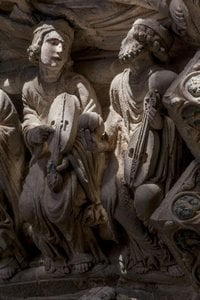
Within the sacred shadows of the Portico of Glory, a profound scene unfolds in stone. The Elders holding instruments, Central Arch, Portico of Glory emerges from the limestone, appearing as if caught in a moment of eternal preparation. This work, created by the hands of Master Mateo, brings the figures of the Apocalypse into a tangible, breathing presence. They sit amidst the radial archivolts, their bodies leaning toward one another…

Saint Matthew, Central Arch, Portico of Glory (1211) للفنان Master Mateo
8

Saint Matthew, Central Arch, Portico of Glory

1211 · Stone · مؤسسة كاتدرائية سانتياغو, سانتياغو دي كومبوستيلا

The stone breathes under the soft, diffuse light of the cathedral, revealing a figure caught in a moment of eternal devotion. Here, within the central arch of the Portico of Glory, Saint Matthew sits with a quiet, heavy presence. He is a winged presence, his form emerging from the granite with a startling sense of life. He leans over a desk, his knees supporting the weight of his task, as…

Saint Luke, Central Arch, Portico of Glory (1211) للفنان Master Mateo
9

Saint Luke, Central Arch, Portico of Glory

1211 · Stone · مؤسسة كاتدرائية سانتياغو, سانتياغو دي كومبوستيلا

The limestone relief of Saint Luke, carved around 1211, occupies a central position within the Portico of Glory at the Cathedral of Santiago de Compostela in Spain. The figure is depicted reclining on his right side, a posture that suggests both physical repose and deep introspection. In his left hand, he holds a book, while his head rests upon a lamb, a direct reference to his role as an Evangelist…

Arma Christi, Central Arch, Portico of Glory (1211) للفنان Master Mateo
10

Arma Christi, Central Arch, Portico of Glory

1211 · Stone · مؤسسة كاتدرائية سانتياغو, سانتياغو دي كومبوستيلا

The relief known as Arma Christi, Central Arch, Portico of Glory is a sculptural work by the artist Master Mateo. This specific piece is situated within the Central Arch of the Portico of Glory. It was created in 1211. The work is part of a larger architectural and sculptural program located at the Santiago de Compostela Cathedral in Galicia, Spain.

المزيد من روائع Master Mateo، من 11 إلى 44

Rose window (1200) للفنان Master Mateo
#42

Rose window

1200 · مؤسسة كاتدرائية سانتياغو

Items made by Master Mateo in the cathedral collections include significant pieces from the great western facade that completed the Portico of Glory. This facade was first modified…

اطلب نسخة طبق الأصل →

المواضيع التي رسمها Master Mateo أكثر من غيره

المواضيع الأربعة الأكثر تكراراً بين هذه التحف الفنية، مع أجمل مثال لكل منها.

أين يمكنك مشاهدة لوحات Master Mateo

المتاحف 2 التي تضم أكبر عدد من اللوحات الموجودة في هذه الصفحة.

المتحف المدينة أعمال Master Mateo لوحات من هذه القائمة
مؤسسة كاتدرائية سانتياغو, سانتياغو دي كومبوستيلامؤسسة كاتدرائية سانتياغو سانتياغو دي كومبوستيلا 40 The disappeared façade at the end of the Camino, Base of the mullion of the Portico of Glory, Trinity of the Portico of Glory
Cathedral, Santiago de CompostelaCathedral Santiago de Compostela 4 Portico de la Gloria, Portico de la Gloria (detail), Portico de la Gloria

Master Mateo، عقداً بعد عقد: اللوحة الأبرز في كل عقد

  1. 1180s
    Base of the mullion of the Portico of Glory (1188) للفنان Master Mateo
    الترتيب 2 من 44

    Base of the mullion of the Portico of Glory

    العمر 19 – 28 · مؤسسة كاتدرائية سانتياغو

    To stand before the Portico of Glory is to witness a profound shift in the language of stone. This specific base of the mullion, carved around 1188, offers…

  2. 1200s
    Santo dos Croques of the Portico of Glory (1200) للفنان Master Mateo
    الترتيب 11 من 44

    Santo dos Croques of the Portico of Glory

    العمر 39 – 48 · مؤسسة كاتدرائية سانتياغو

    Just in the reverse of the mullion appears a kneeling figure, with its right hand on the chest and holding a cartouche with the left hand where, according…

  3. 1210s
    The disappeared façade at the end of the Camino (1211) للفنان Master Mateo
    المركز 1 من 44

    The disappeared façade at the end of the Camino

    العمر 49 – 56 · مؤسسة كاتدرائية سانتياغو

    The disappeared façade at the end of the Camino is a square format work by the sculptor Master Mateo. Created about 1211, this piece originates from the period…

روائع Master Mateo: أسئلة وأجوبة

ما هي اللوحة التي اشتهر بها Master Mateo؟أظهر الإجابة

The disappeared façade at the end of the Camino (1211)، مؤسسة كاتدرائية سانتياغو, سانتياغو دي كومبوستيلا. يليهما Base of the mullion of the Portico of Glory (1188) وTrinity of the Portico of Glory (1188).

كم كان عمر Master Mateo عندما رسم The disappeared façade at the end of the Camino؟أظهر الإجابة

عمر 50 عاماً: يعود تاريخ The disappeared façade at the end of the Camino إلى عام 1211، وقد وُلد Master Mateo في 1161.

ما هي أعظم عشر لوحات لـ Master Mateo؟أظهر الإجابة

The disappeared façade at the end of the Camino, Base of the mullion of the Portico of Glory, Trinity of the Portico of Glory, Statue-column of king David, The Glory, Central Arch, Portico of Glory, The Elders holding instruments, Central Arch, Portico of Glory, Voussoirs with the punishment of lust, Saint Matthew, Central Arch, Portico of Glory, Saint Luke, Central Arch, Portico of Glory و Arma Christi, Central Arch, Portico of Glory. يوضح التصنيف أعلاه سنة الإنتاج والمتحف الخاص بكل منها.

كم عدد الأعمال التي رسمها Master Mateo؟أظهر الإجابة

تضم قائمتنا 44 من أعمال Master Mateo، التي يعود تاريخها من 1188 إلى 1211.

في أي متاحف يمكنني مشاهدة روائع Master Mateo؟أظهر الإجابة

معظمها موجود في مؤسسة كاتدرائية سانتياغو (سانتياغو دي كومبوستيلا) و Cathedral (Santiago de Compostela). وتدرج القائمة أعلاه المتاحف واحداً تلو الآخر.

متى رسم Master Mateo هذه اللوحات الخالدة؟أظهر الإجابة

في 1210s: 24 من أصل 44 من الأعمال في هذه الصفحة تعود إلى ذلك التاريخ، من بينها The disappeared façade at the end of the Camino.

ما هي أول وآخر لوحات Master Mateo الشهيرة؟أظهر الإجابة

أقدم لوحة في هذه الصفحة هي من عام Base of the mullion of the Portico of Glory (1188)، وأحدثها من عام The disappeared façade at the end of the Camino (1211).

ما هي موضوعات Master Mateo المفضلة؟أظهر الإجابة

Sculpture (5), Medieval art (5) و Stone (3)، من بين 44 من الأعمال في هذه الصفحة.

ما هي التقنية التي كان يفضلها Master Mateo؟أظهر الإجابة

Stone: 10 من أصل 44 من الأعمال في هذه الصفحة.

إلى أي حركة فنية ينتمي Master Mateo؟أظهر الإجابة

Romanesque و Gothic، كما تظهر اللوحات في هذه الصفحة.

ما هي الروائع التي رسمها Master Mateo وتُعرض في مؤسسة كاتدرائية سانتياغو؟أظهر الإجابة

تُعد The disappeared façade at the end of the Camino, Base of the mullion of the Portico of Glory و Trinity of the Portico of Glory من بين 40 عمل فني في هذه الصفحة محفوظة لدى مؤسسة كاتدرائية سانتياغو, سانتياغو دي كومبوستيلا.

هل يمكنني اقتناء نسخة من إحدى روائع Master Mateo؟أظهر الإجابة

نعم. يمكن طلب كل لوحة في هذه الصفحة كنسخة زيتية مرسومة يدوياً بجودة المتاحف أو كمطبوعة فنية فاخرة، بالمقاس الذي تختاره، وذلك من صفحة اللوحة نفسها.

حياة Master Mateo

The Soul of Santiago’s Glory

Master Mateo, a sculptor whose name remains shrouded in mystery despite his monumental contribution to the Catedral de Santiago de Compostela Cathedral, stands as one of the most revered figures of Romanesque art in Spain. Born around 1161 in Galicia, though precise details about his life are scarce, Mateo’s legacy rests primarily on his unparalleled achievement: the Portico de la Gloria. This breathtaking architectural marvel dominates the cathedral’s façade and embodies the spiritual fervor of the twelfth century. He emerged as a sculptor during a period marked by fervent religious devotion and artistic innovation, stepping into a world where the pilgrimage route to Santiago was already a transformative journey for thousands of souls.

The genesis of his greatest work began around 1188, when he was tasked with overseeing the creation of the triple doorway that would become his magnum opus. The Cathedral project itself had been conceived decades earlier, driven by King Alfonso VIII and fueled by the immense religious significance of the site. Within this sacred context, Mateo did not merely carve stone; he breathed life into it. His involvement in the Portico de la Adamant was a divine undertaking, transforming a structural necessity into a theological narrative that continues to captivate pilgrims and art historians alike.

A Symphony in Stone: Technique and Style

Mateo's sculptural style is characterized by a remarkable realism that represented a profound departure from earlier, more rigid Romanesque conventions. While his contemporaries often relied on stylized, flat figures, Mateo meticulously studied human anatomy and the complex behavior of drapery, achieving an astonishing accuracy in his depictions. His mastery of limestone carving was unparalleled, particularly through his use of a technique known as trabajo vivo. This method involved layering stone slabs to create textured surfaces that mimicked the appearance of flesh and fabric, lending a sense of movement and vitality to the static medium.

This innovative approach allowed him to bridge the gap between the earthly and the divine. When observing his work, one can see how he skillfully employed light and shadow to enhance the depth of his reliefs. His ability to manipulate stone to suggest the softness of a saint's robe or the muscular tension of a biblical figure elevated his craftsmanship to a level of sophistication rarely seen in the Middle Ages. This technical brilliance ensured that his figures were not merely symbols, but palpable presences within the cathedral's entrance.

The Portico de la Gloria: A Testament to Faith

The Portico de la Gloria serves as the ultimate testament to Mateo’s artistic and spiritual vision. Its central panels depict profound scenes from the Gospels—including the Nativity, Annunciation, and the Crucifixion—arranged in a way that guides the viewer through a sacred history. The iconography is vast and complex, featuring:

  • The Central Arch: Featuring iconic figures such as Saint Luke, where the intricate Romanesque sculpture displays profound religious symbolism.
  • The Left Arch: A masterclass in 12th-century Spanish relief carving, showcasing detailed biblical narratives.
  • The Right Arch: An exhibition of intricate beauty that demonstrates his ability to manage complex architectural and sculptural integration.

Through these works, Mateo achieved a level of historical significance that transcends the era of his birth. He transitioned the Romanesque style toward the burgeoning elegance of the Gothic, leaving behind a legacy that remains the heartbeat of Santiago de Compostela. His work stands as a permanent bridge between the medieval mind and the eternal, ensuring that even centuries after his death in 1217, the glory of his stone symphony continues to inspire awe.

جميع أعمال 44 لـ Master Mateo →