أونوريه دومييه, 1808 – 1879

أونوريه دومييه: أشهر 100 لوحات

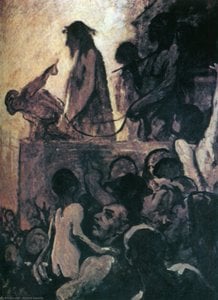
تُعد أونوريه دومييه نحن نريد باراباس (Ecce Homo) (1852) اللوحة الأكثر شهرة للفنان أونوريه دومييه، وهي محفوظة في Museum Folkwang في إيسن. تُعد The Third-class Carriage (1860) وUnknown, maybe Hippolyte Lucien-Joseph Lucas (1807-1878), a Journalist, maybe P.Mendez de Vigo (1790-1860) a Spanish General, but Most Probably the Count Pelet de la Lozere (1785-1871), a Politician (1833) من أكثر العملين الفنيين شهرة في العالم. من بين 355 من أعمال أونوريه دومييه في كتالوجنا، إليكم 100 من الأعمال الأكثر مشاهدة من قبل المقتنين وزوار المتاحف، مع ذكر سنة الإنتاج، والمتحف، وقصة كل منها.

تُصنف الأعمال بناءً على درجة شعبيتنا، التي تجمع بين عمليات البحث والزيارات والطلبات لكل عمل فني. تم التحديث في أكتوبر 2026. يمكن طلب كل لوحة فنية في هذه الصفحة كنسخة زيتية مرسومة يدوياً بجودة المتاحف، أو كمطبوعة فنية فاخرة، وذلك بالمقاس الذي تختارونه.

بورتريه لـ أونوريه دومييه
أونوريه دومييه · 1808 – 1879
تاريخ الميلاد · تاريخ الوفاة
1808 – 1879, مرسيليا
حركة
الواقعية
الأعمال الموجودة في كتالوجنا
355
الأكثر شهرة
أونوريه دومييه نحن نريد باراباس (Ecce Homo) (1852)
أكبر عدد من الأعمال في
متحف أورسيه

أفضل 10 لوحات شهرةً لـ أونوريه دومييه

أونوريه دومييه نحن نريد باراباس (Ecce Homo) (1852) للفنان أونوريه دومييه
1

أونوريه دومييه نحن نريد باراباس (Ecce Homo)

1852 · زيت على قماش · Museum Folkwang, إيسن

Powerful Depiction of Human Suffering and Social Justice This compelling artwork captures a poignant biblical scene that resonates deeply with themes of compassion, injustice, and societal critique. Rendered in a raw, expressive style, the scene invites viewers into a moment of collective emotion and moral reflection. The figures, depicted with gestural immediacy, evoke a sense of urgency and human vulnerability, making it a profound statement on social conscience and spiritual…

The Third-class Carriage (1860) للفنان أونوريه دومييه
2

The Third-class Carriage

1860 · Oil On Canvas · متحف المتروبوليتان للفنون, نيويورك

In the crowded, dimly lit confines of a mid-19th-century railway carriage, Honoré Daumier captures more than just a moment in transit; he captures the very essence of human endurance. The Third-class Carriage serves as a profound window into the burgeoning urban reality of France during the Second Empire. As the industrial revolution reshaped the landscape of Europe, Daumier turned his gaze away from the gilded salons of the aristocracy and…

Unknown, maybe Hippolyte Lucien-Joseph Lucas (1807-1878), a Journalist, maybe P.Mendez de Vigo (1790-1860) a Spanish General, but Most Probably the Count Pelet de la Lozere (1785-1871), a Politician (1833) للفنان أونوريه دومييه
3

Unknown, maybe Hippolyte Lucien-Joseph Lucas (1807-1878), a Journalist, maybe P.Mendez de Vigo (1790-1860) a Spanish General, but Most Probably the Count Pelet de la Lozere (1785-1871), a Politician

1833 · Clay / Terracotta · متحف أورسيه, باريس

This evocative portrait captures more than just the likeness of an elderly gentleman; it arrests a moment in time, freezing the very essence of 19th-century Parisian intellectual life. The subject, whose identity is suggested by the possibilities of a journalist or politician, possesses a gaze that seems to look past the viewer, into some distant, weighty contemplation. Rendered with the unmistakable hand of Honoré Daumier, the piece transcends mere portraiture;…

Ratapoil (front view) (1850) للفنان أونوريه دومييه
4

Ratapoil (front view)

1850 · Bronze · متحف أورسيه, باريس

Honoré Daumier's "Ratapoil (front view)," created around 1850, is more than just a bronze sculpture; it’s a potent distillation of 19th-century French social commentary and political critique. This arresting figure, rendered with remarkable dynamism and a touch of unsettling realism, offers a captivating window into the turbulent world of post-Revolutionary France – a world grappling with nascent democracy, imperial ambitions, and the pervasive inequalities of its society. The sculpture’s enduring…

Intermission at the Comédie Française (1858) للفنان أونوريه دومييه
5

Intermission at the Comédie Française

1858 · Watercolor · متحف الإرميتاج, سانت بطرسبرغ

Honoré Daumier's “Intermission at the Comédie Française,” painted in 1858, isn’t merely a depiction of an elderly gathering; it’s a meticulously crafted observation of a specific moment frozen in time – and brimming with unspoken commentary. The artwork immediately draws the viewer into a densely packed scene: rows upon rows of men, their faces etched with age and lined with contemplation, are absorbed in reading newspapers or pamphlets within the…

Ratapoil (1850) للفنان أونوريه دومييه
6

Ratapoil

1850 · Bronze · Staatliche Kunsthalle Karlsruhe, كارلسروه

The photograph captures a pivotal moment – a frozen dance of energy and emotion rendered in the enduring medium of bronze. This exquisite reproduction offers an intimate encounter with "Ratapoil," a sculpture by the visionary artist Honoré Daumier, born in Marseille in 1808 and tragically lost in 1879. More than just a depiction of a figure, it’s a window into the social anxieties and artistic fervor that defined mid-19th century…

Scene from a Comedy (1858) للفنان أونوريه دومييه
8

Scene from a Comedy

1858 · Oil On Canvas · متحف أورسيه, باريس

Honoré Daumier's "Scene from a Comedy," painted in 1858, isn’t merely a depiction of two figures; it’s a meticulously crafted snapshot of Parisian society and the biting social commentary that defined the artist’s career. Housed within the walls of the Musée d’Orsay, this oil on canvas offers a rare glimpse into Daumier's world – a world brimming with observation, critique, and an undeniable sense of humor laced with profound sadness.…

Ratapoil (1850) للفنان أونوريه دومييه
9

Ratapoil

1850 · Acrylic On Canvas · Artizon Museum, طوكيو

Honoré Daumier's "Ratapoil," created in 1850, isn’t merely a sculpture; it’s a distilled embodiment of the anxieties and frustrations simmering beneath the surface of mid-19th century France. This arresting figure, rendered in cast iron with a deliberate roughness that mirrors its subject matter, captures a moment of profound disillusionment – a silent indictment of societal hypocrisy and the precariousness of human existence. The sculpture’s power lies not just in its…

Family on the Barricades in 1848 (1854) للفنان أونوريه دومييه
10

Family on the Barricades in 1848

1854 · Oil · الغاليري الوطني, براغ

In the heart of Honoré Daumier’s 1854 masterpiece, Family on the Barricades in 1848, we find a moment suspended in the amber of history. This is not merely a painting of a political uprising; it is a profound psychological study of human resilience. As the Second French Revolution tore through the streets of Paris, Daumier captured the very essence of the era's turbulent spirit. The scene presents a family huddled…

بقية ترتيب أونوريه دومييه، من 11 إلى 100

The Print Collector (1865) للفنان أونوريه دومييه
#11

The Print Collector

1865 · معهد شيكاغو للفنون

Honoré Daumier's "The Print Collector" isn’t merely a depiction of a man surrounded by prints; it’s a carefully constructed tableau of introspection, a poignant meditation on knowledge, legacy,…

اقتنِها الآن →
The Republic (1848) للفنان أونوريه دومييه
#12

The Republic

1848 · متحف أورسيه

Honoré Daumier’s “The Republic” (1848) isn't merely a painting; it’s a potent distillation of the anxieties and aspirations swirling within post-revolutionary France. Captured with his signature blend of…

اقتنِها الآن →
On a Bridge at Night (1848) للفنان أونوريه دومييه
#14

On a Bridge at Night

1848 · The Phillips Collection

The scene captures a moment of silent intimacy under the artificial glow of lamplight. Two figures move across a bridge, their forms defined by expressive, simplified outlines that…

اقتنِها الآن →
Burden (1850) للفنان أونوريه دومييه
#16

Burden

1850 · متحف الإرميتاج

In the quiet, somber depths of Honoré Daumier’s 1850 masterpiece, "Burden," we are invited into a moment of profound human endurance that transcends the boundaries of time. The…

اطلب نسخة طبق الأصل →
The Studio (1870) للفنان أونوريه دومييه
#19

The Studio

1870 · متحف ج. بول غيتي

In this intimate oil on canvas, a man leans toward a seated woman within a dimly lit interior. The composition is tightly cropped, creating a sense of enclosure…

اطلب نسخة طبق الأصل →
Jean-Marie Fruchard (1788-1872), Deputy (1833) للفنان أونوريه دومييه
#20

Jean-Marie Fruchard (1788-1872), Deputy

1833 · متحف أورسيه

Honoré Daumier’s 1833 sculpture of Jean-Marie Fruchard, a deputy of the French parliament, functions as a sharp political indictment. Rather than an idealized likeness, the bust utilizes deliberate…

Load (Washerwoman) (1853) للفنان أونوريه دومييه
#21

Load (Washerwoman)

1853 · الغاليري الوطني

In this 1853 lithograph, a woman moves through a Parisian street, her form defined by the heavy burden she carries. A large basket, filled to the brim with…

اقتنِها الآن →
Two Lawyers (1860) للفنان أونوريه دومييه
#24

Two Lawyers

1860 · معهد شيكاغو للفنون

This small-scale oil painting presents two men in profile, positioned side-by-side while facing one another. The subjects are captured from the upper torso upward, creating a close-up view…

اطلب نسخة طبق الأصل →
Outside the Print–Seller's Shop (1860) للفنان أونوريه دومييه
#25

Outside the Print–Seller's Shop

1860 · متحف دالاس للفنون

This painting, titled Outside the Print–Seller's Shop, was created by the French artist Honoré Daumier. It offers a quiet glimpse into the social fabric of 19th-century France, capturing…

اقتنِها الآن →
Exit from the Theater (1863) للفنان أونوريه دومييه
#26

Exit from the Theater

1863 · متحف نيلسون-أتكينز للفنون

The work titled Exit from the Theater is an oil on panel. It is attributed to the artist Honoré Daumier. The painting captures a street scene of theater-goers…

اقتنِها الآن →
Penelopa's Dream (1842) للفنان أونوريه دومييه
#34

Penelopa's Dream

1842 · Bibliothèque Nationale

Penelopa's Dream is a lithograph created by the artist Honoré Daumier. The work was produced in 1842. This specific piece belongs to the Ancient History series, a collection…

اقتنِها الآن →
Jean-Auguste Chevandier de Valdrome, Parliamentarian (The Fool) (1832) للفنان أونوريه دومييه
#35

Jean-Auguste Chevandier de Valdrome, Parliamentarian (The Fool)

1832 · متحف أورسيه

Honoré Daumier's "Jean-Auguste Chevandier de Valdrome, Parliamentarian (The Fool)" is not merely a sculpture; it’s a profound distillation of human sorrow and the weight of political disillusionment. Completed…

The Washerwoman (1863) للفنان أونوريه دومييه
#36

The Washerwoman

1863 · متحف أورسيه

Honoré Daumier’s “The Washerwoman,” painted in 1863, is more than just a depiction of a woman laboring by the Seine; it's a poignant meditation on poverty, resilience, and…

اطلب نسخة طبق الأصل →
Masks of 1831 (1832) للفنان أونوريه دومييه
#37

Masks of 1831

1832 · متحف مينيابوليس للفنون
The Beautiful Narcissus (1842) للفنان أونوريه دومييه
#59

The Beautiful Narcissus

1842 · Bibliothèque Nationale

Honoré Daumier’s lithograph, "The Beautiful Narcissus," transcends mere depiction; it embodies the spirit of Realism—a courageous confrontation with societal realities tempered by profound artistic sensitivity. Created in 1842…

اقتنِها الآن →
Two Singers للفنان أونوريه دومييه
#66

Two Singers

متاحف هارفارد للفنون

In this oil painting, we find ourselves drawn into a quiet, private moment between two figures. A man and a woman are positioned closely together, their upper bodies…

اقتنِها الآن →
The Serenade (1858) للفنان أونوريه دومييه
#69

The Serenade

1858 · المعرض الوطني الاسكتلندي

The Serenade is a painting by Honoré Daumier, created about 1858. In this work, the artist captures a strolling player singing within the setting of a garden restaurant.…

اطلب نسخة مرسومة يدوياً →
The Print Amateur (1855) للفنان أونوريه دومييه
#70

The Print Amateur

1855 · متاحف هارفارد للفنون

The Print Amateur is an oil on panel by Honoré Daumier. Created in France, this work captures a specific moment of observation. The pigment rests upon the hard,…

اقتنِها الآن →
Jacques Lefévre (1777-1856), Banker and Deputy (1833) للفنان أونوريه دومييه
#72

Jacques Lefévre (1777-1856), Banker and Deputy

1833 · متحف أورسيه

Honoré Daumier's 1833 sculpture, “Jacques Lefévre (1777-1856), Banker and Deputy,” is far more than a simple bust; it’s a meticulously crafted caricature brimming with social commentary. Captured in…

Theater Audience (1856) للفنان أونوريه دومييه
#80

Theater Audience

1856 · المتحف الوطني للفن الغربي

Theater Audience is an oil painting by the French artist Honoré Daumier. The work was created about 1856-60. Daumier was a male artist born in 1808 and he…

اطلب نسخة طبق الأصل →
Don Quixote Reading (1866) للفنان أونوريه دومييه
#81

Don Quixote Reading

1866 · National Museum Cardiff

In this oil on canvas, Honoré Daumier presents us with a quiet, intense moment of absorption. The work, titled Don Quixote Reading, captures the titular character lost within…

اقتنِها الآن →
Avant l (1865) للفنان أونوريه دومييه
#84

Avant l

1865

Honoré Daumier’s “Avant l’audience” (Before the Hearing), painted in 1865, is a deceptively simple yet profoundly resonant work that captures a pivotal moment of restrained tension and intellectual…

اطلب نسخة طبق الأصل →
Street Scene (1864) للفنان أونوريه دومييه
#92

Street Scene

1864 · متحف بويجمانس فان بيونينغن

The shadows of a mid-19th-century urban environment emerge through Street Scene, a work by the French painter Honoré Daumier. Created about 1864, this piece captures a fleeting moment…

اطلب نسخة مرسومة يدوياً →
To the Street (1850) للفنان أونوريه دومييه
#97

To the Street

1850 · The Phillips Collection

In the evocative monochrome of Honoré Daumier’s To the Street, we are transported back to the mid-19th century, a period defined by the rapid pulse of urban transformation.…

اقتنِها الآن →
Mother (1855) للفنان أونوريه دومييه
#100

Mother

1855 · المتحف الوطني في صربيا

Executed in 1855, Mother by Honoré Daumier presents a portrait of disquiet. This work functions as a genre painting, utilizing a depiction of a mother and child to…

اقتنِها الآن →

لوحات أونوريه دومييه حسب الفترة الزمنية

المواضيع التي رسمها أونوريه دومييه أكثر من غيره

المواضيع الأربعة الأكثر تكراراً بين هذه التحف الفنية، مع أجمل مثال لكل منها.

أين يمكنك مشاهدة لوحات أونوريه دومييه

المتاحف الـ 8 التي تضم أكبر عدد من اللوحات الموجودة في هذه الصفحة.

المتحف المدينة أعمال أونوريه دومييه لوحات من هذه القائمة
متحف أورسيه, باريسمتحف أورسيه باريس 33 Unknown, maybe Hippolyte Lucien-Joseph Lucas (1807-1878), a Journalist, maybe P.Mendez de Vigo (1790-1860) a Spanish General, but Most Probably the Count Pelet de la Lozere (1785-1871), a Politician, Ratapoil (front view), Ratapoil (rear view)
Burrell Collection, غلاسكوBurrell Collection غلاسكو 9 The Good Samaritan, Susannah and the Elders, The Miller, His Son and the Donkey
The Phillips Collection, واشنطن العاصمةThe Phillips Collection واشنطن العاصمة 8 On a Bridge at Night, The Uprising (L, The Strong Man
معهد شيكاغو للفنون, شيكاغومعهد شيكاغو للفنون شيكاغو 4 The Print Collector, Street Musicians, Two Lawyers
National Museum Cardiff, كارديفNational Museum Cardiff كارديف 8 Head of a Man, A Third Class Carriage, Don Quixote Reading
Rhode Island School of Design Museum of Art, بروفيدنسRhode Island School of Design Museum of Art بروفيدنس 4 Second-Class Carriage, Mme Pipelet, the Concierge, Au Palais de Justice (At the Law Courts)
Bibliothèque Nationale, باريسBibliothèque Nationale باريس 3 Penelopa's Dream, The Beautiful Narcissus, Rue Transnonain, April 15, 1834
متاحف هارفارد للفنون, كامبريدجمتاحف هارفارد للفنون كامبريدج 3 Scapin, Two Singers, The Print Amateur

أونوريه دومييه عبر العقود: لوحة خالدة لكل عقد

  1. 1830s
  2. 1840s
    The Republic (1848) للفنان أونوريه دومييه
    الترتيب 12 من 100

    The Republic

    العمر 32 – 41 · متحف أورسيه

    Honoré Daumier’s “The Republic” (1848) isn't merely a painting; it’s a potent distillation of the anxieties and aspirations swirling within post-revolutionary France. Captured with his signature blend of…

  3. 1850s
  4. 1860s
    The Third-class Carriage (1860) للفنان أونوريه دومييه
    الرقم 2 من أصل 100

    The Third-class Carriage

    العمر 52 – 61 · متحف المتروبوليتان للفنون

    In the crowded, dimly lit confines of a mid-19th-century railway carriage, Honoré Daumier captures more than just a moment in transit; he captures the very essence of human…

  5. 1870s
    The Studio (1870) للفنان أونوريه دومييه
    المركز 19 من 100

    The Studio

    العمر 62 – 71 · متحف ج. بول غيتي

    In this intimate oil on canvas, a man leans toward a seated woman within a dimly lit interior. The composition is tightly cropped, creating a sense of enclosure…

لوحات أونوريه دومييه: الأسئلة الشائعة

ما هي أشهر لوحة لـ أونوريه دومييه؟أظهر الإجابة

أونوريه دومييه نحن نريد باراباس (Ecce Homo) (1852)، Museum Folkwang, إيسن. يليهما The Third-class Carriage (1860) وUnknown, maybe Hippolyte Lucien-Joseph Lucas (1807-1878), a Journalist, maybe P.Mendez de Vigo (1790-1860) a Spanish General, but Most Probably the Count Pelet de la Lozere (1785-1871), a Politician (1833).

في أي عمر رسم أونوريه دومييه لوحة أونوريه دومييه نحن نريد باراباس (Ecce Homo)؟أظهر الإجابة

عمر 44 عاماً: يعود تاريخ أونوريه دومييه نحن نريد باراباس (Ecce Homo) إلى عام 1852، وقد وُلد أونوريه دومييه في 1808.

ما هي أشهر 10 لوحات لـ أونوريه دومييه؟أظهر الإجابة

أونوريه دومييه نحن نريد باراباس (Ecce Homo), The Third-class Carriage, Unknown, maybe Hippolyte Lucien-Joseph Lucas (1807-1878), a Journalist, maybe P.Mendez de Vigo (1790-1860) a Spanish General, but Most Probably the Count Pelet de la Lozere (1785-1871), a Politician, Ratapoil (front view), Intermission at the Comédie Française, Ratapoil, Ratapoil (rear view), Scene from a Comedy, Ratapoil و Family on the Barricades in 1848. يوضح التصنيف أعلاه سنة الإنتاج والمتحف الخاص بكل منها.

كم عدد اللوحات لـ أونوريه دومييه؟أظهر الإجابة

تضم قائمتنا 355 من أعمال أونوريه دومييه، التي يعود تاريخها من 1832 إلى 1870.

أين يمكنني مشاهدة أشهر لوحات أونوريه دومييه؟أظهر الإجابة

معظمها موجود في متحف أورسيه (باريس), Burrell Collection (غلاسكو) و The Phillips Collection (واشنطن العاصمة). وتدرج القائمة أعلاه المتاحف واحداً تلو الآخر.

في أي فترة زمنية رسم أونوريه دومييه أشهر أعماله؟أظهر الإجابة

في 1850s: 34 من أصل 100 من الأعمال في هذه الصفحة تعود إلى ذلك التاريخ، من بينها أونوريه دومييه نحن نريد باراباس (Ecce Homo).

ما هي أقدم لوحة مشهورة لـ أونوريه دومييه، وأحدثها؟أظهر الإجابة

أقدم لوحة في هذه الصفحة هي من عام Count Antoine-Maurice-Apollinaire d'Argout (1782-1858), Minister and Peer of France (1832)، وأحدثها من عام The Studio (1870).

ما هي المواضيع التي رسمها أونوريه دومييه؟أظهر الإجابة

People (18), Satire (15) و Man (13)، من بين 100 من الأعمال في هذه الصفحة.

ما هي المواد التي استخدمها أونوريه دومييه في الرسم، وبأي أدوات؟أظهر الإجابة

Oil On Canvas: 15 من أصل 100 من الأعمال في هذه الصفحة.

إلى أي مدرسة فنية ينتمي فن أونوريه دومييه؟أظهر الإجابة

الواقعية، كما تظهر اللوحات في هذه الصفحة.

ما هي لوحات أونوريه دومييه التي يقتنيها متحف أورسيه؟أظهر الإجابة

تُعد Unknown, maybe Hippolyte Lucien-Joseph Lucas (1807-1878), a Journalist, maybe P.Mendez de Vigo (1790-1860) a Spanish General, but Most Probably the Count Pelet de la Lozere (1785-1871), a Politician, Ratapoil (front view) و Ratapoil (rear view) من بين 19 عمل فني في هذه الصفحة محفوظة لدى متحف أورسيه, باريس.

أين يمكنني شراء نسخة من أعمال أونوريه دومييه؟أظهر الإجابة

نعم. يمكن طلب كل لوحة في هذه الصفحة كنسخة زيتية مرسومة يدوياً بجودة المتاحف أو كمطبوعة فنية فاخرة، بالمقاس الذي تختاره، وذلك من صفحة اللوحة نفسها.

أونوريه دومييه: السيرة الذاتية

حياة منقوشة بالسخرية: عالم أونوريه دومييه

ولد أونوريه-فيكتورين دومييه في مرسيليا عام 1808، وكانت رحلته متشابكة بعمق مع التيارات المضطربة لفرنسا في القرن التاسع عشر. كانت حياته المبكرة، التي تميزت بطموحات والده الشعرية وانتقاله اللاحق إلى باريس في عام 1814، غارقة في مدينة تعج بالطاقة الفنية. على الرغم من أنه كان مقدرًا له أن يخوض مهنة قانونية، إلا أن ميول دومييه الشاب انحرفت بشكل لا رجعة فيه نحو الفن. تدرب تحت إشراف ألكسندر لينوار، واستوعب التأثيرات الكلاسيكية جنبًا إلى جنب مع تقدير للكياروسكورو الدرامي لبيتر بول روبنس، وصقل مهاراته في أكاديمية سويس. سيثبت هذا التدريب الأساسي أهميته الحاسمة في تشكيل أسلوبه المتميز - مزيج قوي من الواقعية والبراعة التعبيرية. ومع ذلك، لم يكن الأسلوب الفني هو الذي حدد دومييه فحسب؛ بل كانت حساسيته العميقة للظلم الاجتماعي والتناقضات السياسية المحيطة به.

القلم المشحذ: السخرية والتعليق الاجتماعي

بدأت مسيرة دومييه المهنية حقًا في أعقاب ثورة عام 1830، وهو حدث غير مجرى التاريخ الفرنسي بشكل لا رجعة فيه وفي الوقت نفسه قدم أرضًا خصبة لموهبته الساخرة المتنامية. سرعان ما أثبت نفسه كرسام كاريكاتوري بارع، حيث ساهم في البداية بشكل مجهول في منشورات مختلفة قبل أن يكتسب شهرة من خلال عمله مع *Le Charivari*، وهي مجلة هزلية مستقلة بقوة أسسها شارل فيليبون. هنا ازدهرت عبقرية دومييه حقًا. لم تكن رسوماته الكاريكاتورية مجرد تصوير فكاهي؛ بل كانت إدانات لاذعة للبرجوازية والنظام القانوني والمنشأة السياسية. لقد سخر بلا خوف من الملك لويس فيليب، وكسب لنفسه السجن لمدة ستة أشهر في عام 1832 بسبب رسم كاريكاتوري حاد بشكل خاص. لم تصمت هذه التجربة، بل عززت التزامه بفضح النفاق وتحدي السلطة من خلال الفن. أصبحت رسوماته الكاريكاتورية بمثابة بيانات مرئية، تلتقط روح المعارضة وتقدم تعليقًا نقديًا على العلل الاجتماعية لعصره. الحجم الهائل لإنتاجه خلال هذه الفترة مذهل - آلاف الرسومات الكاريكاتورية التي عملت كترفيه شعبي وبيانات سياسية قوية.

ما وراء السخرية: رؤى الرسم والنحت

بينما يحتفل دومييه أكثر ما يشتهر به في رسوماته الكاريكاتورية، فإن حصره فقط في هذا المجال سيكون إهانة جسيمة. كان أيضًا رسامًا ونحاتًا متفانيًا، على الرغم من أن الاعتراف بهذه الأعمال جاء لاحقًا في الحياة. غالبًا ما تصور لوحاته مشاهد من الحياة الباريسية اليومية - عربة الدرجة الثالثة، والغسالات، والمحامين - وهي مشبعة بإحساس عميق بالواقعية والتعاطف. إنها ليست تصويرات مثالية بل تصويرات صريحة للصعوبات والنضال. استخدم ببراعة ضربات فرشاة فضفاضة وإضاءة درامية لنقل المشاعر والجو، مما يمهد الطريق لبعض التقنيات التي تبناها لاحقًا الانطباعيون. عمله النحتي، الذي تم إنشاؤه في الغالب من الطين (ظلت العديد من القطع غير مخبوزة خلال حياته)، يكشف عن التزام مماثل بالتقاط الشكل الإنساني بصدق وعمق عاطفي. تُظهر هذه المنحوتات، التي أعيد اكتشافها بعد وفاته، موهبة رائعة في النمذجة وقدرة على نقل التعقيد النفسي من خلال الإيماءات الجسدية.

إرث دائم: التأثير والأهمية التاريخية

لا يمكن إنكار تأثير أونوريه دومييه على تاريخ الفن. لقد سد الفجوة بين الرومانسية والواقعية، ومهد الطريق لأجيال قادمة من الفنانين الذين سعوا إلى تصوير العالم كما هو حقًا - بكل عيوبه. أثر تعليقه الاجتماعي الذي لا يلين على فنانين مثل جوستاف كوربيه وإدوارد مانيه، بينما أحدث استخدامه المبتكر لتقنيات الطباعة ثورة في فن الطباعة. يستمر عمله في الرنين اليوم، ويذكرنا بقوة الفن في تحدي السلطة وكشف الظلم والشهادة على الحالة الإنسانية. يضم متحف أورسيه في باريس مجموعة كبيرة من لوحاته ومنحوتاته، مما يوفر للزوار لمحة عن العالم الذي صوره ببراعة. رسوماته الكاريكاتورية متاحة على نطاق واسع من خلال مجموعات مثل تلك الموجودة في WahooArt، مما يضمن استمرار عبقريته الساخرة في إثارة التفكير وإلهام الحوار. لم يكن دومييه مجرد فنان؛ لقد كان مؤرخًا لعصره - شاعرًا بصريًا استخدم موهبته لإعطاء صوت للصامت ومحاسبة السلطة. يستمر إرثه بمثابة شهادة على الصلة الدائمة للفن كقوة للتغيير الاجتماعي.

جميع أعمال 355 لـ أونوريه دومييه →