
1
Saviour Made Without Hands
نسخة زيتية مرسومة يدوياً لـ $181 28 × 36 cm
بنفس حجم العمل الأصلي $219 42 × 53 cm اطلب بالمقاس الأصلي →

تُعد Saviour Made Without Hands (1658) اللوحة الأكثر شهرة للفنان Simon Ushakov، وهي محفوظة في معرض تريتياكوف الحكومي في موسكو. تُعد Genealogy of the state of Muscovy (1668) وVirgin Eleousa of Kykkos (1668) من أكثر العملين الفنيين شهرة في العالم. من بين 3 من أعمال Simon Ushakov في كتالوجنا، إليكم 3 من الأعمال الأكثر مشاهدة من قبل المقتنين وزوار المتاحف، مع ذكر سنة الإنتاج، والمتحف، وقصة كل منها.
تُصنف الأعمال بناءً على مؤشر شعبيتنا، الذي يجمع بين عمليات البحث والزيارات والطلبات لكل عمل فني. تم التحديث في نوفمبر 2026. يمكن طلب كل لوحة فنية في هذه الصفحة كنسخة زيتية مرسومة يدوياً بجودة المتاحف، أو كمطبوعة فنية فاخرة، وذلك بالمقاس الذي تختارونه.


المتاحف 1 التي تضم أكبر عدد من اللوحات الموجودة في هذه الصفحة.
| المتاحف | المدينة | أعمال Simon Ushakov | لوحات من هذه القائمة |
|---|---|---|---|
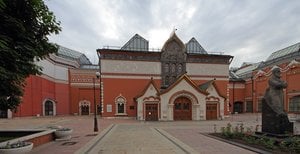 معرض تريتياكوف الحكومي |
موسكو | 3 | Saviour Made Without Hands, Genealogy of the state of Muscovy, Virgin Eleousa of Kykkos |
عشر سنوات تقريباً، من 1658 إلى 1668، تضم جميع روائع Simon Ushakov المؤرخة: إليكم إياها، عاماً تلو الآخر.


Saviour Made Without Hands (1658)، معرض تريتياكوف الحكومي, موسكو. يليهما Genealogy of the state of Muscovy (1668) وVirgin Eleousa of Kykkos (1668).
عمر 32 عاماً: يعود تاريخ Saviour Made Without Hands إلى عام 1658، وقد وُلد Simon Ushakov في 1626.
تضم قائمتنا 3 من أعمال Simon Ushakov، التي يعود تاريخها من 1658 إلى 1668.
معظمها موجود في معرض تريتياكوف الحكومي (موسكو). وتدرج القائمة أعلاه المتاحف واحداً تلو الآخر.
في 1668: 2 من أصل 3 من الأعمال في هذه الصفحة تعود إلى ذلك التاريخ، من بينها Genealogy of the state of Muscovy.
أقدم لوحة في هذه الصفحة هي من عام Saviour Made Without Hands (1658)، وأحدثها من عام Genealogy of the state of Muscovy (1668).
تُعد Saviour Made Without Hands, Genealogy of the state of Muscovy و Virgin Eleousa of Kykkos من بين 3 عمل فني في هذه الصفحة محفوظة لدى معرض تريتياكوف الحكومي, موسكو.
نعم. يمكن طلب كل لوحة في هذه الصفحة كنسخة زيتية مرسومة يدوياً بجودة المتاحف أو كمطبوعة فنية فاخرة، بالمقاس الذي تختاره، وذلك من صفحة اللوحة نفسها.
In the quiet workshops of seventeenth-century Moscow, a new way of seeing began to take shape through the hands of Simon Ushakov. He emerged from a world where the sacred was rendered in rigid, traditional patterns, yet his brush sought a different path. By the age of twenty-two, he had already secured a position within the Silver Chamber, a role that allowed him to move within the highest circles of the Russian court. His talent was not confined to a single medium; he was a man of many crafts, working as an engraver, a designer of coins, and a maker of maps. This versatility allowed him to bridge the gap between the ancient spiritual traditions of the Orthodox Church and the emerging influences arriving from the West.
His rise was fueled by a distinctive style that caught the attention of the powerful Patriarch Nikon. While some traditionalists viewed his work with suspicion, seeing in his lifelike faces a departure from the old ways, the royal family found great favor in his art. He became a favorite of Tsar Alexei Mikhailovich, eventually leading him to the Kremlin Armoury. Here, he did more than merely paint; he shaped the visual language of a nation in transition. His work often featured a palette of rose pink, olive green, and pale lilac, colors that brought a sense of naturalism to the holy figures he depicted.
Ushakov lived during a time of profound religious and cultural reform. As the Church underwent significant changes under Patriarch Nikon, Simon was at the center of this movement. He was not merely a practitioner of tradition but a theorist who sought to refine the very act of painting. In 1664, he published a treatise titled A Word to Loving-Meticulous Icon Painting, a work that emphasized the importance of naturalism and the study of the physical world. This intellectual pursuit was controversial. Some priests criticized his "fleshly saints," arguing that his pursuit of realism strayed too far from the spiritual essence of the icon. They saw his work as too Western, yet his ability to render the human form with depth and shadow helped define a proto-baroque style in Russia.
His influence extended far beyond the walls of the church. He is credited with helping to popularize the parsuna, a genre of secular portrait painting that sought to capture the likeness of individuals rather than just their spiritual essence. This shift marked the beginning of secular portraiture in Russia. Through his engravings and book illustrations, he helped introduce a new visual literacy to the Russian people. His skill was such that his icons, when transported to Western Europe, helped spark an interest in the unique artistic developments occurring in the Russian lands.
The life of Simon Ushakov was one of constant creation and teaching. He headed a workshop that produced many of the era's most significant works, training a generation of artists who would carry his methods forward. His hands were busy with everything from the delicate work of jewelry to the grand scale of monumental design. He was a man who understood the power of the line and the weight of color, using them to navigate the tension between the divine and the earthly.
When he passed away in Moscow in 1686, he left behind a transformed artistic landscape. He had helped move Russian art from the strictly symbolic toward a more observational, human-centered approach. His works remain in significant collections, such as the State Tretyakov Gallery and the State Russian Museum, serving as markers of the moment when Russian art first began to embrace the complexities of the modern world.