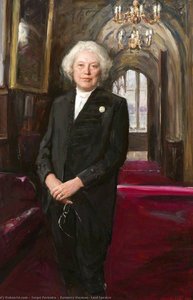
Sergei Pavlenko: A Royal Portraitist Bridging Russia and Britain
Sergei Pavlenko’s name is increasingly recognized within the world of fine art, particularly for his strikingly realistic and emotionally resonant portraits. Born in 1953 in Russian-speaking Riga, Latvia, he represents a fascinating confluence of artistic heritage – a grounding in the traditions of St. Petersburg’s Imperial Academy of Fine Arts juxtaposed with a distinctly modern approach to capturing human character. His work transcends mere likeness; it delves into the essence of his subjects, revealing their inner lives through masterful technique and an intuitive understanding of gesture and expression. Pavlenko's journey, marked by relocation and evolving artistic perspectives, has resulted in a body of work that is both deeply personal and universally compelling.
Pavlenko’s early education was steeped in the rigorous training of the Russian art establishment. He graduated from the St. Petersburg Academy of Fine Arts in 1988, studying under Boris Ugarov, a prominent figure known for his emphasis on classical realism. This foundation provided him with an exceptional command of traditional painting techniques – color theory, composition, and anatomical accuracy. However, Pavlenko’s artistic vision quickly transcended mere imitation. He sought to infuse his work with a sense of dynamism and psychological depth, qualities that would become hallmarks of his distinctive style.
A pivotal moment in Pavlenko's career arrived in 1989 when he relocated to the West, specifically London. This move proved transformative, offering him access to new markets, audiences, and artistic influences. Initially met with immediate recognition, he rapidly established himself as a leading portrait painter, commanding commissions from prominent figures across Europe and America. His relocation wasn't simply a geographical shift; it represented a deliberate embrace of Western artistic traditions while retaining the core values instilled during his Russian training. The move also coincided with a growing interest in Russian art abroad, providing Pavlenko with an advantageous platform for showcasing his talent.
The Royal Portraiture and Beyond
Pavlenko’s most celebrated work undoubtedly lies within his series of portraits of members of the British Royal Family. The commission to paint Queen Elizabeth II in 2000 proved a watershed moment, catapulting him to international prominence. This portrait, now housed in the Royal Collection, is widely considered one of the Queen's favorite depictions and a testament to Pavlenko’s ability to capture both regal dignity and quiet intimacy. The painting was unveiled personally by Her Majesty, further cementing its significance.
Beyond royal commissions, Pavlenko has consistently demonstrated his versatility across various subjects. He has painted Prince Michael of Kent, the Duke of Marlborough, and numerous other notable figures from the worlds of business, academia, and philanthropy. His portraits are not merely formal representations; they reveal a keen eye for character, capturing subtle nuances of expression and conveying a sense of personality that resonates with viewers. The breadth of his subject matter reflects a deep appreciation for human diversity and a commitment to documenting significant individuals within British society.
Technique and Influences
Pavlenko’s technical skill is undeniable, rooted in the rigorous training he received at the St. Petersburg Academy. However, his style transcends mere technical proficiency; it's characterized by an intuitive approach to color, light, and composition. He employs a layered glazing technique, building up rich textures and subtle tonal variations that create a remarkable sense of depth and realism. His use of color is particularly noteworthy – he avoids overly bright or saturated hues, favoring instead muted tones that evoke atmosphere and mood.
While firmly rooted in classical traditions, Pavlenko’s work has been influenced by a diverse range of sources. The influence of Kabuki theatre, encountered during his time in Japan, is evident in his dynamic compositions and expressive use of gesture. Furthermore, he cites the works of Rembrandt and John Singer Sargent as key inspirations, acknowledging their mastery of capturing psychological depth and emotional resonance within portraiture. His work also demonstrates a clear understanding of the principles of montage, a technique pioneered by Sergei Eisenstein, which he applies to create a sense of movement and narrative within his portraits.
Legacy and Recognition
Sergei Pavlenko’s impact on the contemporary portraiture scene is significant. He has not only achieved widespread recognition for his exceptional talent but also demonstrated a willingness to embrace new challenges and push the boundaries of traditional portraiture. His work has been exhibited in prestigious galleries across Europe and America, and he continues to receive commissions from leading figures worldwide. His inclusion in the Royal Society of Portrait Painters and the Royal Academy Summer Exhibition further underscores his standing as one of Britain’s most accomplished portrait artists.
Beyond his artistic achievements, Pavlenko's story represents a compelling narrative of cultural exchange and artistic adaptation. He has successfully bridged the gap between Russian and British art worlds, forging a unique style that is both deeply rooted in tradition and refreshingly contemporary. His portraits offer not just visual representations but also glimpses into the lives and personalities of those he depicts, solidifying his place as a significant voice within the realm of fine art.