Peng Wei: Bridging Worlds Through Ink and Reflection
Born in Chengdu, China, in 1974, Peng Wei’s artistic journey is a fascinating synthesis of traditional Chinese aesthetics and contemporary sensibilities. Her early life, shaped by her father, the esteemed calligrapher Peng Xiancheng – a figure deeply rooted in the legacy of Tang dynasty painting – provided an invaluable foundation for her own distinctive style. This lineage isn't merely inherited; it’s actively engaged with, interrogated, and ultimately reinterpreted through Peng Wei’s unique lens.
Peng Wei’s formal education solidified this dual influence. She earned a Bachelor of Fine Arts in Chinese Painting from Nankai University in 1997, followed by a Master's degree in Philosophy (Aesthetics) from the same institution in 2000. This rigorous academic grounding—combining artistic skill with philosophical inquiry—is crucial to understanding her work’s layered complexity. It’s not simply about replicating traditional forms; it’s about critically examining their meaning and relevance within a rapidly changing world.
The Language of Ink: Themes and Techniques
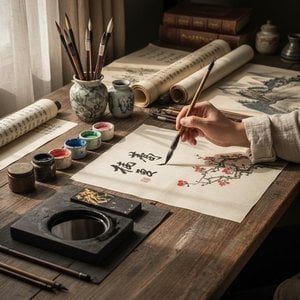
At the heart of Peng Wei's practice lies the medium of ink, a material deeply intertwined with Chinese cultural history. She masterfully employs *shui hua*, or “water painting,” utilizing delicate washes and subtle gradations to create images that possess an ethereal quality. However, her work transcends mere imitation; it’s characterized by a deliberate juxtaposition of elements – clothing, fans, scholar's rocks, and fragments of text – arranged in unexpected combinations.
A recurring motif is the representation of garments, often rendered with meticulous detail, hinting at both historical formality and contemporary fashion. Fans, frequently depicted in swirling patterns, evoke notions of grace, elegance, and hidden narratives. Scholar’s rocks, symbols of permanence and wisdom, provide a grounding element amidst the more transient imagery. Crucially, Peng Wei doesn't simply depict these objects; she pairs them with excerpts from Western philosophical texts – figures like Percy Bysshe Shelley, Ingeborg Bachmann, and Paul Celan – creating dialogues between seemingly disparate worlds.
This pairing of Eastern and Western thought is a defining characteristic of her work. She’s not attempting to translate or synthesize these traditions directly but rather to explore the resonances and dissonances that emerge when they are placed in conversation. The inclusion of texts, often fragments of letters, adds another layer of intimacy and vulnerability, suggesting a longing for connection and understanding.
A Dialogue with History and Modernity
Peng Wei’s artistic process is deeply rooted in the concept of “replication” – not as mere duplication, but as a means of engaging critically with the past. She meticulously recreates traditional images, often on unconventional materials like rice paper or molded torsos, transforming them into objects that challenge our assumptions about their original context. This deliberate act of reproduction serves as a starting point for reflection, prompting questions about authenticity, representation, and the nature of memory.
Her collaboration with Sergio Rossi, resulting in hand-painted rice paper boots, exemplifies this approach. These exquisite creations are not simply decorative objects; they’re meditations on embodiment, femininity, and the interplay between tradition and modernity. The process itself—the careful application of ink to a utilitarian material—highlights the inherent beauty within everyday objects.
Recognition and Legacy
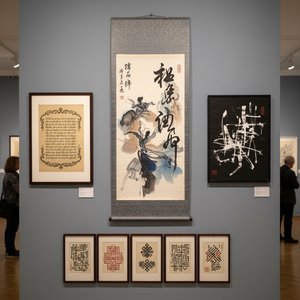
Peng Wei's work has garnered significant recognition both in China and internationally. Her pieces are held in prestigious collections, including the National Art Museum of China, the Hong Kong Museum of Art, and the Asian Art Center of San Francisco. She’s been featured in major exhibitions such as “Contemporary Art from China: Visual Expression Through Ink and Paper” and has participated in events like the Venice Biennale and Art Basel Hong Kong.
More than just an artist, Peng Wei is a thoughtful observer of cultural shifts, using her art to explore the complexities of identity, memory, and the enduring power of human connection. Her work invites viewers to contemplate the past while simultaneously engaging with the present, creating a dialogue that transcends time and culture.