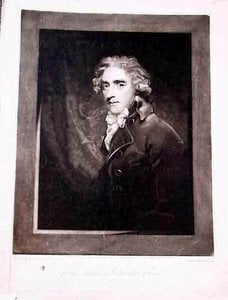
The Visionary Synthesis of Paul Jones
The artistic journey of Paul Jones is not a sudden emergence, but rather a compelling evolution—a delicate dance between inherited traditions and the burgeoning spirit of modernism. His work represents an evolution of modern vision that masterfully blends Baroque traditions with the raw energy of Abstract Expressionism. To encounter a Jones canvas is to witness a profound dialogue between centuries, where the structural grandeur of the past meets the fluid, emotive freedom of the contemporary era.
Jones’s distinctive style is rooted in a deep, foundational understanding of composition and the dramatic use of light and shadow. While his work is often categorized within the Abstract Expressionist movement, it reveals subtle yet significant echoes of earlier masters, particularly those of the Baroque period. This connection is not mere imitation; instead, Jones utilizes an inherent sense of narrative and spatial depth to reinterpret classical principles through a distinctly twentieth-century lens. He possesses a unique ability to strip away representational constraints, seeking instead to reveal the pure essence of color and form.
Landscape and Emotional Resonance
In his explorations of the natural world, Jones captures a sense of serene beauty through evocative brushwork that invites the viewer into a uniquely personal realm. His landscapes, such as the East Anglian Landscape, serve as windows into a world of rural tranquility and impressionistic light. Through these works, he depicts elements like windmills and cottages not merely as subjects, but as vessels for atmosphere and emotion.
The artist’s technique often draws upon a sophisticated mastery of color theory and geometric forms, suggesting an aesthetic connection to the way light and shape interact in the natural environment. Whether portraying the romanticized scenes of nature or more abstract compositions, his work maintains a consistent focus on:
- The dramatic interplay of light and shadow inherited from Baroque traditions.
- The use of evocative, textured brushwork to convey movement and life.
- A profound sense of spatial depth that anchors the viewer within the scene.
- The distillation of complex landscapes into essential emotional truths.
An Enduring Artistic Legacy
The historical significance of Paul Jones lies in his ability to bridge the gap between the classical and the modern. By finding the seeds of abstraction within the heavy, dramatic textures of the Baroque, he created a language that speaks to both the tradition-bound collector and the lover of modernism. His paintings, ranging from the pastoral beauty of Scottish life to the impressionistic vistas of East Anglia, remain a testament to his ability to capture the enduring spirit of the landscape through a transformative, modern vision.
الأسئلة والأجوبة
أين يمكن العثور على أعمال Paul Jones الفنية مصنفة حسب الحركة الفنية؟
تجمع صفحة كافة المدارس الفنية أعمال Paul Jones الفنية حسب الحركة الفنية.
ما هي الأسماء المستعارة أو الأسماء الأخرى التي يُعرف بها Paul Jones؟
يُعرف Paul Jones أيضاً باسم John Paul.
كم عدد الأعمال الفنية المتاحة لتصفحها لـ Paul Jones؟
يمكنك تصفح 81 أعمال فنية من أعمال Paul Jones في صفحة جميع الأعمال الفنية.