Martin Schaffner: A Master of Detail in the Dawn of the Renaissance
Born in Ulm, Germany, around 1478, Martin Schaffner emerged as a significant figure within the burgeoning artistic landscape of the mid-15th century. While details surrounding his early life remain somewhat sparse – he was a man who largely worked behind the scenes, often serving as an assistant to more prominent masters – his output speaks volumes about his skill and dedication. Schaffner’s career unfolded primarily in Ulm, where he established himself as a respected painter and medallist, contributing significantly to the religious art that dominated the era. He wasn't a flamboyant innovator; rather, he was a meticulous craftsman, a master of detail who honed his abilities through diligent apprenticeship and a deep understanding of established artistic conventions.
Schaffner’s early training is believed to have been under Jörg Stocker, a renowned painter in Ulm. This association provided him with a solid foundation in the techniques of oil painting and fresco, crucial skills for creating the intricate scenes that would become his hallmark. However, it was through his work alongside other masters – particularly as an assistant – that he truly developed his distinctive style: one characterized by remarkable precision, vibrant colors, and a profound sense of realism. He wasn’t interested in grand gestures or revolutionary approaches; instead, he focused on faithfully rendering the subjects before him with painstaking accuracy.
Biblical Narratives and Tabletop Masterpieces
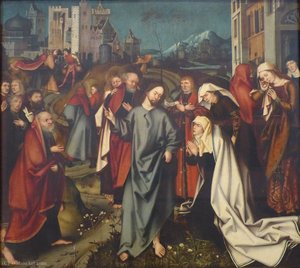
Schaffner's artistic output primarily revolved around religious themes, reflecting the prevailing devotional climate of the time. He frequently produced altarpieces – large-scale paintings intended for church interiors – depicting scenes from the Bible. These works are notable for their detailed depictions of figures, architectural settings, and symbolic elements. The “Adoration of the Magi,” a particularly striking example, showcases his mastery of perspective and color theory, creating a richly layered scene brimming with biblical significance. The painting exemplifies Early Netherlandish style, characterized by its meticulous detail and use of symbolism to convey theological messages.
Beyond altarpieces, Schaffner also excelled in producing smaller-scale works, often commissioned for private patrons. These included portraits – typically of wealthy merchants or members of the clergy – and intricately decorated tabletop scenes. The “Painted tabletop for Erasmus Stedelin” is a testament to his skill in creating miniature worlds within panels, depicting biblical narratives and allegorical figures with astonishing detail. These tabletop compositions were not merely decorative; they served as visual sermons, educating viewers on religious teachings through carefully arranged imagery.
Technique and Influences
Schaffner’s technique was rooted in the traditions of Northern European painting, particularly those practiced by artists working in Germany and the Netherlands. He employed oil paints with a remarkable degree of control, layering thin glazes to achieve luminous colors and subtle gradations of tone. His meticulous attention to detail is evident in every brushstroke, from the folds of clothing to the texture of fabrics. While he didn’t radically depart from established conventions, Schaffner demonstrated an exceptional ability to execute these techniques with unparalleled precision.
It's believed that his work was influenced by artists like Stefan Lochner and Hans Memling, both masters of detail and religious illustration. However, Schaffner developed a unique style characterized by a quiet solemnity and a focus on the human figure. He avoided dramatic compositions or overly expressive gestures, instead prioritizing clarity and accuracy in his depictions.
Legacy and Historical Significance
Martin Schaffner’s contribution to 15th-century art is often overshadowed by more flamboyant figures of the era, but his work holds considerable historical significance. He represents a crucial link between the Gothic and Renaissance periods, embodying the meticulous craftsmanship that characterized Northern European painting during this transitional time. His altarpieces and tabletop scenes provide valuable insights into the religious beliefs and artistic practices of the period.
Schaffner’s legacy lies not in groundbreaking innovations but in his unwavering commitment to excellence. He was a master of his craft, a diligent artist who dedicated his life to faithfully rendering the world around him with remarkable skill and precision. His work continues to be studied by art historians today as a testament to the enduring power of detail and the importance of craftsmanship in the creation of great art.