Lamar Dodd: Weaver of Southern Light
William Lamar Dodd (September 22, 1909 – September 21, 1996) wasn’t merely a painter; he was a chronicler of the American South, an interpreter of its landscapes and its people. His work, often characterized by a haunting beauty and a deep sense of place, transcends simple representation, delving into the emotional resonance of the region—its light, its shadows, its history, and its enduring spirit. Dodd’s legacy isn't just found in his paintings but also in the institution he shaped: the Lamar Dodd School of Art at the University of Georgia, a testament to his belief in accessible art education and the transformative power of creative expression.
Born in Fairburn, Georgia, into a family deeply rooted in Southern culture—his first cousin was Etta Cleveland, the creator of the beloved comic strip Mark Trail—Dodd’s artistic journey began early. He received his initial training at LaGrange Female College, a formative experience that instilled within him a profound appreciation for the local landscape and its people. This early exposure to both formal instruction and the rhythms of rural Georgia would profoundly influence his later work. He briefly attended the Georgia Institute of Technology before pursuing his artistic ambitions in New York City, seeking guidance from influential figures like George Bridgman and George Luks – artists who championed a more direct and emotionally resonant approach to painting.
The Ashcan Influence and Southern Roots
Dodd’s time in New York exposed him to the burgeoning Ashcan School of painting, known for its gritty realism and focus on everyday life. However, he quickly realized that his heart lay elsewhere. Returning to Alabama in 1933, he found a new artistic purpose: to capture the essence of his native South. This wasn’t simply about depicting Southern scenery; it was about conveying a specific feeling—a sense of melancholy, nostalgia, and an almost spiritual connection to the land. He drew inspiration from Thomas Hart Benton's populist style, which emphasized regional identity and social commentary, but tempered it with a more personal and introspective vision.
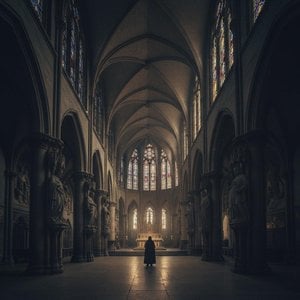
His early works, such as “Cathedral Number 1” (1958), exemplify this shift. These paintings aren’t literal representations of Southern landscapes; they are imbued with symbolism—the towering cathedrals representing the enduring spirit of the region, the interplay of light and shadow evoking a sense of mystery and reverence. Dodd's use of color is particularly striking – often muted earth tones punctuated by bursts of vibrant hues, creating a visual harmony that reflects the beauty and complexity of his subject matter.
Monhegan Island and Expanding Horizons
In the 1950s, Dodd discovered Monhegan Island, off the coast of Maine, a transformative experience that broadened his artistic horizons. The island’s unique landscape—its grassy shorelines, its dramatic cliffs, and its ever-changing light—provided him with a new set of visual challenges and opportunities. He began to experiment with brighter colors and looser brushstrokes, reflecting the influence of abstract expressionism while retaining his distinctive Southern sensibility. This period marked a significant evolution in his work, moving away from purely representational imagery towards a more expressive and emotionally charged style.
His travels throughout Europe during this time further enriched his artistic vocabulary, exposing him to the techniques and philosophies of the Old Masters. He studied the works of Cézanne and other masters, incorporating their principles of color theory and composition into his own practice. He also embraced a role as a cultural emissary for the State Department, documenting American life in countries around the world – experiences that undoubtedly shaped his perspective on humanity and its relationship to the natural world.
Legacy and Influence
Lamar Dodd’s impact extends far beyond his own paintings. He played a pivotal role in establishing art education at the University of Georgia, founding the Lamar Dodd School of Art in 1937. This institution has become one of the leading art schools in the United States, attracting talented students and fostering a vibrant artistic community. Dodd’s commitment to accessibility and his belief in the transformative power of art have left an enduring legacy on generations of artists.
His work continues to be exhibited and studied today, appreciated for its evocative beauty, its profound sense of place, and its timeless exploration of the human spirit. Dodd's paintings are not merely images; they are windows into a world—a world that is both familiar and mysterious, comforting and challenging, deeply rooted in Southern tradition yet open to new possibilities. He remains a vital voice in American art, reminding us of the power of observation, imagination, and the enduring beauty of the natural world.