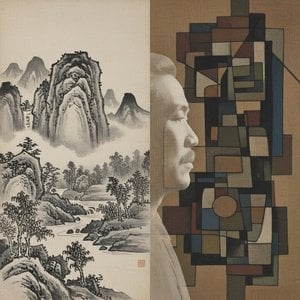
Kim Sun-doo: Bridging Tradition and Contemporary Vision
Kim Sun-doo, born in Seoul, South Korea in 1951, stands as a prominent figure within the Korean contemporary art landscape. His artistic journey began in the late 70s, establishing him as a versatile performer across film and television—a career trajectory that continues to this day. While primarily recognized for his acting roles, notably in films like “Men of the Bath House” (1995) and “Forever Yours” (1998), Sun-doo’s artistic endeavors transcend mere entertainment; they represent a profound engagement with Korean heritage and a masterful exploration of themes rooted in the natural world.
Early Influences: Sun-doo's formative years were marked by exposure to traditional Korean art forms, particularly calligraphy and landscape painting—influences that subtly permeate his artistic sensibilities.
Formal Training: He pursued formal training at Seoul National University’s Fine Arts Department, honing his skills in various mediums including oil painting and mixed media.
Sun-doo's artistic style is characterized by a distinctive blend of realism and abstraction. His canvases often depict serene Korean landscapes—mountains bathed in misty dawn or tranquil rice paddies reflecting the golden hues of sunset—capturing not just visual beauty but also conveying a deeper sense of spirituality and connection to the environment. He skillfully employs layering techniques, blending colors with meticulous detail while simultaneously introducing textural elements that invite contemplation. This approach reflects a broader artistic ethos – one that seeks to honor tradition while embracing innovation.
Notable Works: Among his most celebrated pieces are “Going Between Night and Day” and “February,” both showcasing Sun-doo’s mastery of color palettes and compositional balance.
Film Roles: Beyond painting, he has achieved considerable success as an actor, appearing in films such as “Bichunmoo” (2000) and “The Myth” (2005), demonstrating his adaptability and artistic versatility.
Throughout his career, Kim Sun-doo’s work has garnered critical acclaim and solidified his position as a significant contributor to Korean art history. His dedication to portraying the essence of Korean landscapes—combined with his commitment to exploring complex emotional narratives—underscores his enduring legacy as an artist who successfully bridges the gap between artistic heritage and contemporary expression. He continues to inspire fellow artists and captivate audiences alike, ensuring that his vision remains relevant for generations to come.
Explore the captivating world of Yi Eungro (Lee Ungno), a pivotal figure in Korean modernism. Discover his unique fusion of Eastern and Western artistic traditions, abstract masterpieces, and lasting legacy. A must-read for discerning art collectors.
كم عدد لوحات Kim, Sun-Doo المعروضة على ArtsDot.com؟
2
من هو Kim, Sun-Doo؟
Kim Sun-doo: Bridging Tradition and Contemporary Vision
Kim Sun-doo, born in Seoul, South Korea in 1951, stands as a prominent figure within the Korean contemporary art landscape. His artistic journey began in the late 70s, establishing him as a versatile performer across film and television—a career trajectory that continues to this day. While primarily recognized for his acting roles, notably in films like “Men of the Bath House” (1995) and “Forever Yours” (1998), Sun-doo’s artistic endeavors
ما هي اللوحة الأعلى تقييماً للفنان Kim, Sun-Doo على منصة ArtsDot.com؟
February
متى وأين وُلد Kim, Sun-Doo؟
1951, Seoul, South Korea
ما هي الأسماء الأخرى التي يُعرف بها Kim, Sun-Doo؟
Kim Sun-Doo
من أين Kim, Sun-Doo؟
South Korea
إلى أي حقبة فنية ينتمي Kim, Sun-Doo؟
Contemporary
ما هي أفضل 3 لوحات تصنيفاً لـ Kim, Sun-Doo على ArtsDot.com؟
February, Going-Between Night and Day
هل لا تزال أعمال Kim, Sun-Doo محمية بموجب حقوق الطبع والنشر؟
نعم، لا تزال أعمال هذا الفنان محمية بموجب حقوق الطبع والنشر.
ما هي المدارس الفنية التي ينتمي إليها Kim, Sun-Doo؟